
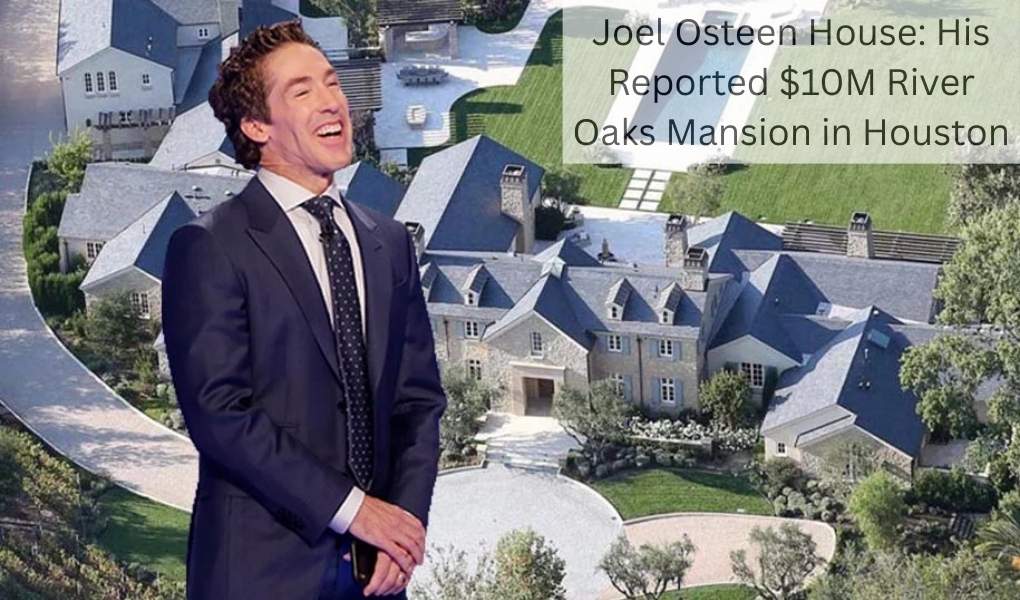
Joel Osteen lives in a 17,000-square-foot stone mansion in the River Oaks neighborhood of Houston, Texas. The senior pastor of Lakewood Church and his wife, Victoria Osteen, reside in one of the most exclusive residential enclaves in the state. The estate, often referred to as the River Oaks Stone Property, was purchased for $10.5 million in 2010 and is now valued between $14 million and $14.3 million.
The property details, tax structure, and purchase price have been publicly documented, including coverage by CultureMap Houston. Now let’s examine the estate in detail and understand what makes this property one of the most discussed pastor residences in America.
Quick Facts: Joel Osteen’s River Oaks Mansion
| Category | Details |
|---|---|
| Owner | Joel Osteen |
| Co-Owner | Victoria Osteen |
| Primary Role | Senior Pastor of Lakewood Church |
| Location | River Oaks (Tall Timbers subdivision), Houston, Texas |
| Property Type | Luxury Stone Mansion / Estate |
| Living Space | Approximately 17,000 square feet |
| Lot Size | 1.86 acres |
| Purchase Price (2010) | $10.5 million |
| Current Estimated Value | $14 million to $14.3 million |
| Bedrooms | 6 |
| Bathrooms | 6 to 8 |
| Fireplaces | 5 wood-burning fireplaces |
| Elevators | 3 |
| Additional Structures | Guest house and pool house |
| Outdoor Amenities | Large swimming pool, spa, patio, extensive landscaping |
| Garage & Driveway | Custom-built garage with driveway capacity for up to 20 cars |
| Ownership Structure | Held under Covenant Trust |
| Annual Property Taxes | Approximately $250,000 to $260,000 (Harris County) |
The Exact Location: River Oaks, Houston, Texas
Joel Osteen’s mansion is located in River Oaks, a premier residential neighborhood in Houston, Texas. River Oaks is widely regarded as the most prestigious address in the city. It is home to energy executives, professional athletes, business magnates, and public figures.
The mansion specifically sits within the Tall Timbers subdivision of River Oaks. This micro-location matters. Tall Timbers is known for oversized lots, mature trees, and architectural estates designed for privacy and prestige.
From a real estate standpoint, River Oaks represents legacy wealth. Properties here are not starter homes. They are generational assets. Osteen’s decision to purchase in this enclave aligns with long-term investment logic rather than short-term status.
Property Overview: Size, Structure, and Classification
The estate is best classified as a luxury stone mansion. It spans approximately 17,000 square feet and sits on a 1.86-acre lot.
- Total living space: 17,000 square feet
- Lot size: 1.86 acres
- Purchase price in 2010: $10.5 million
- Current estimated value: $14 to $14.3 million
- Annual property taxes: Approximately $250,000 to $260,000
In luxury residential terms, 17,000 square feet places this estate firmly in the ultra-high-end category. Most luxury homes in River Oaks range between 6,000 and 12,000 square feet. Osteen’s property exceeds that standard significantly.
Interior Features: A Mansion Built for Scale and Function
The interior layout is structured for both residential comfort and professional functionality. Reports consistently outline the following amenities:
- Six bedrooms
- Six to eight bathrooms
- Three elevators
- Five wood-burning fireplaces
- Personal library
- Home theater
- Dedicated sermon preparation office
Three elevators inside a private residence signals vertical scale. This is not decorative luxury. It is structural necessity. The multiple fireplaces and high ceilings suggest classic architectural influence, while the elevators and layout reflect modern planning.
The design style blends traditional detailing with modern elegance. High ceilings, intricate moldings, and a grand foyer establish formality. Meanwhile, the gourmet kitchen with high-end appliances anchors daily living functionality.
From an expert perspective, this layout balances public image and private life. As a pastor who leads one of America’s largest congregations, Osteen requires office space for sermon writing, media production planning, and publishing coordination. The home supports that professional workload.
Exterior and Grounds: Privacy and Estate-Level Amenities
The exterior of the River Oaks Stone Property reinforces its estate classification. The property is enclosed by tall stone walls and ornamental fencing. Mature landscaping and dense greenery shield it from public visibility.
- Large swimming pool
- Spa area
- Pool house
- One-bedroom guest house
- Spacious patio for entertaining
- Custom-built garage
- Grey concrete driveway with capacity for up to 20 cars
The driveway capacity alone reveals the estate’s scale. Parking for 20 vehicles is not common, even in luxury communities. This allows hosting large gatherings, ministry events, or private functions without logistical strain.
The guest house and pool house further elevate the property into true estate territory rather than standard luxury home classification.
Ownership Structure and Tax Position
The property is held under Covenant Trust. This ownership structure reportedly prevents the Osteens from claiming a homestead tax exemption.
As a result, annual property taxes range between $250,000 and $260,000 paid to Harris County. That tax obligation aligns with the property’s high valuation and lack of homestead benefits.
From a financial planning standpoint, holding real estate in trust structures can provide estate planning and asset protection advantages. It is a common approach among high-net-worth individuals.
How the Mansion Aligns With Joel Osteen’s Public Role
Joel Osteen is not a traditional local pastor. He is a global religious figure, bestselling author, and television personality. Lakewood Church, based in Houston, is one of the largest megachurches in the United States.
When analyzing the property through a professional lens, the mansion aligns with his brand scale. Large-scale ministry operations generate significant revenue through book sales, speaking engagements, and media broadcasting. A residence of this magnitude is financially consistent with that level of enterprise.
It is also important to note that Lakewood Church is a separate organization from Osteen’s personal finances. His home was purchased privately and is not church-owned property.
Market Appreciation & The “Texas Valuation Gap”
The estate was purchased for $10.5 million in 2010. While current tax records often reflect a value between $14 million and $14.3 million, industry experts recognize a significant “valuation gap” common in the Texas luxury market.
Tax Appraised Value vs. Market Reality: In Harris County, the appraised value (used for tax purposes) is a mass-appraisal figure that often lags behind the open-market value. For an estate of this caliber in River Oaks, the price a motivated buyer would pay in a private sale typically exceeds the county’s conservative tax assessment.
The 14-Year Horizon: A 35%–40% increase over 14 years represents stable growth, but it likely understates the true appreciation of the 1.86-acre lot in the Tall Timbers subdivision—one of the most land-constrained and high-demand micro-markets in the Southern U.S.
Non-Disclosure Impact: Texas is a non-disclosure state, meaning final sales prices are not public record. This lack of transparency often leads to “rigid” public valuations that don’t account for the premium paid for hyper-privacy and custom estate-level improvements.
A Broader Perspective
Luxury real estate often serves three functions: residence, asset preservation, and brand alignment. This property checks all three boxes.
It provides security and privacy, It functions as a stable appreciating asset in one of Texas’s strongest luxury markets. It also aligns with the scale of a national religious and media platform.
Viewed strictly through real estate economics, the River Oaks Stone Property represents strategic placement in a high-demand micro-market. Viewed through cultural context, it illustrates how modern ministry leadership can intersect with high-value personal assets.
Ultimately, the significance of Joel Osteen’s residence is not just its size or cost. It reflects how influence, income diversification, and geographic positioning converge in today’s landscape of public leadership.
