
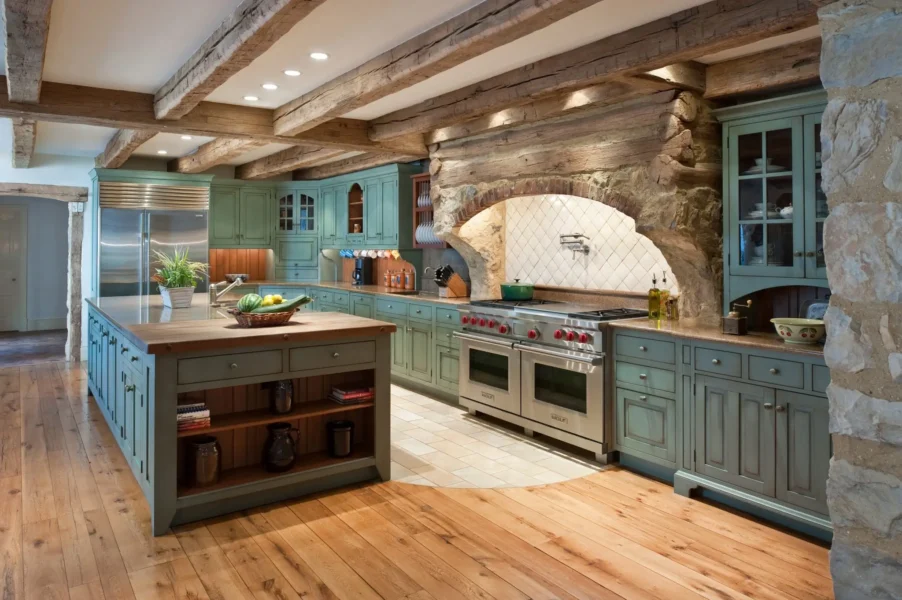
The farmhouse kitchen has survived countless design cycles because its strongest features were never merely decorative.
Generous work surfaces, durable materials, practical storage, deep sinks, and social layouts solve real household needs. Modern luxury kitchens retain these principles while replacing imitation rustic details with refined craftsmanship, integrated technology, and higher-performing materials.
The result is not a reproduction of an old rural kitchen. It is a sophisticated interpretation built around warmth, permanence, and daily function.
Quick Facts About Modern Farmhouse Kitchen Design
| Design element | Modern luxury interpretation | Practical benefit |
|---|---|---|
| Cabinetry | Inset, Shaker, or restrained slab fronts | Creates depth without visual clutter |
| Wood | White oak, walnut, or reclaimed timber accents | Adds warmth and natural variation |
| Sink | Apron-front fireclay, copper, stone, or steel | Provides a deep, accessible work basin |
| Work surfaces | Quartzite, granite, marble, or engineered stone | Balances durability with material character |
| Island | Furniture-style or custom fitted | Supports preparation, dining, and gathering |
| Storage | Full-height cabinetry and concealed pantries | Keeps the main kitchen calm and organized |
| Lighting | Pendants, task lighting, and natural light | Supports work while creating atmosphere |
| Technology | Panel-ready appliances and discreet controls | Adds convenience without dominating the room |
| Hardware | Brass, bronze, nickel, or blackened metal | Introduces detail and tactile quality |
| Ventilation | Properly ducted exterior range hood | Removes moisture, odors, and cooking pollutants |
Farmhouse Design Has Evolved Beyond a Passing Trend
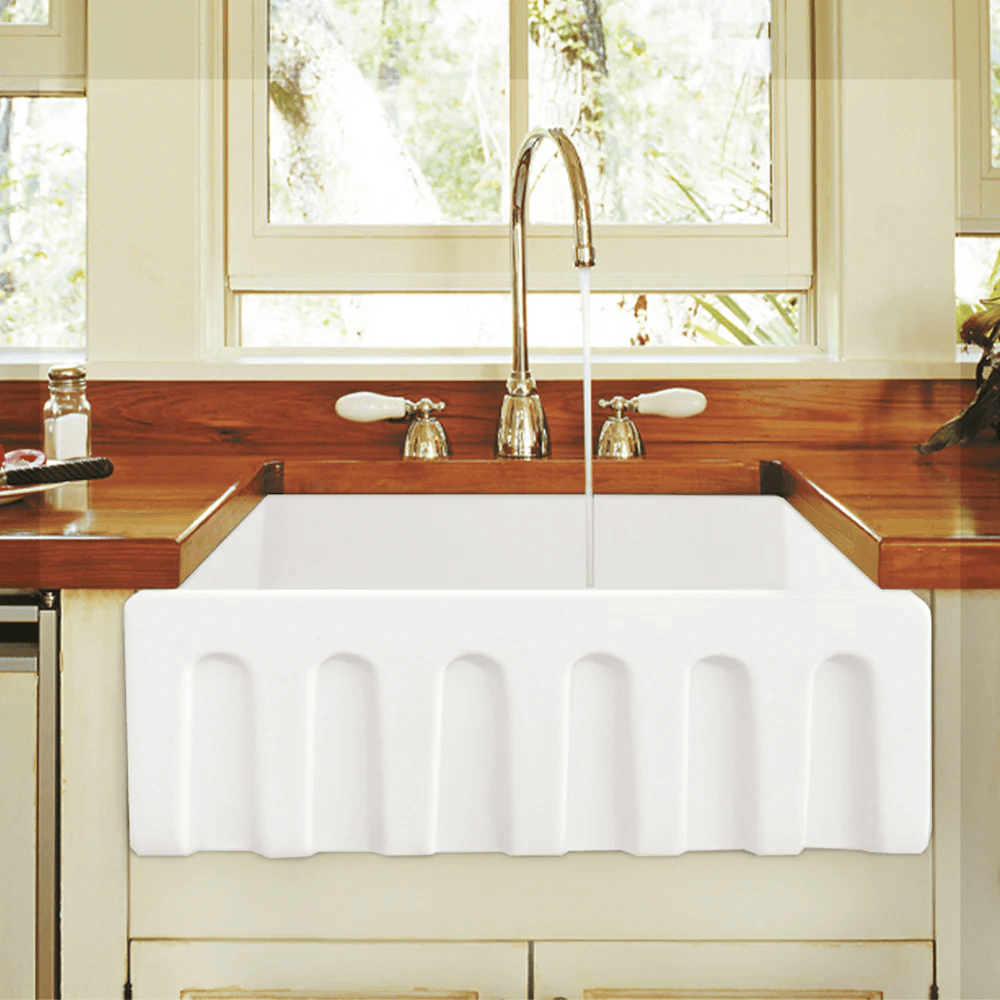
The farmhouse kitchen became overexposed when the style was reduced to white cabinets, decorative signs, and artificially distressed finishes.
Its current form is more architectural. Designers are drawing from traditional kitchens without copying every historic detail.
The 2026 National Kitchen & Bath Association report found that 72% of professionals expect transitional or timeless kitchens to remain popular. Organic and natural design followed at 58%.
Those findings explain why farmhouse principles continue to work. The style sits comfortably between traditional craftsmanship and modern functionality.
It can accommodate a classical country house, a coastal residence, or a contemporary luxury property. The result depends on proportion, material quality, and restraint.
Modern Farmhouse Is Warmer and More Refined
Modern farmhouse kitchens now feature richer woods, quieter colors, handmade surfaces, and carefully detailed cabinetry.
Houzz reported that traditional kitchen style rose by five percentage points among renovating homeowners. The renewed look emphasizes inset cabinets, arched hoods, rich wood, built-ins, and detailed millwork.
This is a significant shift from the flat, bright-white farmhouse kitchens of the previous decade.
The updated style feels established rather than themed. It creates a sense that the kitchen belongs to the architecture of the house.
Natural Materials Give Farmhouse Kitchens Their Luxury
A luxury kitchen should reveal material quality at close range.
Timber grain, stone veining, metal patina, and hand-finished joinery create depth that printed surfaces struggle to reproduce. These details become more attractive as natural light changes throughout the day.
Wood cabinetry is particularly important. Houzz found that wood became the most selected cabinet finish in renovated kitchens, chosen by 29% of homeowners. White followed at 28%.
The NKBA also identified wood grain as a growing cabinet preference. White oak was the leading wood species in its professional survey.
Material Authenticity Matters More Than Rustic Decoration
A successful farmhouse kitchen does not require exposed beams, barn doors, or distressed signs.
In my experience evaluating high-end interiors, a single well-made oak island can establish more authenticity than several decorative farmhouse references.
The same principle applies to stone. Natural quartzite, granite, marble, and soapstone each offer distinct movement and texture.
However, every material has practical implications. Marble can etch when exposed to acids. Some natural stone may require sealing and suitable cleaning products.
The Natural Stone Institute recommends understanding the specific stone before choosing maintenance products. It also advises against acidic cleaners on many natural surfaces.
Luxury comes from selecting a material knowingly, not pretending it requires no care.
The Farmhouse Sink Remains the Functional Focal Point
Few features identify a farmhouse kitchen as clearly as an apron-front sink.
Its exposed face breaks the repeated line of cabinet doors. This gives the sink greater visual weight and turns a working fixture into an architectural feature.
The deep basin also supports practical tasks. Large cookware, baking trays, roasting pans, and food preparation equipment can be handled more easily.
Homeowners exploring farmhouse kitchen sinks can compare fireclay, copper, stainless steel, granite, marble, concrete, and cast-iron options. The collection also includes single-bowl, double-bowl, smooth, fluted, and decorative apron designs.
Choose the Sink Material Around Real Use
Fireclay creates a clean, traditional appearance. Its substantial form works particularly well with painted or natural-wood cabinetry.
Stainless steel gives the farmhouse profile a more contemporary character. It is often easier to coordinate with professional-style appliances.
Copper adds warmth and develops a changing surface patina. Homeowners should understand that this evolution is part of the material’s character.
Stone sinks create a strong architectural statement. Their weight and natural variation require careful product selection and professional installation.
A large single bowl offers uninterrupted washing space. A divided sink separates preparation and cleaning tasks but reduces the size of each basin.
The Cabinet Must Support the Sink Properly
Farmhouse sinks should not be treated like standard drop-in fixtures.
Many require a modified sink base, support frame, precise counter cutout, and clearance for plumbing or waste-disposal equipment.
Installation guidance from Signature Hardware states that the support frame must carry the sink and its attachments. It also recommends having the actual sink available for accurate cabinet fitting.
This matters because handcrafted fireclay and stone products may have small dimensional variations.
The sink should be selected before the cabinetry and countertop are finalized. Retrofitting it later can lead to weak support, uneven gaps, or expensive alterations.
The Layout Supports Both Work and Social Life
The traditional farmhouse kitchen was a working room and a gathering place.
Modern luxury homes preserve that dual purpose. The kitchen may support meal preparation, informal dining, entertaining, homework, and remote work within one connected space.
The NKBA found that 76% of professionals expect kitchen footprints to increase. Respondents also predicted continued demand for social connection, multifunctional layouts, and lifestyle-focused spaces.
However, luxury does not always require a larger room.
Houzz found that 52% of renovating homeowners changed their kitchen layout, while 68% kept roughly the same overall footprint.
Good planning can therefore matter more than square footage.
The Island Should Behave Like Furniture
A farmhouse island works best when it feels grounded and useful.
A contrasting timber finish can make the island resemble a traditional worktable. Turned legs, framed panels, or restrained detailing can reinforce that impression.
However, decorative features should never obstruct seating or movement.
The island must support clearly defined tasks. These may include preparation, serving, storage, washing, or casual dining.
Trying to place the sink, cooktop, seating, dishwasher, storage, and waste bins into one island often creates conflict. Luxury comes from giving each function enough room.
Storage Protects the Calm, Collected Appearance
Farmhouse kitchens appear relaxed, but the best examples are highly organized.
Deep drawers, tray storage, appliance cabinets, pantry units, and concealed waste systems keep everyday items close to where they are used.
Houzz found that 76% of renovating homeowners added specialty built-ins. Pantry cabinets were installed by 47%, while 16% added walk-in pantries.
Among homeowners updating cabinets, 94% included specialized storage features. These included pull-out bins, tray drawers, spice storage, and corner solutions.
Back Kitchens Preserve the Main Room
Large luxury homes increasingly separate visible entertaining space from heavy preparation.
A pantry, scullery, or back kitchen can contain small appliances, food storage, additional refrigeration, and cleanup equipment.
This allows the main kitchen to remain welcoming during entertaining. It also reduces countertop clutter.
The secondary space should not become an afterthought. It needs durable surfaces, suitable lighting, ventilation, and efficient access to the main kitchen.
Lighting Creates Warmth Without Sacrificing Performance
Farmhouse kitchens often depend on atmosphere, but task lighting remains essential.
Natural light should reach major work areas where possible. Windows above the sink remain popular because they connect a repetitive task with an outdoor view.
Pendant lights can define an island or dining table. Wall lights add softer illumination around shelves, artwork, or preparation areas.
Under-cabinet lighting should provide even light across the countertop. Poorly placed spotlights can create shadows directly where knives and hot cookware are used.
NKBA professionals ranked natural, quality, and task lighting among the most important kitchen considerations. Statement lighting was also expected to remain highly influential.
Ventilation Is Part of Luxury Performance
A large range and decorative hood may create a strong focal point. The ventilation behind it matters more than the hood’s appearance.
Cooking produces heat, moisture, odors, and airborne particles. Open-plan kitchens allow these pollutants to spread into surrounding living spaces.
The US Environmental Protection Agency recommends using a range hood whenever cooking. It also advises exhausting kitchen air outdoors rather than simply recirculating it.
A luxury hood should be correctly sized for the appliance and installed at the specified height.
Noise also matters. A powerful system that occupants avoid using because it is too loud has limited practical value.
The duct route, fan location, replacement air needs, and external outlet should be considered during architectural planning.
Smart Technology Should Remain Visually Quiet
Farmhouse character does not conflict with modern technology.
The most convincing designs conceal technology until it is needed. Panel-ready refrigeration, integrated dishwashers, hidden charging points, and discreet controls preserve visual continuity.
Smart lighting can create preparation, dining, and evening scenes. Leak sensors beneath sinks and appliances can also provide valuable protection.
Induction cooking suits this restrained approach because the surface is smooth and visually quiet. However, appliance choices should always reflect the household’s cooking habits.
Technology should support the kitchen rather than make it resemble an appliance showroom.
Common Mistakes That Make Farmhouse Kitchens Feel Artificial
A farmhouse kitchen loses credibility when every surface tries to communicate the theme.
Common mistakes include:
- Excessive artificial distressing
- Too many competing timber finishes
- Decorative beams without architectural purpose
- Open shelving without practical storage
- Oversized islands that restrict movement
- Poorly supported apron-front sinks
- Fake stone or brick used without restraint
- Inadequate task lighting
- Decorative range hoods with weak ventilation
- Mixing several unrelated historical styles
A better approach is to choose two or three strong farmhouse elements.
These could include an apron-front sink, oak cabinetry, a furniture-style island, or a plastered range hood. Allow the remaining surfaces to remain quiet.
Why the Style Works in Luxury Real Estate
Farmhouse kitchens photograph well, but their value extends beyond appearance.
They create an emotional sense of comfort while supporting large-scale entertaining and daily family routines. Natural materials also provide the variation and tactile depth expected in high-end homes.
The style is adaptable. Cabinet colors, sink materials, lighting, and architectural details can be changed without losing the underlying design logic.
Its strongest elements are also familiar to buyers. Deep sinks, generous islands, walk-in pantries, durable surfaces, and quality joinery communicate usefulness immediately.
A farmhouse kitchen is most valuable when the craftsmanship matches the property. Poorly fitted cabinetry and imitation finishes will weaken even an expensive installation.
Frequently Asked Questions
What defines a farmhouse kitchen?
A farmhouse kitchen combines practical planning with warm, traditional materials. Common elements include an apron-front sink, timber cabinetry, natural stone, generous work surfaces, open or glazed storage, classic hardware, and a central island or table.
Are farmhouse kitchens still popular?
Yes, although the style has become more refined. Current kitchens use richer woods, quieter colors, natural stone, integrated appliances, and restrained traditional details instead of heavy distressing or decorative farmhouse signs.
What makes a farmhouse kitchen look luxurious?
Material quality, cabinetry construction, balanced proportions, lighting, and installation detail create luxury. Custom joinery, natural timber, carefully selected stone, solid hardware, and properly integrated appliances matter more than adding numerous rustic accessories.
What is the best sink for a farmhouse kitchen?
The best choice depends on use and maintenance preferences. Fireclay offers a classic appearance, stainless steel feels more contemporary, copper develops patina, and stone creates a substantial focal point. Cabinet strength and installation requirements must also be considered.
Can a farmhouse kitchen work in a modern home?
Yes. Use simplified cabinet profiles, restrained colors, clean apron-front sinks, and integrated appliances. Natural materials can provide warmth without making the room appear old-fashioned or overly decorative.
Do farmhouse kitchens add value to a home?
A well-designed farmhouse kitchen can strengthen buyer appeal because it combines familiar character with practical features. Its effect on value depends on workmanship, layout, material quality, property type, and consistency with the rest of the home.
Final Perspective
The farmhouse kitchen continues to define modern luxury because it offers more than a recognizable look.
Its lasting value comes from natural materials, visible craftsmanship, generous work zones, useful storage, and a strong connection to family life.
The most successful examples are neither rustic replicas nor trend-driven showpieces. They are carefully planned kitchens that feel warm, permanent, and genuinely pleasant to use.