
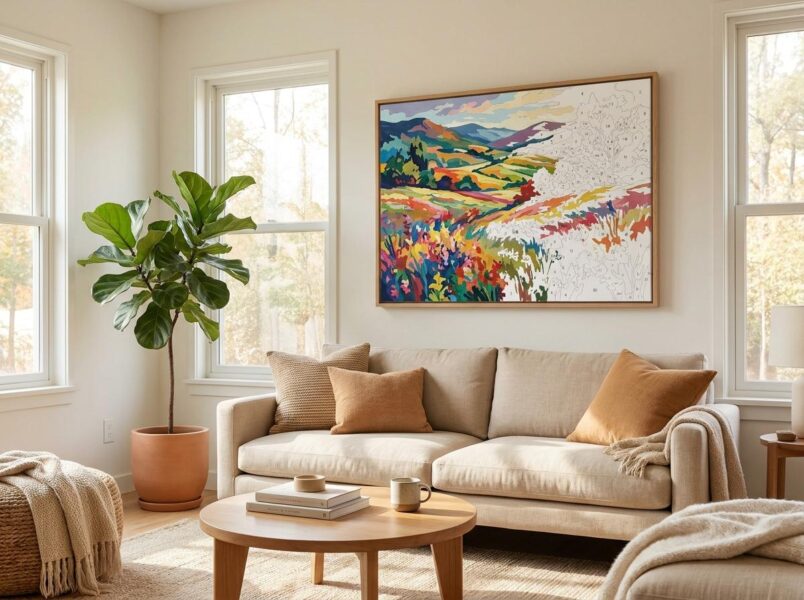
The days of filling blank walls with generic poster prints are fading. Walk through any design-focused home today, and you are more likely to see something unexpected: a canvas that tells a personal story, a portrait you painted yourself, or an abstract piece that matches the room’s exact colour palette. This isn’t a fringe aesthetic. It’s a movement backed by market data, consumer psychology, and changing attitudes about what a home should say about the people who live in it.
The global wall art market hit $70.94 billion in 2026, according to Fortune Business Insights, and is projected to reach $145.49 billion by 2034. That growth reflects a fundamental change in what buyers want. They no longer settle for whatever is stacked at the home goods store.
They want pieces that mean something. For homeowners who care about design, this means the biggest decorating opportunity right now isn’t a new sofa or a fresh coat of paint. It’s the wall space that tells your story.
This article looks at why personalised wall art has moved from niche to mainstream, what the data says about the trend, and how to bring it into your own home – with or without formal artistic training.
The market for personalised wall art is booming
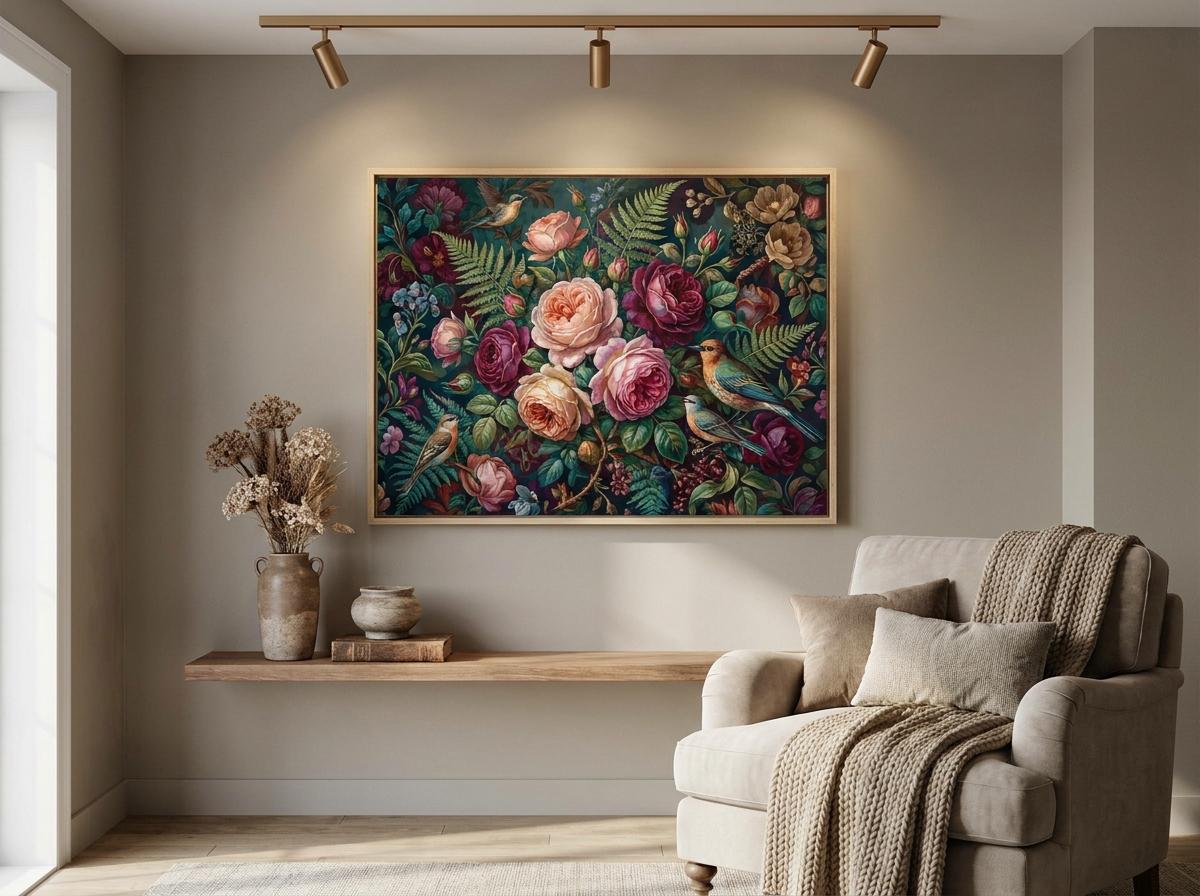
The numbers are hard to ignore. Grand View Research reports that 58% of consumers now prefer personalised or custom wall products over off-the-shelf options. Canvas alone holds about 45% of the wall art market share in 2026, making it the dominant medium. Meanwhile, Pinterest searches for “hand-painted wall patterns” rose 60% in 2025, as reported by Elle Decor, and searches for “hand-painted furniture” surged 135%.
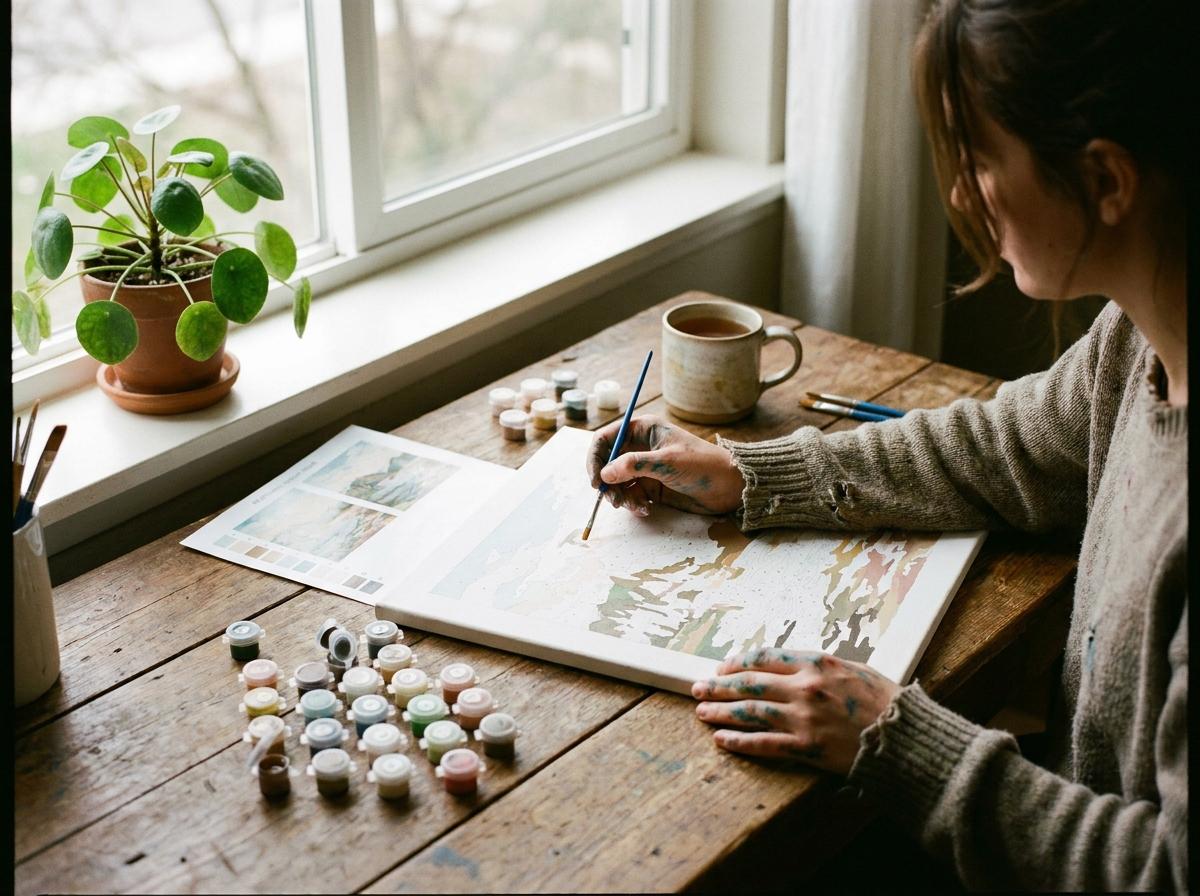
What is driving this change? Part of it is the growing range of accessible tools that remove the skill barrier. Custom paint by number kits for adults let you turn a personal photograph into a numbered canvas with matching paints and a brush set. No art degree required.
You upload a photo – a wedding shot, a pet portrait, a landscape from your last holiday – and a kit arrives with everything you need. The result is a gallery-quality piece that also happens to be something you made.
Why handmade decor resonates in 2026
The desire to make things by hand is not a retro novelty. A Frontdoor survey of more than 1,000 U.S. homeowners conducted in January 2025 found that 74% plan at least one DIY home project this year, with an average spend of $804 per project. And the hand-painted wall pattern trend on Pinterest suggests people want texture and originality, not factory-perfect uniformity.
Psychologists call this the “IKEA effect” – the tendency to value things more when you have put labour into making them. A store-bought print is interchangeable. A canvas you painted yourself carries memory and effort. That emotional premium matters in interior design because it makes a room feel inhabited rather than staged.
When you know every piece on your wall has a reason for being there, the whole room feels more deliberate. Modern style priorities have moved away from showroom perfection toward spaces that reflect the people who use them.
How to choose custom wall art that complements your space
Not every custom piece works in every room. The key is matching the artwork to the existing design language.
Start with the colour palette. A custom canvas that echoes two or three accent colours already present in the room will feel cohesive. If your living room leans toward warm neutrals, a piece with earthy tones and soft greens fits naturally. For a minimalist space with cool greys and whites, an abstract with muted blues keeps the look intentional.
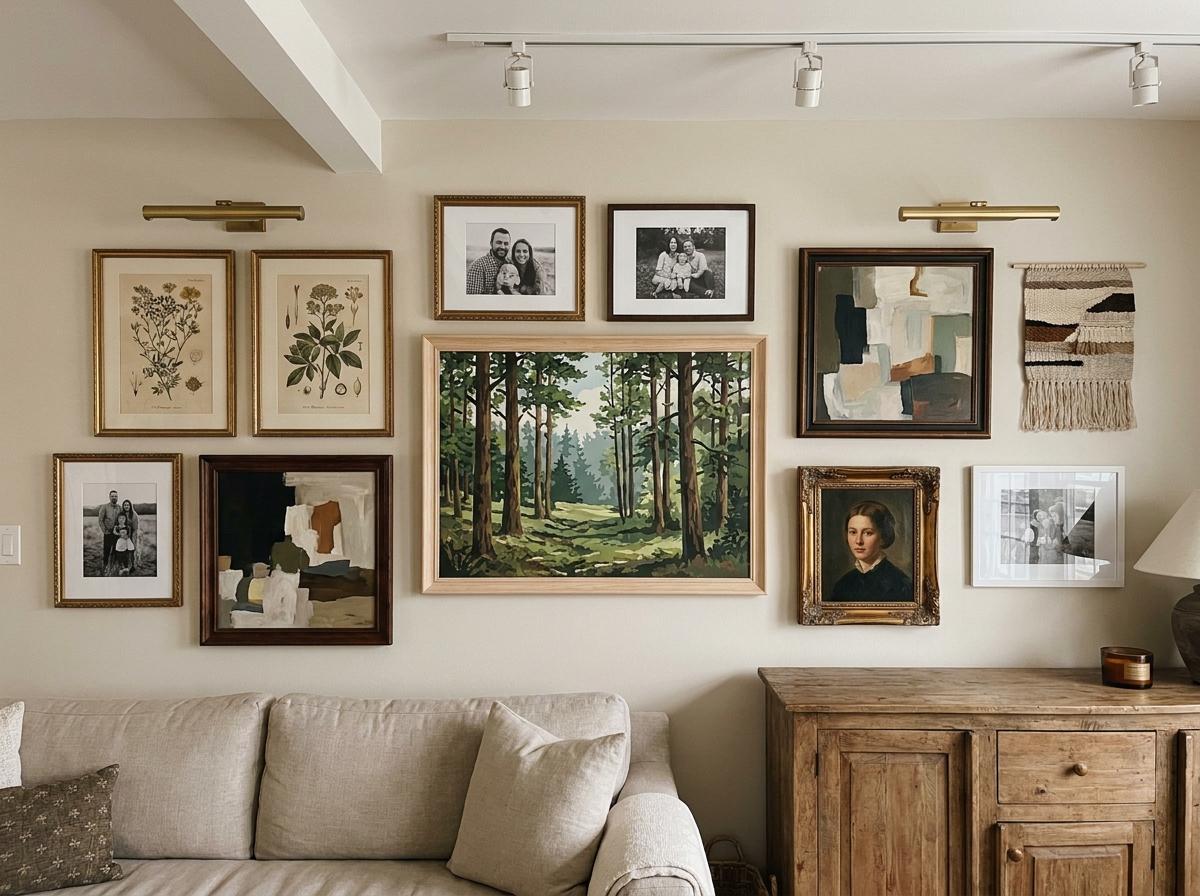
Think about scale, too. A small canvas on a large wall looks lost. Measure the wall space and size your canvas to fill at least two-thirds of the available area when hung alone, or pair it with complementary pieces in a gallery arrangement. Lighting matters as well – a picture light directed at your canvas turns it into a deliberate focal point rather than just another framed object. This approach follows what today’s modern interior design priorities emphasise: intentional, personal expression through every piece in the room.
Subject matter matters as much as size. Botanicals suit organic, modern and boho interiors. Abstracts work in minimalist or industrial settings. Family portraits and pet photos bring warmth to cosy, lived-in rooms like bedrooms and home offices. Match the frame style to the room, too – natural wood for rustic spaces, black or metal for contemporary ones.
Beyond decor: the unexpected benefits of creating your own art
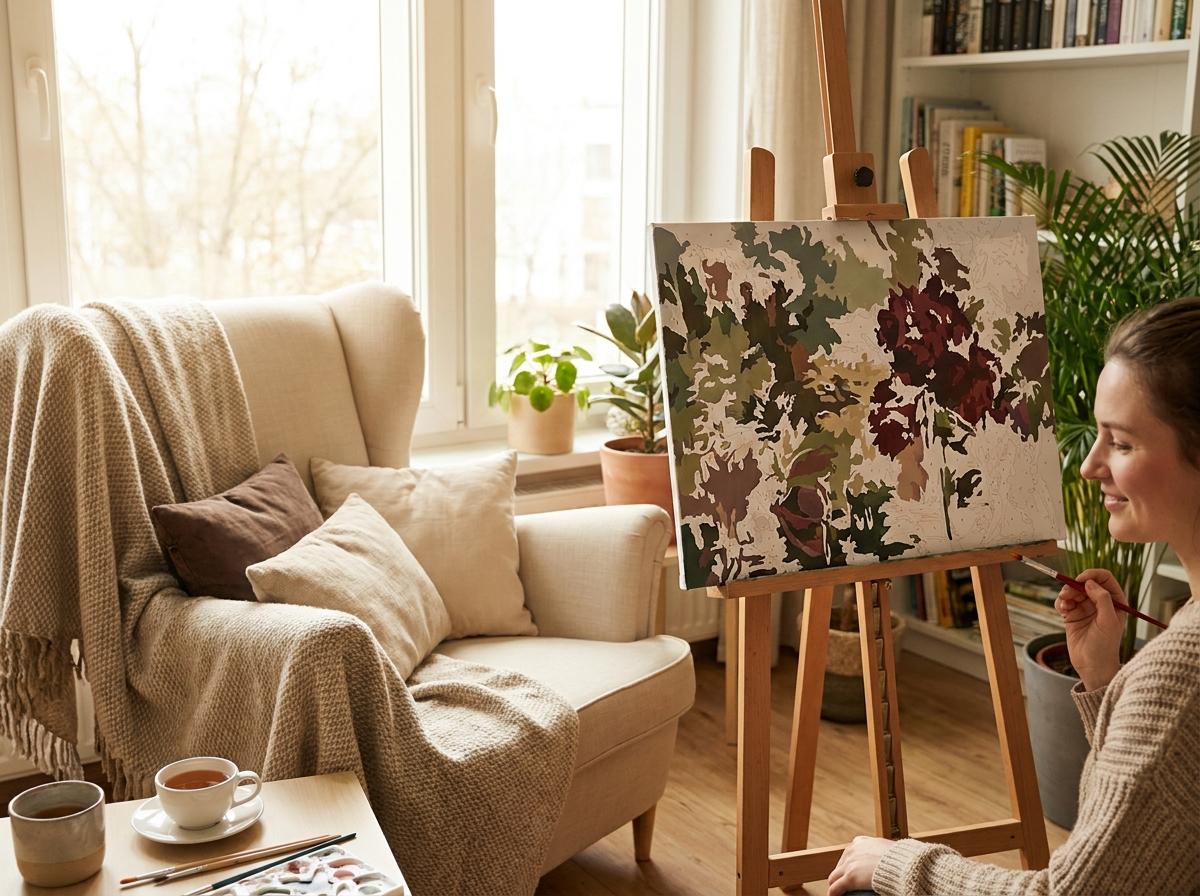
A 2025 meta-analysis published in the Journal of Psychiatric and Mental Health Nursing analysed 35 randomised controlled trials involving 3,167 participants. It found that visual art therapy produced significant reductions in anxiety. The structured, repetitive nature of guided art-making – the kind you find in a paint-by-numbers process – induces a focused mental state similar to meditation. Unlike passive entertainment such as streaming a show, this kind of active creation requires your full attention, which is what makes it effective for stress relief.
This is not abstract theory. The paint-by-numbers market reached $1.56 billion in 2024, growing at 7.1% CAGR through 2033, with more than 50 million kits sold annually. Grand View Research confirms that personalisation remains the dominant consumer preference in wall decor, reinforcing the idea that people value both the process and the product.
When your home is filled with objects you have made yourself, the space feels different. It’s not a showroom. It’s a collection of memories, decisions, and hours spent creating. For families looking for meaningful activities that produce lasting results, DIY craft projects for the home offer a practical starting point that pays off in both decor quality and shared experience. Making art together on a weekend afternoon can become a ritual that produces something beautiful for the wall.
Conclusion
The convergence of market trends, consumer psychology, and accessible creative tools has made personalised wall art one of the more notable developments in home decor. The data is clear: people want homes that reflect who they are, not what a catalogue tells them to buy.
Custom paint-by-numbers offers a rare combination. It produces gallery-ready wall art. It delivers the psychological benefits of making something with your hands. And it requires zero prior experience. Whether you are decorating a first flat or refreshing a family living room, the best wall art is the one you made yourself.