
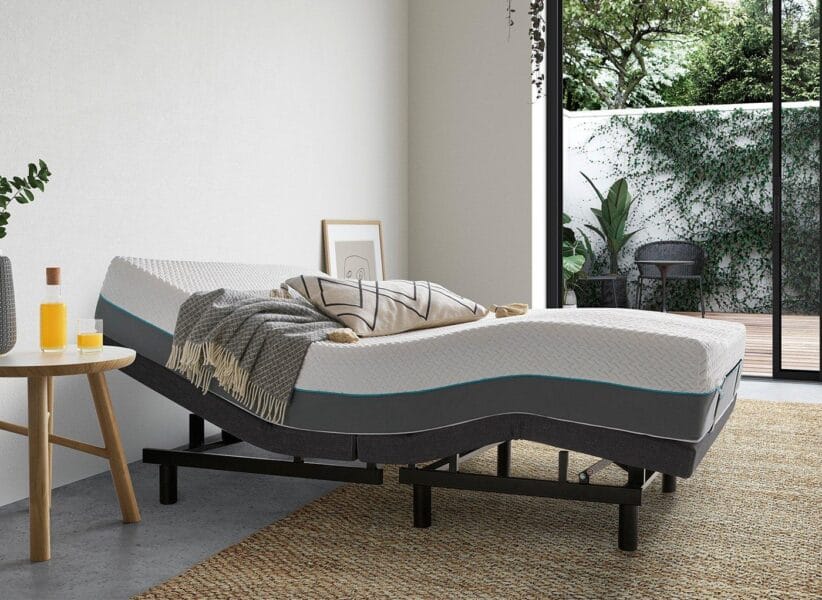
A beautiful bed can still produce an uncomfortable bedroom.
Better rest depends on a complete sleep system. This combines the bed frame, mattress, pillows, bedding, lighting, temperature, ventilation, acoustics, and room layout into one coordinated environment.
The Centers for Disease Control and Prevention recommends that most adults get at least seven hours of sleep. It also advises keeping the bedroom quiet, relaxing, dark, and cool.
The aim is not to fill the bedroom with technology. It is to remove the physical and environmental problems that can make rest more difficult.
Quick Facts About Complete Sleep Systems
| Element | What to consider | Why it matters |
|---|---|---|
| Bed frame | Stability, centre support, height, storage | Creates the structural base |
| Mattress | Firmness, support, materials, partner movement | Affects comfort and pressure distribution |
| Pillow | Loft, firmness, sleeping position | Supports the head and neck |
| Bedding | Weight, breathability, washability | Influences warmth and comfort |
| Layout | Circulation, access, furniture position | Makes the room easier to use |
| Lighting | Daylight, dimming, blackout control | Supports the light-dark cycle |
| Temperature | Cooling, heating, air movement | Prevents thermal discomfort |
| Ventilation | Fresh air, filtration, moisture control | Supports indoor air quality |
| Acoustics | External noise, vibration, room echo | Reduces environmental disturbance |
| Technology | Automated blinds, sensors, controls | Adds convenience when used discreetly |
What Is a Complete Sleep System?
A bed is a piece of furniture. A sleep system is the complete physical and environmental setup that supports rest.
Its physical layer includes:
- The bed frame or base
- The mattress
- The mattress protector
- Pillows
- Sheets, blankets, and duvets
Its environmental layer includes:
- Bedroom temperature
- Humidity and ventilation
- Light exposure
- Sound control
- Air quality
- Spatial planning
This distinction matters because replacing the mattress may not solve a bedroom problem caused by heat, noise, poor airflow, excessive light, or an unstable base.
A luxury sleep system should therefore be judged by how the whole room performs, not by the cost of one product.
Begin With the Needs of the Sleeper
The best sleep system starts with the person using it.
Consider body size, preferred sleeping position, sensitivity to heat, mobility, allergies, and whether the bed is shared. Partners may have different preferences for firmness, bedding weight, lighting, and temperature.
The system must also respond to real habits.
Someone who reads before sleeping needs focused bedside lighting. A person who rises during the night needs a safe route to the bathroom without intense overhead illumination.
Couples may benefit from separate reading lights, independent bedside storage, and bedding that reduces unwanted movement between sides.
These details can appear small during the design stage. In daily use, they often determine whether the bedroom feels calm or frustrating.
Build a Stable Structural Foundation
The bed frame is the load-bearing part of the sleep system.
It must support the mattress, sleepers, bedding, and any movement without excessive flexing, noise, or instability. Weak joints and poor centre support can affect how the mattress feels.
The base must also match the mattress manufacturer’s requirements. Some mattresses need closely spaced slats, while others are designed for solid, sprung, or platform foundations.
Always confirm:
-
- Internal frame dimensions
- Mattress compatibility
- Slat spacing
- Centre-support requirements
- Maximum load guidance
- Headboard stability
- Floor protection
- Warranty conditions
When comparing beds and bed frames, homeowners can review upholstered, wooden, divan, and Ottoman configurations. Storage choices include drawer and lift-up options, which can be useful where floor area is limited.
Storage should not be selected on capacity alone. Check whether drawers can open without hitting bedside tables, walls, or radiators.
Bed Height Affects Everyday Function
The combined height of the frame and mattress affects how easily a person can sit down and stand up.
An excessively low bed may look elegant but feel awkward for someone with limited mobility. A very high mattress can make the room feel visually crowded.
Measure the finished height before ordering. Mattress depth can significantly change the original proportions of a bed frame and headboard.
The top surface should feel comfortable when sitting at the edge. Feet should reach the floor without requiring the user to slide forward.
Select the Mattress as Part of the System
Mattress comfort is personal. Firmness labels are not perfectly consistent across brands, so testing remains important.
A randomized clinical trial involving people with chronic nonspecific lower-back pain found better outcomes with medium-firm mattresses than firm mattresses. However, this does not mean one firmness level is right for every person.
Consider:
- Support in the usual sleeping position
- Pressure around shoulders and hips
- Ease of changing position
- Edge stability
- Heat retention
- Partner movement
- Mattress weight
- Compatibility with the base
Do not judge a mattress through softness alone. A plush surface can still have strong underlying support, while a firm surface can feel uncomfortable without improving alignment.
Persistent pain, insomnia, snoring, or daytime exhaustion should be discussed with a qualified healthcare professional. Bedroom design cannot diagnose or treat a sleep disorder.
The Pillow Completes the Support Layer
A pillow must work with both the mattress and sleeping position.
Side sleepers often need more height because the shoulder creates greater distance between the head and mattress. Back and front sleepers may require different proportions.
Mattress softness also changes the required pillow height. When the shoulder sinks deeply into the mattress, less pillow loft may be needed.
This is why pillows should be selected after the mattress. Treating them as unrelated purchases can produce an uneven support system.
Choose Bedding for Thermal Control
Luxury bedding should feel pleasant without trapping excessive heat.
Consider fibre type, weave, fabric weight, duvet filling, and the number of layers. Removable layers offer more flexibility than one heavy covering.
The most useful arrangement often includes:
- A washable mattress protector
- Fitted and flat sheets
- A temperature-appropriate duvet
- A lighter blanket
- Separate throws for individual comfort
Avoid building the bed entirely for photography. Numerous heavy cushions and tightly tucked layers can become inconvenient during daily use.
Material quality should be evaluated through comfort, durability, washing requirements, and breathability. A high price does not automatically make a fabric suitable for every climate or sleeper.
Plan the Bedroom Around Clear Movement
The bed should not consume every available centimetre.
Leave enough space for comfortable movement, bed making, cleaning, and access to wardrobes. Drawers, cupboard doors, and curtains should open without conflict.
Private bedrooms are not generally required to follow public-building accessibility standards. However, the US Access Board’s 36-inch accessible-route benchmark provides a useful reference for generous, future-conscious circulation.
At least one side of the bed should remain easy to approach. Wider access on both sides is preferable in a shared bedroom.
Avoid placing the bed where its circulation route crosses a sharp furniture corner. Loose rugs and trailing charging cables can also create hazards at night.
Position the Bed With the Architecture
The headboard usually works best against a solid wall.
A solid wall gives the bed visual weight and provides a more reliable fixing point for integrated joinery, lighting, or upholstered panels.
Placing the bed beneath a window may restrict curtains, create drafts, and complicate headboard design. It may still work when the architecture and window height support the arrangement.
Check the location of:
- Supply and return vents
- Radiators
- Electrical outlets
- Wall switches
- Windows
- Doors
- External noise sources
The bed should not block airflow or make essential controls difficult to reach.
Use Light to Reinforce Day and Night
Light and darkness have a major influence on circadian rhythms. These rhythms help regulate sleep patterns, hormone release, appetite, and body temperature.
A complete lighting plan should provide bright, useful light during the day and softer illumination before sleep.
Use three layers:
Daylight Control
Natural morning light helps connect the bedroom with the daytime environment.
Use sheer curtains or adjustable blinds for privacy without permanently darkening the room. Blackout curtains or lined blinds can control streetlights and early sunrise when required.
Check the edges of blackout treatments. Light often enters around the sides, even when the main fabric is opaque.
Evening Lighting
Use dimmable bedside lamps, concealed lighting, or low-level wall lights during the evening.
Avoid depending on strong ceiling lighting before bed. The National Heart, Lung, and Blood Institute advises keeping the bedroom dark and avoiding bright light during the hour before sleep.
Controls should be reachable from the bed and entrance. Nobody should need to cross a dark room after turning off the final light.
Night Lighting
Where night lighting is necessary, keep it low and directional.
A concealed light near floor level can support safe movement without flooding the entire bedroom. Avoid bright indicators on chargers, televisions, alarm clocks, and smart devices.
Control Temperature, Ventilation, and Humidity
A bedroom may appear calm while performing poorly at night.
Heat can accumulate around heavy curtains, upholstered walls, thick bedding, and poorly ventilated bed bases. The result may be uncomfortable even when the rest of the home feels suitable.
The CDC and NHLBI both recommend keeping bedrooms cool. Neither presents one universal temperature because comfort varies by person and conditions.
The ventilation system should provide fresh air without creating a strong draft across the bed.
As of 2026, ANSI/ASHRAE Standard 62.2-2025 is the current residential ventilation and indoor air quality standard. It addresses whole-home ventilation, local exhaust, and source control.
Keep Humidity Within a Sensible Range
The US Environmental Protection Agency recommends maintaining indoor relative humidity between 30% and 50%.
Excess humidity can encourage condensation, mould, and dust mites. Very dry air may also feel uncomfortable.
Use a simple humidity monitor before adding a humidifier or dehumidifier. The correct response depends on the building, climate, ventilation, and season.
Do not push a bed directly against a damp external wall. Leave enough access to inspect and clean behind major furniture.
Design for Quiet, Not Complete Silence
Noise is one of the most overlooked parts of bedroom design.
The World Health Organization identifies excessive environmental noise as a cause of sleep disturbance. Its earlier community-noise guidance recommends less than 30 dB(A) inside bedrooms at night for good-quality sleep.
Begin with the noise source.
Road traffic may require upgraded glazing and perimeter seals. Hallway noise may be reduced through a solid door, acoustic seals, and quieter hinges.
Inside the room, soft materials can reduce echo:
- Curtains
- Rugs
- Upholstered headboards
- Fabric wall panels
- Padded seating
These finishes absorb reflected sound but may not stop noise travelling through walls or floors. Structural sound transmission requires construction-based solutions.
A padded headboard can also soften the wall behind the sleeper. However, it should be securely fixed and made from materials that can be maintained.
Select Low-Emitting and Maintainable Materials
Bedrooms contain large areas of textiles, timber products, adhesives, foam, paint, and furniture.
The EPA notes that furnishings and building materials can release indoor pollutants. It recommends considering low-emitting products and providing adequate ventilation.
When installing a new sleep system:
- Ventilate the bedroom
- Follow product instructions
- Wash suitable bedding before use
- Avoid storing paint or chemicals nearby
- Choose cleanable upholstery
- Control dust beneath the bed
- Repair water leaks promptly
The EPA also recommends increased ventilation after introducing new sources of formaldehyde into a home.
Luxury materials should be selected for their long-term indoor performance, not only their showroom appearance.
Add Technology Only Where It Reduces Effort
Smart technology can improve a sleep system when it operates quietly and reliably.
Useful options include:
- Motorised blackout blinds
- Dimmable lighting scenes
- Temperature and humidity sensors
- Silent ceiling fans
- Automated evening lighting
- Bedside charging inside drawers
- Leak or air-quality sensors
Avoid devices with bright screens, audible alerts, or unnecessary status lights.
Manual controls should remain available. The bedroom must still function when the internet, an app, or a connected device fails.
Sleep trackers may provide useful personal observations, but they should not replace professional medical assessment.
Common Sleep System Design Mistakes
The most common mistake is spending heavily on a mattress while ignoring the room around it.
Other problems include:
- Using an incompatible bed base
- Choosing the bed before measuring circulation
- Blocking ventilation outlets
- Installing only bright overhead lighting
- Selecting bedding without considering temperature
- Placing the bed beside a noisy wall
- Ignoring mattress and frame height
- Adding storage that cannot open fully
- Using too many connected devices
- Choosing upholstery that is difficult to clean
A successful system is balanced. No single element should create problems for another.
Frequently Asked Questions
What is the difference between a bed and a sleep system?
A bed usually refers to the frame, base, and mattress. A sleep system includes those elements plus pillows, bedding, lighting, temperature, ventilation, acoustics, air quality, and bedroom layout.
What should a complete sleep system include?
A complete sleep system should include a stable bed frame, compatible mattress, suitable pillows, adaptable bedding, controlled lighting, fresh air, comfortable humidity, reduced noise, and clear circulation around the bed.
Is a firm mattress always better?
No. Mattress comfort and support depend on the sleeper, sleeping position, body type, and health needs. Research involving chronic nonspecific lower-back pain found better results from medium-firm mattresses than firm ones, but individual requirements vary.
What is the best bedroom temperature for sleep?
There is no single temperature that suits everyone. Major health authorities recommend keeping the bedroom comfortably cool. Bedding, clothing, humidity, airflow, age, and personal preference also affect thermal comfort.
Should a bed have storage underneath?
Under-bed storage can improve space efficiency, especially in smaller rooms. However, drawers and lift-up mechanisms need adequate clearance. The base must also remain stable, ventilated, and compatible with the mattress.
Can bedroom design improve sleep?
Bedroom design can reduce avoidable disturbances such as excessive light, noise, heat, clutter, and poor airflow. It cannot guarantee better sleep or treat a medical condition, but it can create a more supportive environment.
Final Design Perspective
A complete sleep system is not defined by one expensive mattress or elaborate bed.
It succeeds when structure, comfort, temperature, light, sound, air, and movement are considered together. Each element should support the others.
From an architectural perspective, the best bedrooms are calm because their practical problems have already been resolved. The room feels simple because the design work behind it is thorough.