
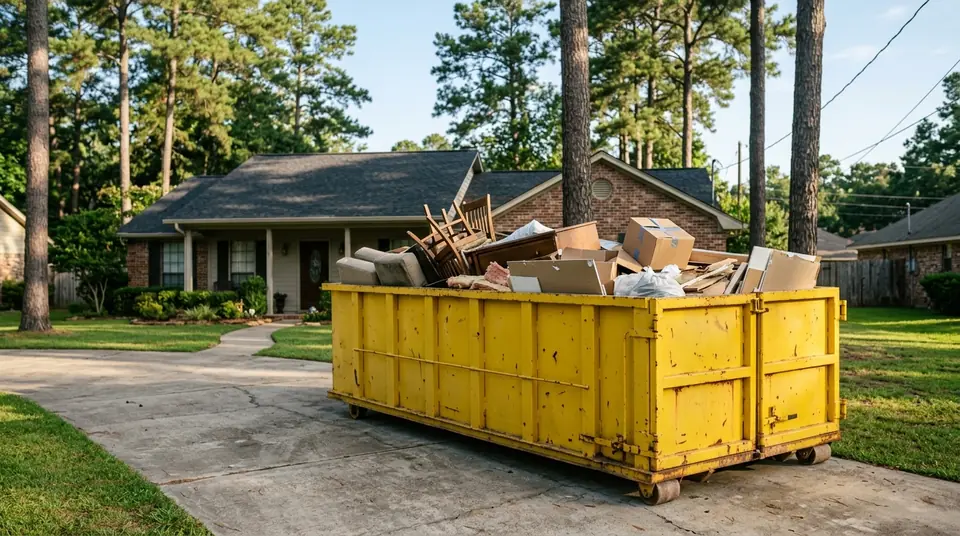
The headline price for a Dumpster Rental tells you only part of the story. Your final bill can change with size, weight, days on site, and placement. What you load into the dumpster can shift it too.
Size sets the base price
Dumpsters are generally priced first by volume. That volume is measured in cubic yards, and a larger dumpster will usually cost more to drop off and haul away. That part is straightforward.
The scope of the job determines the size you need. A small declutter project and a full-house cleanout have very different needs, and homeowners can run into trouble when they guess. Order too small and you may pay for a second haul. Order too large and you pay for space you never use.
Don’t pay for air.
Walk the company through each room and the garage before you book. Photos can help the provider understand the amount and type of material involved. Sizes and terms vary by company and area, so ask what fits your load rather than choosing by the dumpster’s name alone.
Break down what you can before loading. Bed frames and shelving take up far less room when disassembled than when left whole. Bag loose clothing and small goods so they can fill the gaps between larger items.
Weight matters more than volume
This is where many cleanout bills can shift. Your quoted price may include a weight allowance, which is the amount of debris covered by the base rate. The truck is weighed at the disposal site, and material above the stated allowance may be billed as an overage.
Household clutter is often relatively light for the space it takes up. Furniture and boxes can fill a dumpster without adding as much weight as dense building materials. Drywall and tile change the math quickly because a half-full dumpster can still exceed its weight limit.
You can’t control disposal rates in your area, but you can control what goes into the container. Keep heavy remodel debris apart from general cleanout junk when possible, and tell the company what you’re tossing. Allowance levels and overage charges vary by company and locality, so get those numbers in writing before the dumpster arrives.
Disposal charges may be included in the quote or reflected as a separate cost. Landfill and transfer station rates differ by area, and heavier loads can cost more to dump. That’s one reason two same-size dumpsters may have different totals. Ask how disposal is calculated in your quote.
What the quote actually holds
A base rate rarely tells the full story. Some quotes bundle trucking and disposal, while others list those costs separately. The best number for a useful comparison is the all-in price.
Ask for each charge in writing before you agree. Delivery and pickup should appear as separate lines or be included in one flat total. When speaking with a local provider such as JW & CO, ask about the available dumpster options and the size, weight, rental period, pickup, and disposal terms included in the quote.
Watch for smaller lines that can change the total. Fuel and environmental charges differ from place to place, while same-day swaps or rushed pickup may cost extra. If one bid is far below the rest, ask what the quoted price leaves out.
Flat totals and base-plus-line-item quotes can both work. A vague quote can’t. Get the weight terms, included days, pickup details, and disposal costs in writing. Charges vary by company and locality, so a written breakdown gives you a fair way to compare providers.
Days on site and where it sits
You don’t rent a dumpster indefinitely. Your quote covers a set number of days, and that window varies by company and area. Keep it longer and you may pay daily extension charges. The fix is simple.
Have the dumpster dropped off only when you’re ready to load it. Stack bags and furniture ahead of time if you can, then fill the container and call for pickup promptly. Idle days can add avoidable costs when the included rental period ends.
Placement matters too. A spot on private property may avoid the permit requirements that can apply to street placement, but local rules vary. Street placement may require approval and added costs, so clarify who handles the paperwork before the truck arrives. Some companies can handle the permit for a fee.
Extensions are normal when cleanouts run long because sorting takes more time than expected. The cost is easier to manage when you know the daily rate before you begin. Put that rate in the written quote too.
What you load and what stays out
Not all debris can go into every dumpster. Paint, chemicals, tires, and electronics may need separate handling depending on the provider and local disposal rules.
Accepted materials vary by company and locality, so ask for the current list. Don’t hide restricted items under household junk. The load may be rejected or returned for sorting, leaving you responsible for the additional charge.
Keep the load level with the top edge rather than piling material above it. Heavy debris mixed with light junk also makes weight harder to predict, so sort as you go if your project includes both.
Timing can nudge the price or affect availability. Busy seasons fill schedules quickly in some areas, and booking early gives you more choice of dumpster size and drop-off day. It won’t change the weight or disposal cost, but it may prevent a delay.
Sort everything before the dumpster arrives. Set aside donations and items that require a separate drop-off. What remains will load faster, and you won’t pay to haul away belongings you could give away.
Price a Dumpster Rental by the total rather than the headline rate. The right size, a properly sorted load, a short stay, and a written breakdown will help keep the final number where you expect it.
