
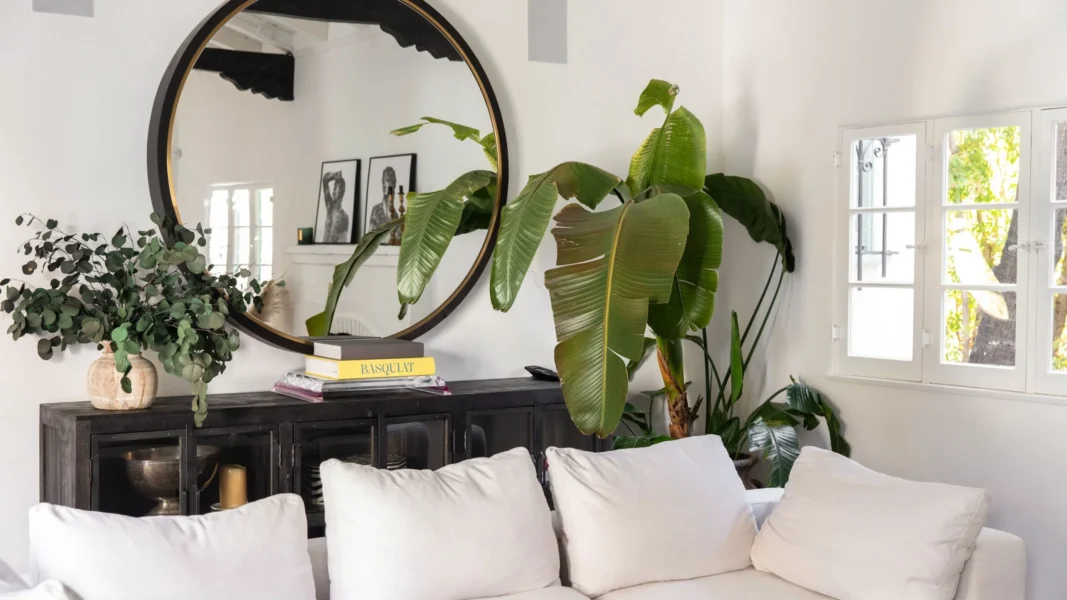
The right wall mirror should suit the size of the wall, complement the room’s furniture and reflect something attractive or useful. As a general rule, choose a mirror that is approximately two-thirds to three-quarters the width of the furniture positioned beneath it. Round mirrors soften rooms with straight lines, while rectangular and arched mirrors create height and structure.
Why Wall Mirrors Matter in Interior Design
A wall mirror is both a functional household item and an interior-design feature. It can reflect natural light, make a compact room feel more open and create a focal point without occupying floor space. Australian homeowners can explore wall mirrors in Australia in round, oval, arched, rectangular, frameless and decorative designs. The best option depends on where the mirror will be installed and what purpose it needs to serve.
Quick Wall Mirror Selection Guide
| Room | Recommended mirror | Main consideration |
|---|---|---|
| Bathroom | Round, oval, rectangular or LED mirror | Moisture suitability, lighting and vanity width |
| Living room | Large decorative, round or arched mirror | Scale and what the mirror reflects |
| Bedroom | Full-length, wall-mounted or dressing mirror | Viewing height and available wall space |
| Hallway | Slim rectangular, round or arched mirror | Depth, natural light and walking clearance |
| Dining room | Wide statement or decorative mirror | Relationship to the dining table or sideboard |
| Entryway | Round, pill-shaped or mirror with shelf | Convenience and proportion to the console table |
How to Select the Correct Wall Mirror Size
Start by measuring both the available wall and any furniture beneath the proposed mirror. A mirror placed above a vanity, console, fireplace or sideboard usually looks balanced when it is narrower than the furniture.
- Above furniture: Aim for approximately two-thirds to three-quarters of the furniture’s width.
- On an empty feature wall: A larger mirror can work as the main decorative element, provided sufficient space remains around it.
- In a narrow hallway: Choose a slim mirror that adds depth without visually overwhelming the passage.
- For a full-body reflection: Select a full-length mirror and position it where the user can stand at a comfortable viewing distance.
Before ordering, mark the proposed dimensions on the wall with removable painter’s tape. This provides a more reliable sense of scale than estimating from product photographs alone.
Which Wall Mirror Shape Is Best?
Round mirrors
Round mirrors soften rooms dominated by rectangular furniture, tiles and cabinetry. They work particularly well above bathroom vanities, entry consoles and compact fireplaces.
Arched mirrors
Arched mirrors combine the structure of a rectangular mirror with a softer curved top. Their vertical shape draws the eye upwards and can help a room appear taller.
Rectangular mirrors
Rectangular mirrors offer the greatest usable reflective area. They suit bathrooms, bedrooms, hallways and living spaces and can usually be installed vertically or horizontally when the mounting design permits.
Oval and pill-shaped mirrors
Oval and pill-shaped mirrors provide softer lines while retaining vertical or horizontal length. They suit contemporary bathrooms, bedrooms and narrow walls.
Organic and irregular mirrors
Organic mirrors use asymmetrical curves to create a relaxed, artistic focal point. They are best treated as decorative statement pieces rather than purely functional mirrors.
Framed or Frameless Wall Mirror?
Framed mirrors add colour, texture and definition. Black frames suit contemporary and industrial interiors, gold and brass finishes introduce warmth, while timber frames complement natural, coastal and Scandinavian-style rooms. Frameless mirrors create a clean, understated appearance and are especially useful when the surrounding tiles, tapware or cabinetry should remain the main visual feature. They are a practical choice for modern bathrooms and minimalist interiors.
Where Should a Wall Mirror Be Positioned?
Position the centre of a decorative mirror close to average eye level, then adjust it according to the furniture and people using the space. Bathroom mirrors should accommodate the heights of regular users rather than being centred only according to the wall. Consider what will appear in the reflection. A mirror facing a window, artwork or attractive part of the room can improve brightness and visual depth. Avoid placing it where it mainly reflects clutter, harsh lighting or an unfinished area.
Wall Mirror Safety and Installation
Mirror weight, wall construction and mounting hardware must be considered before installation. Large and heavy mirrors should be fixed into suitable structural support using hardware designed for the mirror and wall type. Professional installation is advisable when the mirror is oversized, custom-made or being installed in a difficult location. Mirror City supplies ready-made and custom mirrors to Australian customers and offers professional mirror and glass installation within the Sydney region. Installation availability should be confirmed before ordering a custom project.
Frequently Asked Questions
What size mirror should go above a console table?
A mirror measuring approximately two-thirds to three-quarters of the console table’s width usually creates a balanced appearance. It should not normally extend beyond both sides of the furniture.
Do large wall mirrors make a room look bigger?
A large mirror can make a room feel brighter and more open by reflecting light and extending visual depth. The effect is strongest when it reflects a window or an uncluttered area.
Are round mirrors suitable for bathrooms?
Yes. Round mirrors are popular above bathroom vanities because their curved form balances straight cabinetry and tiles. Ensure the diameter provides adequate reflection for the people using the vanity.
Should a bathroom mirror be wider than the vanity?
In most layouts, the mirror should be the same width as or slightly narrower than the vanity. An intentionally oversized mirror can work, but it should align with the overall bathroom design.
What wall mirror style is the most versatile?
A simple round, arched or rectangular mirror with a black, timber or neutral metal frame is generally the most versatile. These designs can remain suitable even when surrounding furniture and colours change.
Final Recommendation
Choose a wall mirror by considering size first, followed by shape, frame finish and placement. Measure the available space, compare the mirror with nearby furniture and check what it will reflect. A correctly proportioned mirror should improve both the function and visual balance of the room rather than simply filling an empty wall.
