
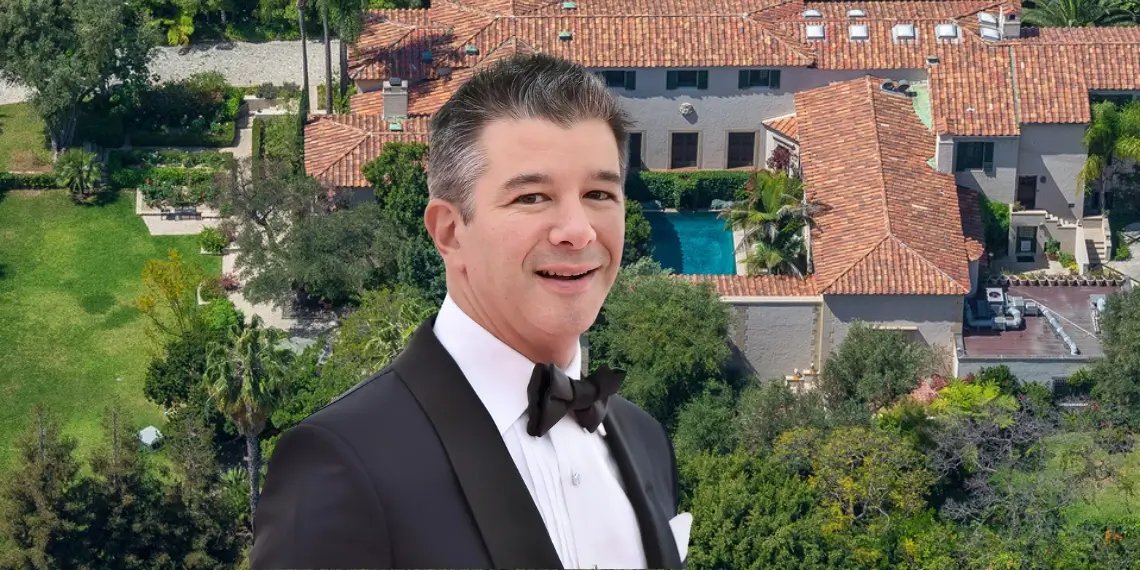
Most billionaires buy waterfront properties for the view. Travis Kalanick bought his Lake Austin house because he wanted to go waterskiing every weekend — and then he never left. The Uber co-founder, who quietly purchased a waterfront home on Lake Austin roughly five years ago, has now officially made it his primary residence, joining the growing list of tech elites trading California for Texas.
Kalanick confirmed the move on the TBPN podcast in March 2026, stating plainly: “I’m Austin now. I own a place in Austin. I’ve owned it for five years.” The announcement sent ripples through both the real estate and tech worlds, not because of the property itself, but because of what it signals about the ongoing exodus of high-net-worth individuals from Silicon Valley.
What makes the Travis Kalanick Lake Austin house particularly noteworthy is the timeline. His formal residency changes on December 18, 2025, came just 14 days before California’s proposed billionaire tax residency deadline — a detail that transforms this from a simple lifestyle story into a calculated financial and strategic decision.
Quick Facts: Travis Kalanick’s Lake Austin Residence
| Detail | Information |
| Owner | Travis Kalanick, Uber co-founder |
| Property Type | Waterfront residence on Lake Austin |
| Location | Lake Austin, Texas (~20 minutes from downtown) |
| Ownership Duration | Approximately 5 years (purchased circa 2021) |
| Primary Residence Status | Official as of December 18, 2025 |
| Previous California Home | Bel-Air estate, $43.3 million (2020) |
| Estimated Net Worth | $3.5 billion (Forbes, 2026) |
| Current Venture | CEO of Atoms (robotics, formerly CloudKitchens) |
| Key Attraction | Waterskiing, proximity to Austin’s tech corridor |
| Notable Neighbors | Elon Musk, Joe Rogan, David Sacks |
Why This Move Matters More Than You Think
On the surface, a billionaire buying a lake house in Texas barely registers as news anymore. Elon Musk did it. Joe Rogan did it. So what makes the Travis Kalanick Lake Austin house significant enough to dominate headlines in 2026?
The California Tax Factor
Kalanick’s residency change on December 18, 2025, is the detail that transforms this from a lifestyle piece into a financial story. California’s proposed billionaire tax — which has not yet qualified for the November 2026 ballot — would impose a one-time levy on ultra-high-net-worth residents. By establishing Texas residency before the January 1, 2026 deadline, Kalanick effectively insulated himself from potential tax liability worth hundreds of millions of dollars.
The timing was not casual. According to the Los Angeles Business Journal, Kalanick moved out “just two weeks before he would have qualified” for the tax. In real estate terms, this represents the kind of strategic asset management you typically see in corporate relocations, not personal home purchases. The Lake Austin house was already in his portfolio — he simply accelerated his timeline.
From a design and architecture perspective, what is particularly interesting is that Kalanick already owned the property for years before converting it to a primary residence. This suggests the home was purchased with long-term intent, functioning initially as a weekend retreat before evolving into a full-time living situation. Properties that serve this dual purpose — vacation home turned primary — often reflect a different design philosophy than homes purchased outright for daily living.
Why Lake Austin Specifically
Lake Austin has emerged as the premier waterfront corridor for Texas’ tech elite, and the reasons go beyond scenery. The lake’s controlled water levels — maintained by the Lower Colorado River Authority — make it one of the most consistent bodies of water in the state for recreational boating and waterskiing, which Kalanick specifically mentioned as a draw.
The 20-minute proximity to downtown Austin is another critical factor. Unlike Lake Travis, which can require significantly longer drives from the city center, Lake Austin waterfront properties offer what urban planners call the “20-minute city” advantage: you get waterfront seclusion without sacrificing access to Austin’s business districts, restaurants, and cultural amenities.
For someone overseeing a multi-billion-dollar robotics company, this balance between privacy and accessibility is not just a lifestyle preference — it is a functional requirement. The lake corridor provides physical separation from the daily noise of a rapidly growing tech hub while maintaining the connectivity that business demands.
Inside the Lake Austin Property
Public records have not disclosed the exact square footage, purchase price, or architectural specifications of the Travis Kalanick Lake Austin house. However, from an architectural and design analysis standpoint, several observations about the property and its market context are worth noting.
Architectural Context of Lake Austin Waterfront
Lake Austin waterfront estates typically range from $10 million to $50 million, with the most recent high-profile listing — a 7,000-square-foot compound — asking $50 million. These properties generally share several defining characteristics: deep-water docks, expansive outdoor living spaces, and floor-to-ceiling glass walls oriented toward the water.
The architectural styles along Lake Austin vary considerably, from contemporary minimalism with flat roofs and steel framing to more traditional Texas Hill Country stone construction. Given the caliber of the owner and the purchase timeline (circa 2021), it is reasonable to expect the property features high-end finishes, open-concept living areas designed to maximize lake views, and outdoor entertainment spaces suitable for both casual weekends and hosting.
What separates Lake Austin properties from other waterfront markets is the emphasis on indoor-outdoor integration. Texas’ climate allows for year-round outdoor living, and the most well-designed homes on the lake feature retractable glass walls, covered terraces, and outdoor kitchens that effectively double the usable living area. For a property owner who values waterskiing and lake recreation, the dock and waterfront access are not amenities — they are the central organizing principle of the home’s design.
What This Means in Real Terms
From a material quality perspective, Lake Austin’s luxury tier demands construction that can withstand both humidity and flooding concerns. Homes in this corridor typically feature reinforced foundations, impact-resistant glazing, and drainage systems engineered for flash flood conditions. The investment in these structural elements often runs into the millions, and they are non-negotiable for properties at this price point.
The practical implication of owning a Lake Austin waterfront estate is that you are buying into a market with extremely limited inventory. There are only so many homes with direct lake access, private docks, and proximity to the city center. This scarcity is what drives the price appreciation that makes these properties attractive not just as residences, but as long-term real estate investments.
From Uber to Atoms: The Business Behind the Move
Kalanick’s relocation to Texas cannot be fully understood without considering his current business venture. After leaving Uber in 2017, he became CEO of City Storage Systems, the parent company of CloudKitchens, which operated ghost kitchen facilities in cities worldwide. The Wall Street Journal reported that entities tied to Kalanick spent more than $130 million on real estate acquisitions for CloudKitchens.
In March 2026, Kalanick rebranded the company as Atoms, unveiling it as a robotics firm focused on food automation, mining, and transportation. The company has been operating in stealth for eight years and has attracted investment from Microsoft and the Saudi sovereign wealth fund. Its estimated valuation stands at approximately $15 billion, according to Business Journal reports.
The connection to Austin is natural. The city has become a major hub for robotics and advanced manufacturing, with Tesla’s Gigafactory Texas and a growing ecosystem of automation startups. By establishing primary residence near his business interests, Kalanick is positioning himself at the center of this emerging industry cluster.
Austin’s Growing Billionaire Corridor
The Travis Kalanick Lake Austin house is not an isolated purchase. It is part of a broader pattern of tech wealth concentrating along the Lake Austin waterfront. Joe Rogan purchased a $14.4 million estate on the lake in late 2024. Elon Musk maintains a presence in the Austin area through Tesla and SpaceX operations. David Sacks, appointed as the Trump administration’s crypto and AI czar, opened an Austin office and relocated to the city in late 2025.
This concentration of high-net-worth individuals has transformed Lake Austin from a desirable residential area into what real estate analysts call a “billionaire corridor” — a stretch of waterfront where proximity to other influential figures is itself part of the property’s value proposition. For residents, the practical benefit is straightforward: living near peers who share similar security requirements, lifestyle preferences, and privacy expectations creates a community dynamic that is difficult to replicate elsewhere.
As of recent reports, Lake Austin waterfront properties continue to appreciate, driven by limited inventory and sustained demand from tech executives relocating from higher-tax states. The trend shows no signs of slowing, with multiple corporations — including Oracle, Hewlett Packard Enterprise, and Chevron — also relocating headquarters to Texas.
Frequently Asked Questions
Does Travis Kalanick still own his Bel-Air mansion?
Public records as of 2026 have not confirmed a sale. Kalanick purchased the Bellagio Estate in Bel-Air for $43.3 million in 2020, and it remains unclear whether he has listed or sold the property since making Texas his primary residence.
How much did Travis Kalanick pay for his Lake Austin house?
The exact purchase price of the Lake Austin property has not been publicly disclosed. Comparable waterfront estates in the area typically range from $10 million to $50 million, depending on size and features.
Why did Travis Kalanick move to Texas?
Kalanick cited his love of waterskiing and proximity to Austin as personal reasons. His move on December 18, 2025, came just 14 days before California’s proposed billionaire tax residency deadline of January 1, 2026.
What is Travis Kalanick’s new company, Atoms?
Atoms is a robotics company rebranded from City Storage Systems (CloudKitchens). It focuses on specialized automation for food, mining, and transport industries. The company has been operating in stealth for eight years and is valued at approximately $15 billion.
Who are some other tech billionaires living near Lake Austin?
Austin’s Lake Austin corridor has attracted several high-profile residents, including Elon Musk (Tesla, SpaceX), Joe Rogan ($14.4 million Lake Austin mansion), and David Sacks, who relocated to Austin ahead of California’s proposed wealth tax.
