
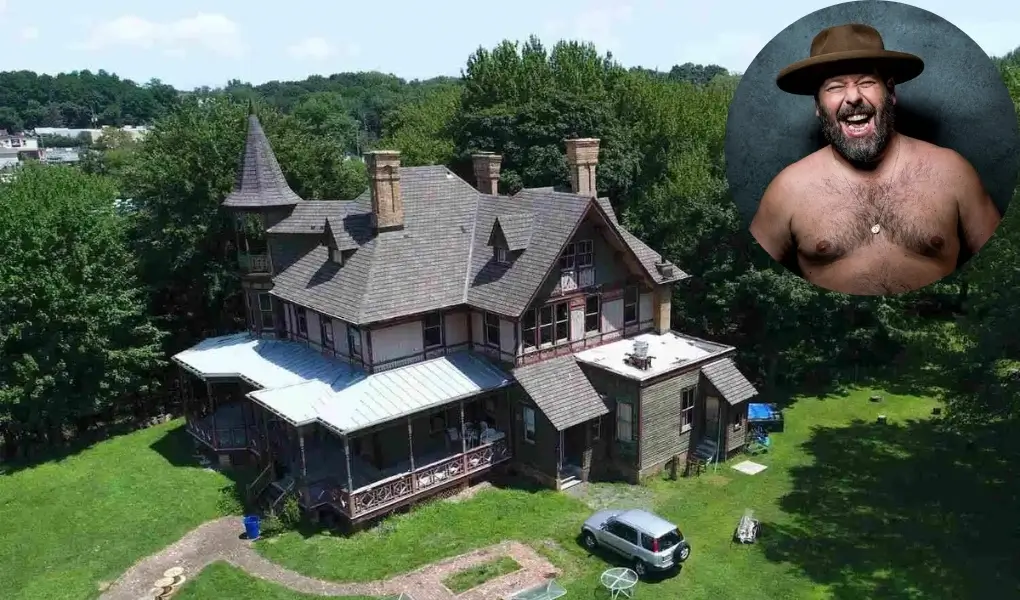
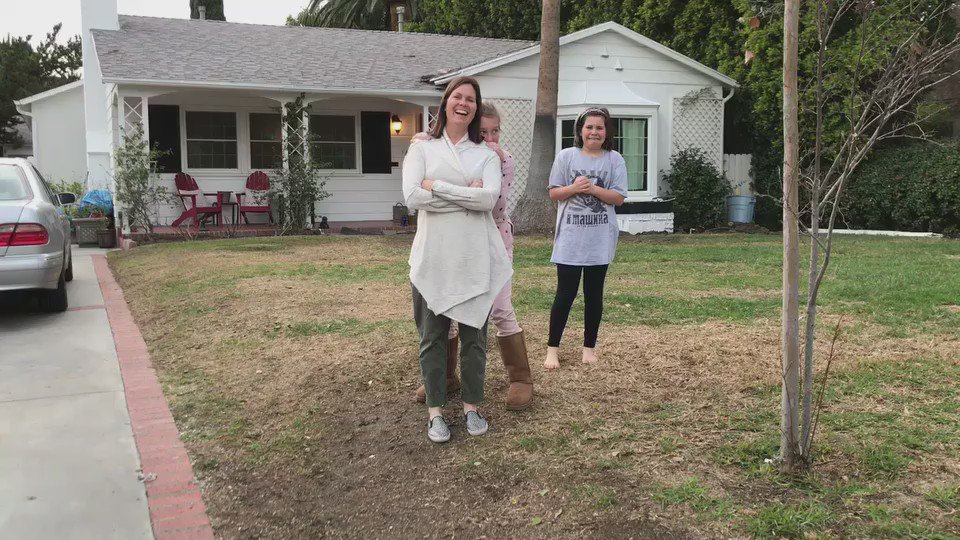
Most celebrity homes in Los Angeles are sprawling estates behind gated walls in Beverly Hills or Bel Air. Bert Kreischer took a different path. The stand-up comedian, podcast host, and star of Netflix’s “The Machine” lives in a modest ranch-style house in Valley Village, a quiet residential neighborhood in the San Fernando Valley.
The Bert Kreischer house, located at Agnes Avenue, was purchased in 2010 for $529,000. Today, it holds an estimated value of $1.5 to $2 million, reflecting both Los Angeles real estate growth and the functional upgrades Kreischer has invested in over the years, including a custom-built podcast studio that has become the operational hub for Berty Boy Productions.
What makes this property interesting is not luxury for its own sake. It is a case study in how a working entertainer adapted a standard mid-century home into a multi-function creative space without losing its residential character.
Quick Facts: Bert Kreischer’s Valley Village Home
| Feature | Details |
|---|---|
| Location | Agnes Avenue, Valley Village, Los Angeles, CA 91607 |
| Purchase Year | 2010 |
| Purchase Price | $529,000 |
| Estimated Value (2026) | $1.5 – $2 million |
| Property Style | Ranch-style single-family home |
| Square Footage | Approximately 1,426 sq ft |
| Bedrooms / Bathrooms | 2 bedrooms, 1 bathroom |
| Notable Feature | Custom Berty Boy Productions podcast studio |
| Owner | Albert C. Kreischer III (Kreischer Family Trust) |
TLDR
Bert Kreischer has owned a ranch-style home in Valley Village, Los Angeles since 2010, purchasing it for $529,000. The two-bedroom, 1,426-square-foot property is now estimated to be worth $1.5–$2 million. Its most distinctive feature is a custom-built podcast studio added around 2020, which serves as the headquarters for Berty Boy Productions, the media company Kreischer runs with his wife, LeeAnn. The home reflects a practical, livable approach rather than celebrity excess.
A Brief History of the Kreischer Family Residence
Bert Kreischer purchased the Valley Village property in 2010, well before his mainstream breakout with the viral “The Machine” comedy bit and the subsequent Netflix film adaptation. At the time, the $529,000 price tag was typical for the area, though it would be considered a bargain by today’s standards.
The home is held under the Kreischer Family Trust, with public records listing Albert C. Kreischer III as the owner. Unlike many entertainers who cycle through properties as their careers escalate, Kreischer has maintained this residence for over fifteen years, a decision that says something about his approach to real estate: stability over spectacle.
Previous homes in Kreischer’s portfolio are not well-documented in public records. There have been unverified rumors of a second property in Santa Barbara, but no credible sources have confirmed this. What is clear is that the Valley Village house has served as the family’s primary residence throughout Kreischer’s rise from club comic to arena headliner.
Key Features and Property Layout
The Ranch-Style Architecture
The home follows a classic ranch-style layout, a design idiom that defined much of the San Fernando Valley’s residential construction during the mid-twentieth century. Ranch homes are characterized by single-story horizontal massing, low-pitched roofs, and an emphasis on indoor-outdoor flow.
From a design perspective, the ranch layout offers genuine practical advantages. The absence of stairs makes the floor plan accessible and efficient. The horizontal orientation typically allows for better natural light distribution across the living spaces, assuming the home is oriented properly on its lot. At 1,426 square feet, the floor plan prioritizes functional use of space over grandeur.
What stands out to me is how this modest footprint has been adapted. Many celebrity homes treat additional rooms as afterthoughts, added on without integrating them into the home’s spatial logic. Kreischer’s renovation, particularly the podcast studio, appears to have been designed with consideration for how the spaces connect and function together.
The Berty Boy Podcast Studio
The most architecturally significant addition to the property is the custom podcast studio, built under the umbrella of Berty Boy Productions and completed around November 2020. Kreischer announced the project on Instagram at the time, signaling a strategic shift toward in-house content production.
The studio is not a repurposed closet or a casual setup. It is a purpose-built recording environment, which means it likely incorporates acoustic treatment, sound isolation, and professional-grade equipment infrastructure. These are not features you can simply add to a room without deliberate construction planning, particularly in a home that shares walls with neighboring properties in a dense residential neighborhood.
LeeAnn Kreischer also maintains her own recording space in the home for her podcast, “Wife of the Party.” The fact that two separate studios were accommodated within a 1,426-square-foot home speaks to thoughtful space allocation. From a renovation standpoint, this likely required reconfiguring existing interior walls or converting a garage, either of which demands permits and structural planning.
The Berty Boy studio has evolved beyond a personal recording space. It now functions as a production hub for multiple shows, including Bertcast, Something’s Burning, and segments of 2 Bears 1 Cave. This transformation from residential home to dual-purpose live-work property is a trend I have observed increasingly among content creators who need professional-grade facilities without the overhead of commercial leases.
Architectural and Design Analysis: What Competitors Miss
Most coverage of the Bert Kreischer house focuses on surface-level details: the purchase price, the square footage, the celebrity name. What is rarely discussed is how the property fits into the broader story of San Fernando Valley residential architecture and how it reflects a pragmatic approach to celebrity homeownership.
The ranch-style home type found throughout Valley Village was built during a period when Los Angeles was expanding rapidly into the Valley. These homes were designed for middle-class families, not entertainers. They feature practical materials, straightforward layouts, and construction methods that prioritized affordability over permanence. The original materials in homes of this era typically include wood-frame construction, stucco or lap siding exteriors, and asphalt shingle roofing.
What Kreischer has done with this property is instructive. Rather than demolishing and rebuilding, which would have been the default move for a celebrity of his earning power, he incrementally upgraded the home’s function. The podcast studio addition represents the single most significant structural investment, and it was driven by professional necessity, not aesthetic ambition.
This approach has real advantages. Maintaining the original structure preserves the neighborhood’s architectural character, which matters for community continuity and long-term property values. Incremental upgrades are also more cost-effective than full-scale rebuilds, particularly when the goal is functional improvement rather than luxury signaling.
The home’s modest size by celebrity standards is also worth noting. At two bedrooms and one bathroom, it is smaller than many starter homes in comparable Los Angeles neighborhoods. This has led to some public curiosity about why a performer of Kreischer’s stature has not upgraded to a larger estate. The answer likely lies in practicality: the home works for how the family actually lives, and the studio investment has made it professionally sufficient as well.
Valley Village Real Estate Context (2026)
Valley Village has emerged as one of the more compelling value propositions in Los Angeles real estate. As of 2026, the neighborhood’s average home value sits at approximately $1.24 million, with some estimates showing an 18% year-over-year increase according to recent market data. This makes the Kreischer property’s estimated $1.5–$2 million range plausible, particularly given the functional upgrades and the studio addition.
The broader San Fernando Valley market has experienced notable appreciation since 2010, when Kreischer purchased his home for $529,000. Median home prices in the region have roughly tripled over that period, driven by limited inventory, proximity to major studios and production facilities, and a general migration of buyers priced out of the Westside. Valley Village specifically has benefited from its location adjacent to Sherman Oaks and North Hollywood, both of which command premium prices.
For context, a comparable ranch-style home in Valley Village today would list well above the 2010 purchase price. The combination of neighborhood appreciation and Kreischer’s property improvements makes the current estimated value reasonable, even without accounting for the speculative premium that sometimes attaches to celebrity-owned properties.
Frequently Asked Questions
Where does Bert Kreischer live?
Bert Kreischer lives in Valley Village, a residential neighborhood in the San Fernando Valley region of Los Angeles, California. The property is located on Agnes Avenue and has been the Kreischer family residence since 2010.
How much is Bert Kreischer’s house worth?
Based on current real estate estimates, the Bert Kreischer house is valued between $1.5 million and $2 million as of 2026. This represents significant appreciation from the original 2010 purchase price of $529,000.
Does Bert Kreischer have a podcast studio at home?
Yes. Kreischer built a custom podcast studio inside his Valley Village home under Berty Boy Productions, completed around November 2020. The studio hosts shows including Bertcast and Something’s Burning.
What style is Bert Kreischer’s house?
The home follows a ranch-style architectural layout, typical of mid-century San Fernando Valley construction. It features single-story horizontal massing with approximately 1,426 square feet of living space.
Is the Kreischer Mansion on Staten Island related to Bert?
No. The Kreischer Mansion is a historic 1880s landmarked property in Staten Island, New York, built by a different branch of the Kreischer family involved in brick manufacturing. It has no connection to comedian Bert Kreischer.
