
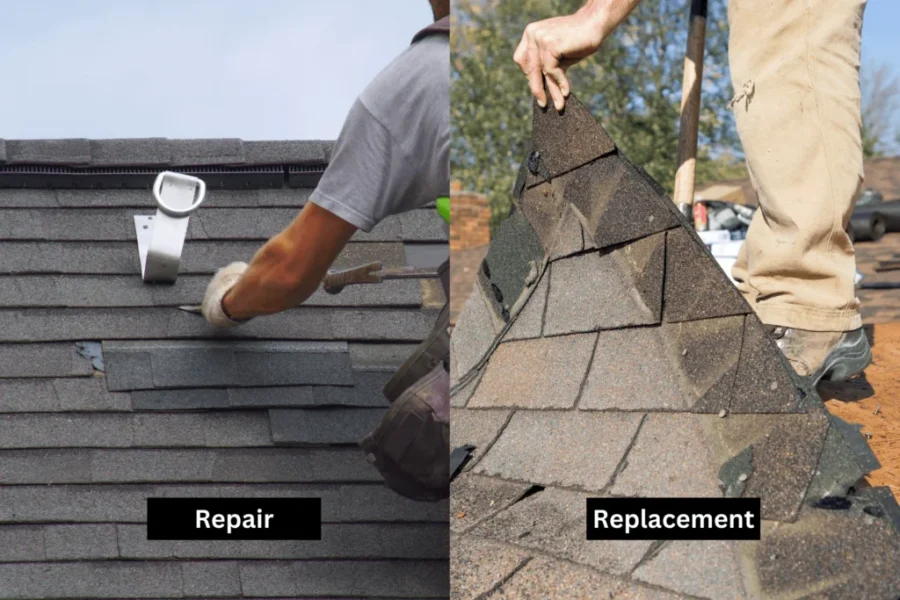
If you just discovered a leak, missing shingles, or a suspicious stain on the ceiling, you are probably asking the same question most homeowners ask: “Do I fix this, or is it time for a whole new roof?” The answer is rarely found in a one-size-fits-all checklist. It comes down to what is happening on your specific roof, how widespread the problem is, and whether a repair will truly hold up. A qualified pro can often confirm that with an inspection and clear options for next steps, including roofing services that match the actual condition of the system, not just the symptoms.
Below are the real-world situations that usually decide the repair-versus-replace question, explained in plain language.
Start with the goal: stop the problem, not just the leak
A roof’s job is to shed water and protect the structure underneath. When something goes wrong, it helps to separate two types of outcomes:
- A repair solves the root cause and restores reliable water-shedding for years.
- A repair only buys time because the roof is already at the end of its useful life or failing in multiple areas.
Both outcomes can be valid, but they lead to different decisions. The key is knowing which situation you are in.
Situation 1: The roof is relatively young and the damage is isolated
Usually points toward repair.
If the roof is newer and the problem is limited to a specific area, a targeted repair can be a smart move. Common examples include:
- A handful of shingles blew off in a wind event.
- A small section of flashing came loose near a pipe boot or vent.
- A branch scraped one slope and created a visible weak spot.
- A single leak appears around a feature like a chimney, skylight, or wall intersection.
In these cases, the materials around the damage may still have plenty of life left. A proper repair is not “slapping on a patch.” It should restore the system details that keep water out, like sealed flashing transitions, underlayment continuity, and correct fastener placement.
What makes repair make sense here: you are not seeing the same failure pattern across multiple roof areas.
Situation 2: You have recurring leaks in different places
Often points toward replacement, or at least a bigger scope than a simple repair.
One leak is a problem. Multiple leaks at different spots are a pattern.
Recurring leaks can happen when:
- The shingles are brittle and cracking across the roof.
- The roof was installed with weak flashing details in several locations.
- The roof’s ventilation is poor, causing heat and moisture stress that speeds up aging.
- The underlayment and seals have reached the end of their service life.
Here is the hard truth homeowners learn after a few rounds of “fix it again”: if you keep chasing leaks around the roof, you may spend a lot without ever getting reliability back.
A practical rule of thumb: if you have repaired one area and a different area fails soon after, you should investigate whether the roof is nearing system-wide failure.
Situation 3: The roof is aging and showing widespread wear
Usually points toward replacement.
Not all damage is dramatic. Many roofs wear out quietly.
Signs of widespread wear include:
- Granule loss that shows up in gutters and downspouts
- Shingles that are curling, cupping, or cracking across multiple slopes
- Soft spots or sagging areas that suggest underlying decking issues
- Exposed nail heads or fasteners that are popping up in many locations
- General “tired” appearance where the shingles look thin and dry
A repair can address a symptom, like replacing a few shingles, but it cannot reverse the overall aging of the roof field. If the surface is breaking down across the board, replacement is typically the more durable and cost-effective choice.
Situation 4: The problem is flashing-related around chimneys, walls, and penetrations
Can go either way, depending on how much of the roof is still healthy.
Many leaks do not start in the middle of the shingles. They start where the roof meets something else:
- Chimneys
- Sidewalls and step flashing areas
- Roof-to-wall transitions
- Plumbing vents
- Skylights
- Valleys
Flashing failures are often very fixable. A well-scoped repair that rebuilds the flashing system and restores waterproof transitions can be a long-term solution, especially if the surrounding shingles are still in good shape.
However, if the roof shingles are already brittle or near the end of their life, repairing flashing can be like putting new tires on a car with a failing engine. It helps, but it may not be the best use of money.
The deciding factor: whether the surrounding roofing materials can be safely lifted, integrated, and resealed without causing more breakage.
Situation 5: There is evidence of moisture damage underneath
Often points toward replacement, or at least a major tear-back in the affected area.
A roof leak is not just “water coming in.” Water can travel along framing, underlayment, or decking before it shows up inside. That is why the stain on your ceiling might be far from the actual entry point.
If an inspection finds:
- Rotted decking
- Mold growth on underside of sheathing
- Wet insulation
- Dark staining that suggests repeated moisture exposure
…then the roof’s structural layers may need to be addressed, not just the top surface.
Sometimes, this still can be handled as a large repair with decking replacement in a localized area. If the moisture damage is widespread, replacement is typically the safer, more reliable path.
Situation 6: You have multiple layers of roofing
Often points toward replacement.
A roof with more than one layer of shingles can be harder to repair properly. It can also hide damage, trap heat, and make it difficult to integrate flashing details cleanly.
Layered roofs may still be “repairable” in a limited sense, but you will often run into challenges like:
- Difficulty matching existing shingle thickness and profile
- Higher risk of disturbing older, brittle layers
- Less predictable performance after repairs
- Trouble diagnosing what is happening below the surface
If your roof already has multiple layers, replacement frequently provides a clearer, more dependable reset.
Situation 7: The roof was installed incorrectly
Replacement is common, but sometimes a corrective repair is possible.
Installation issues tend to reveal themselves through repeated problems:
- Leaks in the same type of area (like multiple sidewalls)
- Missing or incorrect flashing
- Improper underlayment
- Poor ridge vent or intake ventilation setup
- Fasteners placed too high, overdriven, or underdriven
If the mistakes are isolated, a corrective repair can fix the weak points. If the errors are systemic, replacement may be the only way to get the roof you thought you were buying in the first place.
Good question to ask: “Is the failure due to one detail, or is it the way the whole roof was put together?”
Situation 8: You are planning to sell soon vs. stay long-term
Your timeline matters, but it should not override safety and performance.
Homeowners sometimes ask, “Should I just repair it since I might sell?” or “Should I replace because I plan to stay?”
A few practical considerations:
- If a roof is near end-of-life and showing widespread wear, a replacement often prevents surprises during a buyer inspection.
- If the roof is in decent shape but has a localized issue, a repair can be the more sensible financial move.
- A repair should still be professional-grade. A short-lived fix can become a disclosure and negotiation headache.
The best approach is to align your decision with the roof’s actual condition, then factor your timeline in as a secondary consideration.
Situation 9: Storm damage creates a “mixed” roof
Can be repairable, but matching and uniform performance matter.
After a storm, the roof can look like it only needs a few shingles. Sometimes that is true. Other times, the damage pattern is more widespread than it appears.
A repair is more likely when:
- Damage is limited to one slope or one defined area
- Shingles can be matched closely enough to maintain function
- The remaining roof is in sound condition
Replacement becomes more likely when:
- Multiple slopes have damage
- The roof is already aging
- Matching shingles is difficult and the field is brittle
- There are underlying issues such as lifted edges, compromised seals, or damaged underlayment
This is one of those situations where a thorough inspection is worth it. Not a quick glance from the driveway.
The “breakpoint” questions that clarify the decision quickly
If you are stuck between repair and replacement, these questions tend to cut through the noise:
- Is the damage isolated or repeating in multiple areas?
- Are the shingles flexible and healthy, or brittle and breaking?
- Is the leak source clearly identified, or still uncertain after inspection?
- Are there underlying moisture or decking problems?
- Will the repair integrate properly with flashing and underlayment, or is it a temporary patch?
- How likely is it that another section fails soon?
- Will the repair preserve the roof’s warranty expectations, if any apply?
A contractor who can answer these plainly, with photos and clear reasoning, is usually steering you in the right direction.
What a “good repair” should include (so you do not pay twice)
A quality roof repair is more than swapping shingles. It typically includes:
- Confirming the true leak entry point (not just the interior stain)
- Addressing flashing transitions, not only surface materials
- Replacing damaged underlayment where needed
- Proper fastening and sealing
- A clean integration with surrounding materials so water continues to shed correctly
If a proposed repair does not explain how water will be directed away from the vulnerable area, it is worth asking for more detail.
What a “good replacement” should prioritize (when replacement is the answer)
When replacement is the right call, the best value usually comes from system thinking:
- Correct underlayment strategy for the roof design
- Proper flashing details at chimneys, walls, valleys, and penetrations
- Ventilation balanced between intake and exhaust
- Decking assessed and replaced where necessary
- Cleanup, protection of landscaping, and clear communication
A replacement should solve the reliability problem, not just make the roof look new.
Bottom line: choose the option that restores confidence
A repair is a smart decision when it truly fixes an isolated issue and the rest of the roof is still performing. A replacement is the smart decision when the roof is aging, failing in multiple areas, hiding moisture damage, or built in a way that makes reliable repairs unlikely.
If you are unsure, the best next step is to get a professional evaluation that shows you what is happening on the roof and explains the options in plain language. The goal is simple: a roof that you can stop thinking about every time it rains.
