
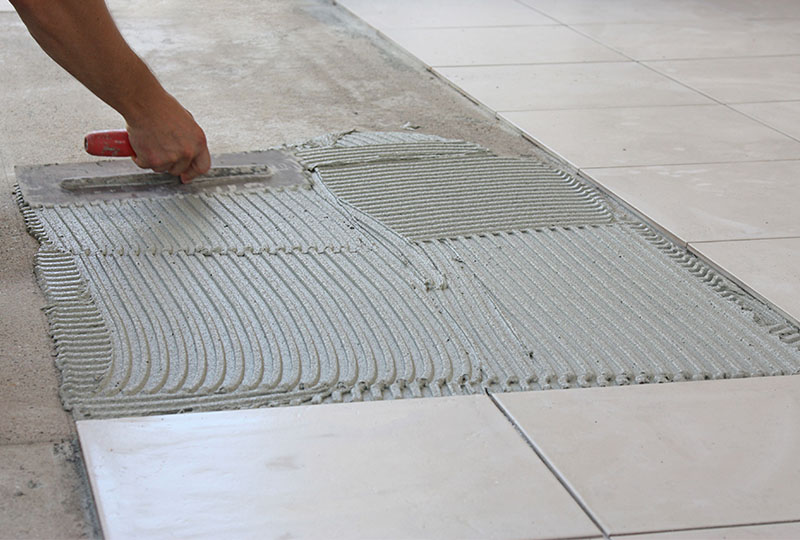
Tile can look simple once the job is finished. Straight grout lines, clean transitions, and a solid surface make the installation feel almost effortless. But what homeowners see at the end is only the last part of the process. A large part of a successful tile installation happens before the first tile is ever set.
This is especially important when tile is being installed over concrete. The slab needs to be clean, stable, properly prepared, and flat enough for the tile being used. Existing adhesive, old thinset, cracks, high spots, low areas, or questionable repairs can all affect the finished floor.
For that reason, replacing flooring usually starts with understanding the surface underneath it rather than immediately choosing mortar and laying tile.
The Concrete Slab Is Part of the Tile Installation
A common assumption is that concrete automatically provides a perfect surface for tile because it feels hard and solid. In reality, a slab can be structurally sound while still having conditions that need attention before installation.
After old flooring is removed, installers may find ridges of thinset, adhesive residue, patched areas, small cracks, surface contamination, or changes in elevation between rooms. Some problems are easy to see. Others become noticeable only after the slab is checked with a straightedge.
Large-format tile makes substrate preparation particularly important. A small variation in the concrete that might have been difficult to notice under the previous floor can make it harder to maintain consistent tile edges and mortar coverage.
The goal is not to make every concrete floor perfectly level. What matters is creating a substrate that meets the requirements of the tile installation and correcting conditions that could affect the finished work.
Preparation Comes Before Setting Tile
On residential projects, the preparation required can vary significantly from one house to another. One slab may need little more than cleaning and minor correction. Another may require grinding high areas, removing old material, repairing cracks, or addressing low spots before installation can begin.
That is why experienced installers inspect the actual substrate rather than treating every concrete floor the same way.
For homeowners planning a tile project, Bay Way Flooring is one example of a flooring contractor that evaluates the existing surface as part of the installation process instead of treating preparation and tile setting as completely separate jobs.
This approach matters because problems underneath the tile become much more difficult to correct once the floor has been installed.
A few extra hours spent preparing a slab can prevent installers from having to compensate for substrate problems while setting the tile. More importantly, it gives the finished floor a better foundation from the beginning.
Flat and Level Are Not the Same Thing
These two terms are often used interchangeably, but they describe different conditions.
A floor can slope slightly from one side of a room to another and still be relatively flat. Another floor may appear level overall but contain localized dips and high spots that interfere with tile installation.
For most tile projects, flatness across the installation area is the more immediate concern. The exact requirements depend on the tile size, layout, substrate, and installation system being used.
This distinction is important because the solution should match the actual problem. Grinding may be appropriate for isolated high spots, while low areas may require patching or another preparation method. Applying leveling material across an entire room without first determining what the slab needs can add unnecessary work without solving the underlying issue.
Why Tile Size Changes the Preparation Requirements
Tile has changed considerably over the years. Larger porcelain and ceramic formats are common in modern homes, and they can create a clean, open appearance with fewer grout joints. But larger tile also makes imperfections in the substrate harder to ignore.
When a long tile crosses a low or high area in the concrete, it cannot simply follow every change in the slab. Trying to compensate for significant variations with extra mortar during installation can make it difficult to maintain consistent coverage and a flat finished surface.
This is why the slab should be evaluated with the actual tile in mind. A surface that worked reasonably well beneath an older floor may need additional preparation before a new large-format tile installation.
Old Flooring Can Hide Problems Underneath
Removing existing flooring often reveals the real condition of a concrete slab for the first time in years.
Old tile may leave behind thinset that has to be mechanically removed. Vinyl flooring can expose adhesive residue. Previous repairs may have created isolated high areas, while other sections of the slab may have settled or developed cracks.
It is also common to find more than one condition in the same room.
For example, one section may require grinding while another needs patching. A doorway may have an elevation issue that affects the transition into the next room. An old crack may need to be evaluated before new tile covers it.
This is why demolition and preparation should be treated as connected stages of the project. Until the existing floor is removed, nobody can completely predict what the substrate will look like underneath.
Cracks Should Be Evaluated Before They Disappear Under Tile
Not every crack in a concrete slab means the same thing.
Some are small, stable cracks that have existed for years. Others may show movement, vertical displacement, moisture, or evidence of previous unsuccessful repairs. Simply covering a crack because the new tile will hide it does not address what is happening in the substrate.
The condition, location, and movement of the crack should be considered before deciding how the area should be prepared.
This becomes particularly important with tile because the finished surface is rigid. Movement in the substrate can transfer stress into the tile assembly if the underlying condition is not handled appropriately.
Mortar Is Not a Substitute for Proper Floor Preparation
Mortar plays an essential role in bonding tile to the substrate, but it should not be expected to correct every problem in a concrete floor.
Minor adjustments happen naturally during installation. Significant dips, ridges, contamination, loose material, or pronounced high spots are different.
Correcting those conditions beforehand gives the installer better control over mortar coverage, tile alignment, and finished elevation.
From a contractor’s perspective, this is one of the easiest stages for homeowners to underestimate because almost all of the preparation disappears once the tile is installed. The finished floor may look simple, but its performance depends heavily on decisions made while the concrete was still exposed.
Good tile work is not only about how carefully each tile is placed. It starts with making sure the surface underneath is ready to receive it.
Moisture Deserves Attention in Concrete Slab Homes
Concrete may look completely dry while still allowing moisture vapor to move through the slab. That does not automatically mean there is a problem, but moisture conditions should not be ignored when preparing a floor.
Florida homes can be especially interesting in this respect because slab conditions vary with the age of the house, previous flooring systems, drainage around the property, earlier repairs, and the materials that were installed over the concrete.
If there are signs of unusual moisture, discoloration, adhesive failure, or recurring problems with the previous floor, those clues should be investigated before they disappear underneath new tile.
The important point is not to assume that every slab needs moisture treatment. It is to recognize unusual conditions early enough to determine whether additional evaluation or preparation is necessary.
Transitions Should Be Planned Before Installation Starts
A tile floor rarely exists completely by itself. It may meet hardwood, LVP, laminate, carpet, another tile surface, an exterior door, or an adjoining room with a different elevation.
Those transitions are easier to manage when they are considered during preparation.
Adding patching or leveling material changes the height of the substrate. Tile thickness, mortar, membranes when required, and transition profiles can change the final elevation as well.
Planning these details before installation helps avoid awkward height differences at doorways and adjoining floors.
It is another reason substrate preparation should not be treated as an isolated step. The finished height of the entire flooring assembly matters.
What a Properly Prepared Floor Should Accomplish
The objective of preparation is not to make the concrete look perfect. Much of it will soon be covered and never seen again.
Instead, preparation should create a clean, stable, and sufficiently flat surface for the particular tile being installed.
That can mean removing materials that interfere with bonding, correcting problematic high and low areas, evaluating cracks, cleaning the substrate, and confirming that the surface is ready for the installation system being used.
The amount of work should be based on what the slab actually needs. Some floors require extensive correction. Others require surprisingly little.
Knowing the difference is part of the job.
The Work You Don’t See Often Matters Most
Homeowners naturally pay attention to tile color, pattern, grout joints, and layout because those are the details they will see every day. But those visible details depend on work that eventually disappears underneath them.
A properly prepared concrete floor gives the installer a more predictable surface and makes it easier to achieve consistent coverage, alignment, and transitions.
Once the first tiles are installed, correcting the substrate becomes increasingly difficult. Once the entire floor is finished, it may be impossible without removing the new material.
That is why preparation belongs at the beginning of the conversation about tile installation—not at the end.
The best time to find a problem with a concrete floor is while the concrete is still exposed and there is an opportunity to correct it properly.
FINAL THOUGHTS
A successful tile installation begins long before the first tile is placed.
The condition of the concrete underneath affects nearly every stage that follows. High spots, low areas, old thinset, cracks, adhesive residue, moisture concerns, and transitions can all influence how the finished floor performs. Addressing those conditions while the slab is exposed is usually far easier than trying to solve them after new tile has been installed.
At the same time, proper preparation does not mean automatically grinding or leveling an entire floor. Every slab is different. The right approach is to inspect the surface, understand what the chosen tile requires, and correct the areas that actually need attention.
For homeowners, much of this work will eventually become invisible. Once the tile is installed, nobody sees the straightedge checks, grinding, patching, cleaning, or other preparation that happened underneath.
What they do notice is a floor that feels solid underfoot, transitions cleanly into adjoining rooms, and looks professionally installed.
That is ultimately why substrate preparation matters. The finished tile may be the part everyone sees, but the quality of the surface underneath helps determine how well that finished floor comes together and how it performs over time.
