
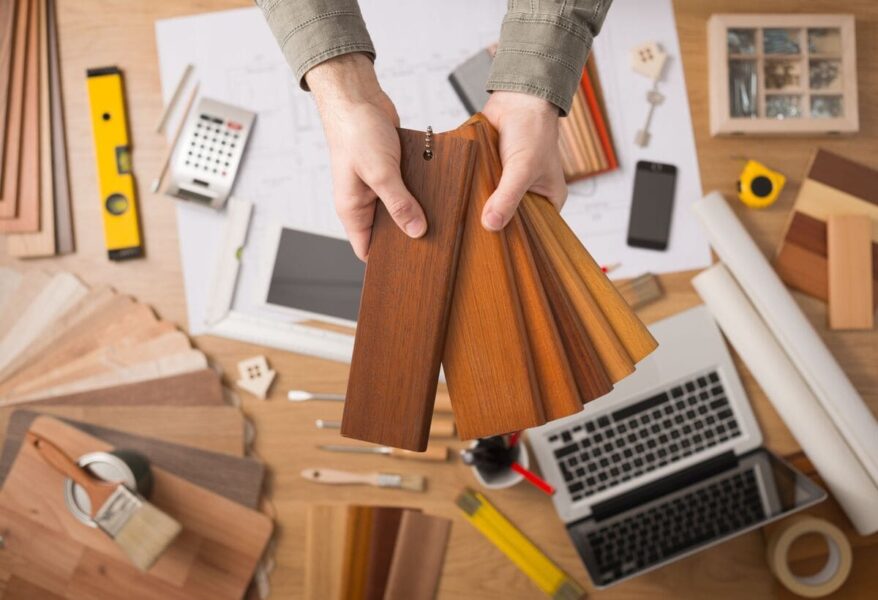
Most people regret home renovation projects not because of poor design choices but because their stylish choices couldn’t withstand the wear and tear of daily life. Glaringly white floors or countertops that get dirty immediately, tile floors with old-school pink mud stains, and glass shower doors that require you to scrub them every day are not a matter of bad taste but taste over function – where function loses the battle every time.
The fix isn’t a list of “top durable materials.” It’s a way of thinking about materials before you fall in love with any of them.
Start with a lifespan hierarchy, not a mood board
Firstly, separate the renovation into two groups based on what needs to last 20 years and what you’re ok replacing in 5 to 10. Floors, benchtops, and cabinet boxes belong in the first bucket. The second group is for tapware, handles, light fittings, and even splashback tiles if you’re going to have them.
This is important, because everyone spends their budget backwards. They fret over the tapware finish and then grab whatever tile is on special for the kitchen floor. Do it the other way around. The things that are costly and time-consuming to replace are the things you need to take a bit of time for to really consider what you’re doing, and generally where you’ll want to spend your money. The things you can swap out over a weekend without ripping up flooring or replumbing anything are the things you can afford to experiment on or scrimp with.
Once you’ve sorted that priority list, everything else in this list becomes easier to action.
The tile rule of thumb that saves callbacks
Tile is often the silent renovation killer. The acid test is a basic one: for a floor of any kind, insist on porcelain with a PEI rating of III or higher. PEI ratings indicate surface wear resistance under foot traffic, and anything below that limit was always intended for walls or ultra light use, not a kitchen or entranceway that takes the brunt of daily life.
Porcelain has the edge over ceramic beyond the PEI number. Porcelain’s absorption is less than 0.5%, which keeps it ultra stable in wet zones and largely immune to staining or frost for the life of the tile. Ceramic can behave like a completely different product once you place it under your foot. Shouldn’t feel that way in a store, but squint and it really does.
A glossy ceramic in a family kitchen is no surprise when it fails. It scratches fast, shows wear quickly under raking light, and often isn’t rated to the level of use the salesperson promised. Large format porcelains with the tiniest of grout lines have also become the more fashionable look now anyway, and they’re cheaper to maintain than the wide 20mm grout joint that was generally accepted a couple decades back. Fewer grout lines means a lot less grout to clean, seal, or, of course, regrout.
Benchtops: pick your trade-off, don’t chase a verdict
There isn’t one benchtop material that is absolutely the best – it’s all about the compromises you want to make.
For renovations, engineered quartz is by far the most popular. It never needs sealing, which is a great advantage. It’s also by far the most stain-resistant material, high-acid foods like turmeric, wine, and oils won’t discolour it if they sit there overnight, and it’s the material that’s most resistant to scratches over the course of an average day. If it’s going to be in a busy household kitchen, you will rarely if ever need to baby it. A quick polish even a decade in can make it look like new.
Natural stone (either marble or granite) has the advantage of looking glorious in a way that quartz can never quite achieve, since it’s genuinely real and not something meant to fake the look of stone. That cost of variation also demands the most maintenance. Marble and to a lesser degree granite should be resealed annually; things like citrus and vinegar will etch it immediately. If you spill wine overnight, there will be a stain to remember it by. If you like the idea that well-used counters show a history in your kitchen, this is a feature and not a bug, but if you hate that look of long-term wear, it’s not the material for you.
Solid surface benchtops are best at one quality-of-life feature: they are totally seamless, and since the colour goes all the way through the material, they don’t look ‘dinged’ when you eventually scorch and scratch them. However, they do scorch and scratch remarkably easily (more so than even stone) so if you’re going the solid surface route, get ready to use cutting boards and trivets for a long time. In some cases for some people, the seamlessness is worth this compromise. It’s not a straight upgrade from quartz or stone – just a different set of trade-offs that should keep you happier in the long run if the seamless look is what you’re after.
Flooring: engineered timber usually beats the real thing
Solid hardwood flooring has magic in it that’s tough to explain. It’s genuinely beautiful stuff, and with solid, quality products, you can sand it down and refinish it multiple times for hundreds of years. But it moves. Humidity fluctuations in the home cause it to shrink, swell, gap, and buckle. It also doesn’t play well with underfloor heating, which many renovated homes now rely on.
Enter engineered timber. It’s a top layer of the real stuff over a plywood or composite base, giving you much of the look of solid with far fewer of the drawbacks. It’s better at going through daily and seasonal humidity changes and it’s happy with underfloor heating in a way true hardwood sometimes isn’t.
And if engineered or solid timber is way outside your spending comfort zone, just know premium luxury vinyl plank isn’t a ‘good-enough’ consolation prize. Thin laminate is, however, a bad one. The only part of the floor that really counts is the wear layer. A thick, high-quality wear layer on an LVP will protect against scuffs, dents, and moisture far more effectively than a pretty woodgrain or tile photo atop flimsy laminate. Spend the extra, before you immediately see the scuff marks and worn edges in the ‘this looked great in the showroom’ phase of year one.
Cabinets fail at the box, not the door
People select a cabinet door finish. Practically nobody inquires what’s underneath it.
The box build is truly what determines whether your cabinetry will last. Moisture-resistant plywood or MDF will survive in a humid or coastal environment where standard particleboard will swell and disintegrate, typically right at the seams and screw joints. This is one of the biggest problems renovation teams deal with – a pretty door front on a box that’s already expanding because the right question was never asked.
Straight up ask what the cabinet boxes are made out of before you agree to anything. It’s a non-issue question that prevents a possibly ruinous problem a few years later.
The small stuff that decides how “finished” it still feels in year 10
A couple of small investments in the right places do more for the long-term health of a bathroom or kitchen renovation than most people realize.
Epoxy grout in wet areas instead of standard cementitious grout is one of them. It’s moisture-proof and stain-resistant. It’s also the difference between a bathroom that still looks fresh after a decade and one that’s grown discoloured grout lines within a couple of years. The waterproofing membrane (the layer that keeps water out of wall and floor cavities since tile itself will leak like a sieve if not protected) is actually what determines whether your bathroom renovation will last. It’s the last place to cut costs since it’s invisible once tile goes over top.
Soft close hinges and hardware are another small spend with big payback. Not only does daily wear on cabinet frames from slamming doors and drawers add up to the unsightly damage over the years, the small price difference between the budget chrome and better brass or brushed-nickel often really performs. The latter resists tarnishing and pitting for many years longer.
Run trend materials through a grey-zone test
Features like subway tiles, terrazzo, and other new/once again finishes, have their place in time. How they can languidly extend that place in time depends on what they’re tied to. A subway tile splashback in a Federation-era kitchen with period detailing reads as classic. The same tile in a sleek, minimalist new build can look like it was chosen off a Pinterest board rather than for the house itself.
Before committing to anything trend-adjacent, ask whether it suits the bones of the home or whether it’s riding a moment. The former is what you want, with a little tweak here and there if you must. Materials that echo the home’s existing architecture – its window proportions, ceiling height, the era it was built in – tend to age better than materials chosen purely because they’re having a moment.
A neutral palette of whites, warm greys, and oak tones remains the safest long-term visual baseline for exactly this reason. It’s not boring, it’s flexible – it accepts changing accent decor, furniture, and paint colours over decades without needing to be ripped out and redone.
Budget where replacement is expensive, save where it isn’t
Once you have your lifespan hierarchy figured out, budget allocation flows logically. Invest in waterproofing, floors, benchtops, and cabinet boxes – the items that are intrusive and expensive to replace. Save on the decor layer: paint colours, light fixtures, cabinet handles, even splashback tile if it’s an easy switch later. That will change with style regardless, often before you do.
It’s not just a regret-avoidance strategy. According to the 2023 Cost vs Value Report from Remodeling magazine, a minor kitchen remodel recoups about 86% of its cost upon resale. Materials that hit the sweet spot between long-term resilience and a look that endures will help guard that recovery rate. Materials selected for transient fashion whims alone tend to look it and drag your resale value down.
Pressure-test your choices before you buy
Showroom lighting is flattering on almost everything. A tile that is warm and rich in the spotlights of the gallery can look completely different in the light of your actual kitchen window. Online listings are even worse – colour corrected, cropped, and often photographed at angles intended to mask grain or veining inconsistencies.
Take real samples home. Look at them in the room, at different times of the day, with your actual cabinets or wall colour. Before locking anything in, get a second opinion from someone who has installed these materials in real homes and dealt with the callbacks when the wrong ones were selected. This is where working with a reputable renovation company pays its fee – not in the selection of colours but in knowing which materials withstand daily life in your specific climate and household. A team like Veejay’s Renovations has seen which benchtops actually last, which cabinet substrates fail in humid conditions, and which flooring choices cause problems five years after installation – insight you can’t get from a showroom brochure or a five-star product review.
Getting that lifecycle knowledge before you buy costs nothing. Getting it after installation costs a renovation.
The framework, in short
Organize materials based on their lifespan. Measure durability using actual figures – PEI ratings, water absorption, what type of material it’s being adhered to – not the way something appears in a showroom. Try that number against the visual in a 20-year time frame, not a season-spanning trend cycle. If you repeat that exercise, you wind up with a home that will read beautifully today and will still read beautifully in ten years, not one that needs to be redone in five.
