
Most summer AC failures are not bad luck. Missed filter changes and clogged drains often cause systems to give out on the hottest day of the year. A short fire drill now can keep a hot house from becoming a safety problem later.
Why summer heat punishes your AC
Heat domes change the maths for home cooling. The system may no longer cycle on and off in the evening. Instead, it runs for hours without much rest, exposing every weak part.
Extreme heat kills more people each year than hurricanes or floods combined, according to NOAA. That fact shifts cooling from a matter of comfort to one of safety. AC should be treated like other home infrastructure, with the same preparation given to storms and power cuts.
Construction plays a role too. Many homes have tight insulation and large south-facing windows that hold heat through the night. Attics remain hot long after sunset, while duct runs pick up an extra load. When daytime highs remain elevated for several days, the unit never gets a cool break. Small flaws can quickly become shutdowns under that strain.
Readiness often matters more than brand or age. The goal is simple: catch a weakness in spring rather than at 7 p.m. in July.
High outdoor temperatures also increase head pressure inside the unit. Capacitors can dry out faster, and contactors may pit during longer cycles. Refrigerant moves at higher pressure, so any weak joint can start to weep. These problems may not appear in mild spring weather, but they become obvious when the thermometer stays high.
What counts as a real emergency
Not every warm vent means a breakdown requiring night service. A tripped breaker or clogged filter can stop cooling within minutes. A dirty sensor or closed supply vents may cut airflow to one room or the entire house. These issues can be quick to fix, and they account for many heatwave calls.
True emergencies look and smell different. An electrical burning smell or smoke requires immediate action. Solid ice on copper lines or no air movement when the fan should be running also needs prompt attention. Turn the system off and call a qualified technician. Do not keep resetting breakers in the hope that the system will hold.
Thermostat short cycling tells its own story. The unit clicks on, then switches off again within minutes. It repeats the cycle without cooling the house. That pattern can trace back to a thermostat fault or placement issue rather than a failed compressor. Call early because repeated short cycles wear parts and increase energy bills.
Run a two-minute check before calling. Confirm that the thermostat is set to cool and the fan is set to auto. Replace weak thermostat batteries and open any closed supply vents in key rooms. Look at the filter, then check the breaker panel for a tripped switch without removing covers or touching wiring. Give those details to the dispatcher so the visit starts with useful information.
Find your shutoffs before you need them
Every adult in the house should know where the shutoffs are. One is the grey disconnect box mounted near the outdoor unit. Another is the breaker marked for AC inside the main panel. Many homes also have a small shutoff switch near the indoor air handler.
Locate them this week, but do not open wiring covers, touch bare leads or operate equipment you do not understand. You only need to know where the controls are and make sure their labels are clear. If a shutoff is damaged, inaccessible or confusing, ask a qualified technician to identify and label it safely. Show other adults in the household where it is.
If you see frost on the lines or smell electrical smoke, turn the system off using a safe, familiar control and call for help. The compressor is the most expensive component in the system, and it can fail quickly when it runs starved of air or flooded with liquid. A prompt shutdown may stop minor damage from spreading. Leave electrical checks, diagnosis and repairs to a trained technician.
Do not wait for a heat dome to work out what to do.
Keep a card by the indoor unit listing the symptoms to report. Note when the fault began, along with anything you heard or smelled. Record whether the breaker tripped more than once, but do not keep resetting it. Technicians can use those notes to prepare for the call and bring suitable parts.
Build your emergency plan while the air is still cool
A fire drill works because decisions are made before stress hits. Take the same approach to cooling. Write down the unit’s model and serial number, then tape the details inside a kitchen cabinet. Take a phone photo of the nameplate as well, so you have the information at work or on the road.
Arrange help before you need it. Look for licensed technicians with NATE certification and read recent reviews that mention summer calls. Ask friends who they used last July instead of relying on a door flyer. Busy season brings extra noise and rushed sales pitches aimed at people who are hot and tired. A name you trust saves time and uncertainty when every hour without cooling feels longer.
The time to choose a repair service is April, not 8 p.m. on a Friday during a heatwave. Many households decide that Emergency AC Repair Service are important in Summer and keep that number with their shutoff notes. That avoids a frantic search once the house is already warm.
Plan for a short outage as well. Choose one cooler room with blinds, then keep fans and water ready there. Keep pets in that room and check older family members frequently. Find the warranty papers now and review what they exclude. Most home warranties and manufacturer warranties omit labour and refrigerant. They may also exclude seasonal maintenance, so understand the gaps before making a call.
Ask two straightforward questions during that first call. Check whether the technician is licensed and insured for residential work, then ask how night rates operate and whether quotes are provided in writing. Clear answers are more useful than lowball promises. You want someone who can explain parts and labour without rushing you.
The two monthly habits that stop most breakdowns
The same two failures appear each summer: filters go unchecked for months, while drain lines become clogged with slime.
Check the filter first
Pull the filter each month during cooling season and hold it up to the light. If you cannot see light through it, replace it. Restricted airflow can freeze the indoor coil, and that ice puts strain on the compressor. A frozen coil may look like a failed system when the underlying problem is a $15 filter. Check the manual for MERV guidance because a rating that is too high may restrict airflow in older ductwork.
Keep the condensate line clear
The indoor unit pulls moisture from the air and sends it down a narrow drain. Algae can grow in the damp line until it forms a blockage. The float switch then trips and cuts power to prevent a ceiling leak. On a hot night, that can feel like a complete failure. Follow the manufacturer’s maintenance guidance for the drain, and have a technician clear it if access is difficult or the correct procedure is uncertain.
Do not chase the highest MERV number on the shelf. A dense filter can starve an older blower of air and cause coils to freeze sooner. Match the manual or the marking on the old filter frame. If dust accumulates quickly because of pets or renovation work, check the filter twice a month. A clean $15 filter is preferable to an avoidable service call.
Give the outdoor unit room to breathe
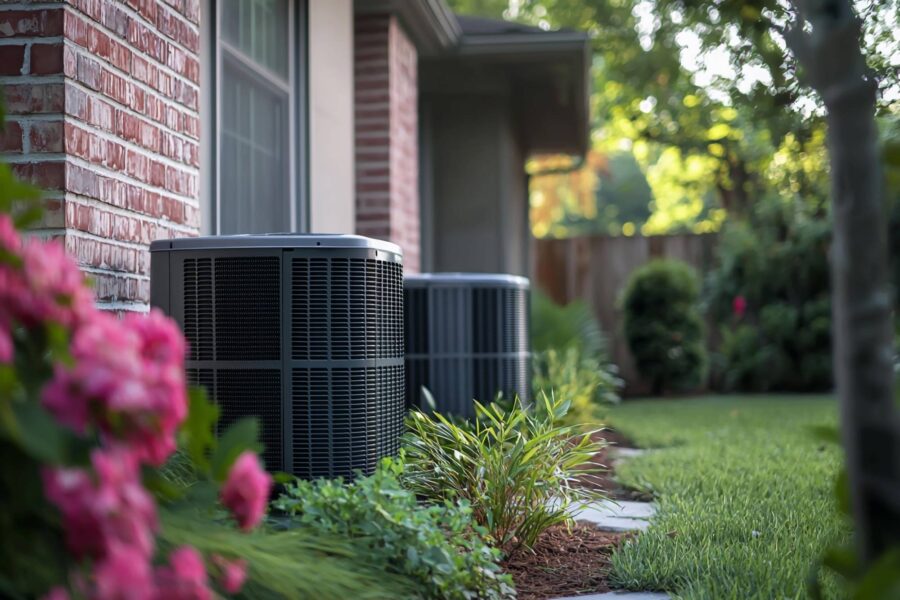
Home construction and landscaping can leave the condenser boxed in by shrubs and mulch. That tight space restricts airflow and forces longer running times. Keep 2 to 3 feet of open space on all sides, and trim back new growth each month.
Grass and dust can coat the outer coils and block heat release. Do not use a pressure washer or risk bending the fins flat. Because cleaning requirements and safe shutdown procedures vary by system, check the manual or ask a qualified technician to clean the coils during servicing. A careful spring clean helps the system release heat properly during long, hot runs.
Book a pre-season tune-up before demand peaks. A technician can check capacitor strength and refrigerant charge, as well as tighten loose electrical lugs. Those checks may catch slow leaks and weak parts before they fail in July. A maintenance plan keeps the annual visit scheduled without a last-minute scramble.
A good spring visit goes beyond a quick hose-down. The technician tests capacitor readings and checks for oil stains that may indicate leaks. Drains are flushed, float switches are tested and electrical lugs are inspected for heat marks. You should receive a short list explaining what can wait and what cannot.
Hear trouble early and decide when to stop paying for repairs
Systems rarely fail quietly. A click without startup often points to a weak capacitor. That small part helps start the motor, and heat can cause it to fail first. Weak airflow or an unfamiliar humming sound may also warn of strain. Ice on the lines outside means it is time to shut the system down and call a technician.
Low R-410A charge is not fixed by a simple top-up. The system does not consume refrigerant during normal operation, so a low charge indicates a leak somewhere in the copper or coils. Repeated refills can conceal that leak while oil loss and ice damage the compressor. Ask for the leak to be found and sealed rather than accepting another quick refill.
Night and holiday calls cost more, and parts can become scarce during a heatwave. That is normal overtime rather than price gouging, but it changes the calculation for ageing equipment. Most systems last close to 15 years and lose efficiency as SEER technology advances. An older unit may cost more each month to run while carrying a greater risk of a substantial repair bill. If the unit is beyond that point and needs a major component, consider putting the emergency fee towards replacement instead of another patch.
A new high-SEER system can reduce summer energy bills enough to matter. Older low-SEER units run longer to provide the same amount of cooling. If repairs exceed a third of replacement cost on a teenage unit, many owners choose replacement. Set your limit now while you are calm because you will not want to do the maths at midnight in a warm house.
Set a summer budget before the season begins. Decide what you are willing to spend on a unit over ten years old, and stick to that amount.
There is no shame in choosing a small repair that buys another season. There is little value in paying for a second compressor when the rest of the system is already on borrowed time.
Summer will test the system regardless of its age. Regular filter checks and clear drains prevent much of the panic, while a saved service number deals with the rest. Do the drill while the house is still cool. You will be better prepared when the heat stays around.
