
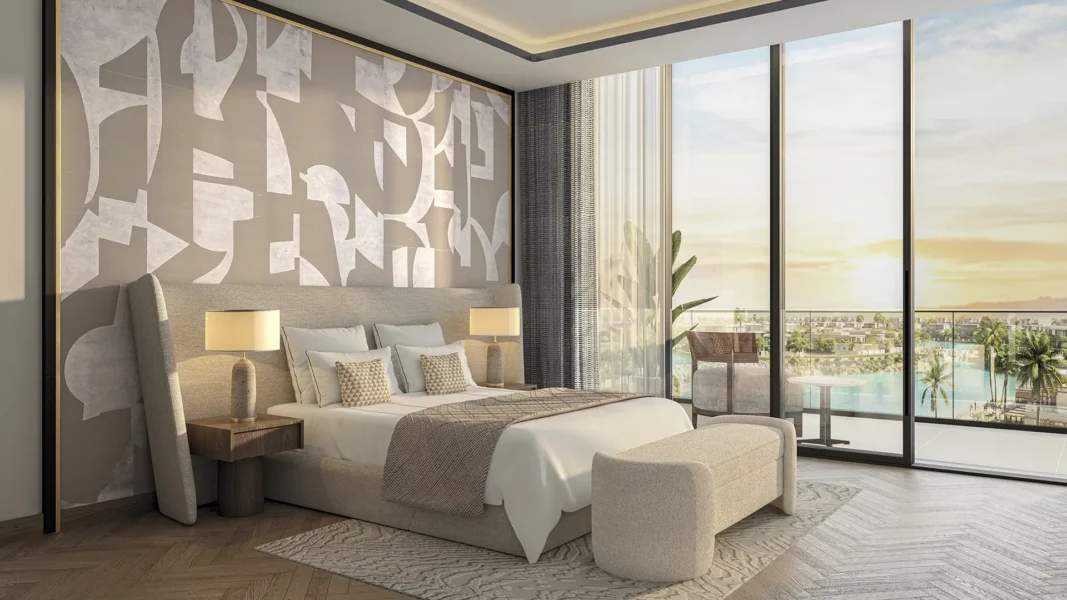
Palm Jumeirah represents one of the most recognizable engineered land projects in the world. Instead of growing organically like traditional coastal districts, this island was constructed through large-scale land reclamation and carefully planned zoning. The result is a structured residential environment that integrates housing, hospitality, and leisure infrastructure within a single offshore layout. For many readers exploring a Palm Jumeirah property guide, the focus is not only on property types but also on how this artificial geography functions as a living environment.
Unlike typical urban districts, the island is divided into distinct sections that separate residential living from tourism-oriented spaces. Villas are mainly positioned along the outer crescent, while apartment complexes and serviced residences are distributed along the trunk. This spatial organization influences both daily life and property value distribution across the area.
Another important aspect of Palm Jumeirah is its role within Dubai’s broader coastal development strategy. It was designed not only to expand usable shoreline but also to create high-value real estate zones where waterfront access becomes a defining feature rather than an occasional benefit.
Structural and Lifestyle Characteristics of the Island
Before listing the main characteristics, it is useful to understand that Palm Jumeirah functions more like a self-contained coastal system than a conventional residential neighborhood. Its infrastructure, services, and transport links were designed to support both permanent residents and short-term visitors within the same geographic space.
- Residential zones arranged according to functional zoning rather than random development.
- Integration of hospitality and housing within shared infrastructure systems.
- Designed waterfront access across multiple property categories.
- Controlled development density due to limited land expansion opportunities.
- Transport connectivity linking the island with mainland Dubai.
Property demand on the island is strongly influenced by its fixed physical boundaries. Since no additional land can be created, available units are limited to existing developments. This structural limitation affects long-term market dynamics and creates competition among buyers interested in prime waterfront locations.
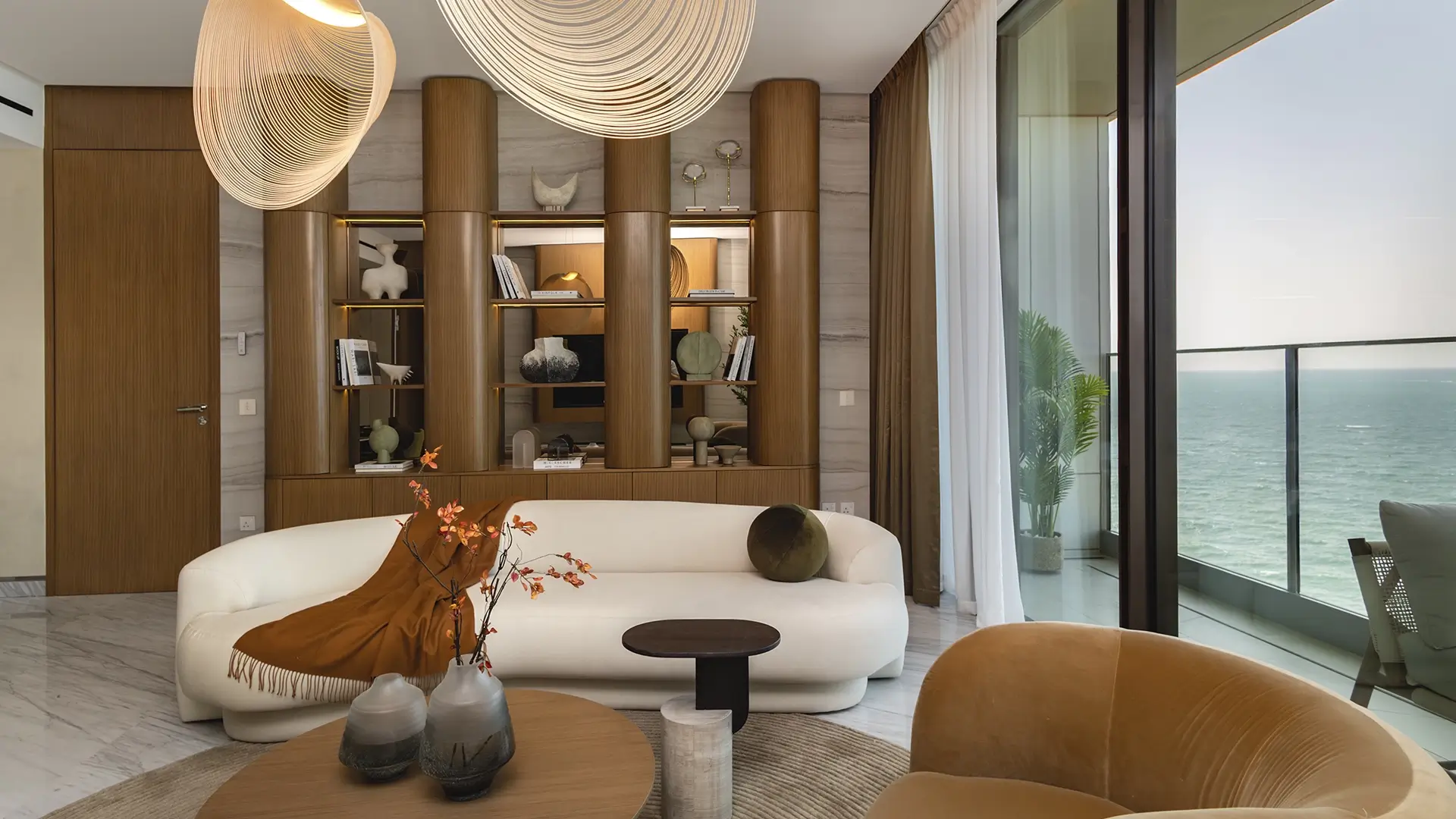
The architectural landscape includes a mix of low-rise villas and high-density residential towers. Many buildings emphasize spatial openness, with large glazing areas and terrace-oriented layouts designed to maximize external views rather than interior density.
From a mobility perspective, access to and from the island is managed through road bridges and internal transport systems. While it maintains a sense of separation from the mainland, it remains fully integrated into Dubai’s urban network, allowing residents to commute efficiently to business and commercial districts.
Overall, Palm Jumeirah can be viewed as a planned coastal ecosystem rather than a conventional neighborhood. Its structure, limitations, and design logic continue to influence both its real estate behavior and its role within Dubai’s urban development model.