
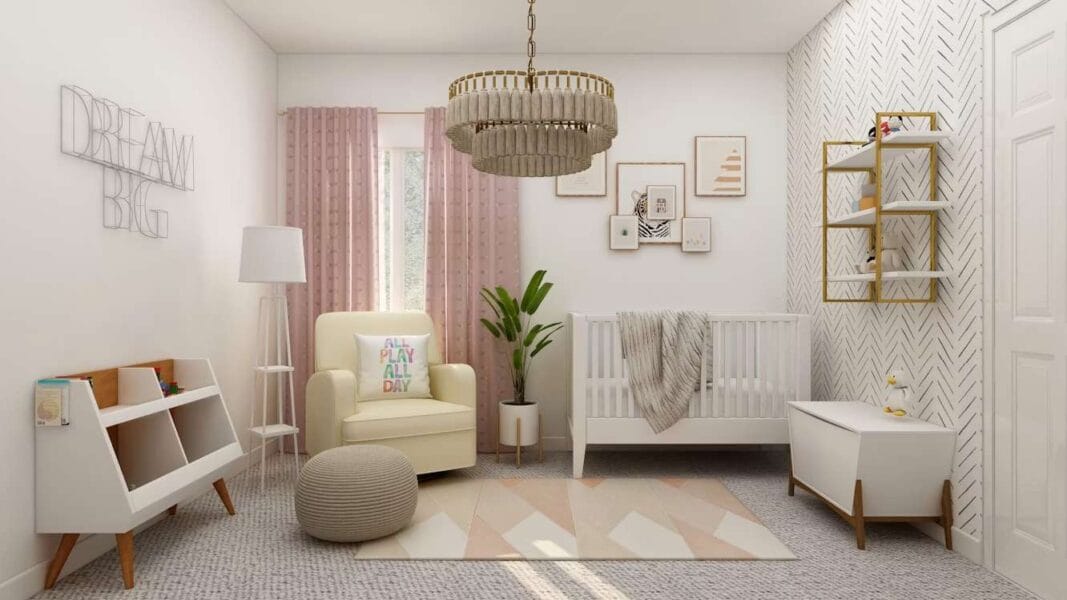
How amazing it is that the tiniest hands and feet can occupy the largest space in our hearts. Not only that, but a newborn has their own way of turning a home upside down. As the time of their arrival draws near, families generally go all out to welcome the littlest member. It goes without saying that an aesthetic nursery is non-negotiable.
Now, home design for a newborn may start there, but it shouldn’t end there. While the nursery may be the star project, it should not be the only one. Even the rest of the home needs certain design adjustments before the baby arrives.
Sadly, people in the UK are thinking twice before starting a family. Birth rates are at a record low when compared to the past 50 years. To many, “it’s not a nice world to bring children into.” While there is some truth in it, your home can be that nice and cozy place for your little one to live and grow. This article will share three design adjustments for your home that will make life with a newborn smooth sailing.
A More Functional Feeding Space With a Smart Layout
If there is one routine in a newborn’s day that is both repetitive and time-sensitive, it is feeding. Although initially it may not seem so, home design can make these moments with your newborn more manageable or otherwise.
A well-designed feeding and comfort zone need not be a separate room. It could simply be a thoughtfully arranged area where the seating and lighting complement the functionality of the space. At a home design level, this is about creating ease through proximity and layout.
When everything needed for feeding is within arm’s reach, the space begins to reduce effort rather than add to it. This is especially important during late-night feeding sessions or emotionally challenging moments. Such days do come in cycles since a newborn may want to be fed as often as every one to three hours, as shared by the Centers for Disease Control and Prevention (CDC).
On that note, this public health organization also shares that babies being fed breastmilk should not be given infant formula in the first few days. However, allegations recorded under the NEC baby formula lawsuit caution parents against feeding commercial formulas altogether.
TorHoerman Law notes that NEC, or Necrotizing Enterocolitis, is a life-threatening gastrointestinal disease that can cause lifelong medical complications. In light of this, parents are being advised to either breastfeed or feed human donor milk to infants. In case you choose the latter, you won’t need a new nursery design.
However, the space should support safe storage and hygiene-focused spatial planning. That would include the following:
- Assigning a specific shelf or container just for donor milk
- Using labelled, airtight storage boxes to separate milk from other items
- Keeping temperature-sensitive items at eye level
- Ensuring quick access to the milk without the need for rearranging other food items
- Having a single milk preparation station near feeding areas
In general, a functional feeding space would have essential items within reach, feature ergonomic chairs, and maintain a visually clean environment for lower mental fatigue. Such choices also provide emotional ease and may even help new mothers with postpartum struggles.
A Gentler Sleep Environment With Lighting Modifications
Many parents expect newborn babies to sleep all the time, only to be shocked that this isn’t the case. Now, it is true that babies do sleep a lot during the first three months to support rapid brain and physical development.
The reason why the above-mentioned fact feels like a farce is that the expectation is to watch one’s baby sleep for hours on end. At least that’s what adults do, right? Newborns, despite logging a shut eye for nearly 15 hours a day, seldom sleep for long stretches at a time. Moreover, they are extremely sensitive to even slight changes in the environment, especially light.
You want your newborn to get all the sleep that they can for proper growth. Dr. Wendy Estrellado-Cruz, a pediatric pulmonary and sleep medicine specialist at Medical University of South Carolina, shared that “Physical growth is stimulated by releasing growth hormone during deep sleep.” This hormone is essential for muscle and tissue development. Sleep is equally important for an infant’s brain maturation, especially in their first year of life.
For a gentler sleep environment, steer clear of total darkness and bright illumination. Thoughtful modifications in lighting are needed to reduce overstimulation and promote peaceful sleep. A 2024 report discovered that cyclic lighting helps train the infant’s internal clock to a 24-hour rhythm. Such lighting conditions are also associated with better nighttime sleep and reduced fussiness on waking up.
The main question is how to achieve that gentler feel to the space where your infant is put to sleep. The following simple and intentional changes should work:
- Through the night, use warm lights with low intensity.
- Consider using night lamps or fixtures that can be dimmed instead of bright overhead lights.
- Ensure that the space is brighter during the day via natural light, with softer lighting dominating the evenings.
- Position small, indirect light sources near the baby’s feeding or changing areas for easier movement.
- Keep the room softly lit so there is a sense of visual calm, something which newborns appreciate.
Smart Storage Solutions That Keep Things Well-Organized
Is it not fascinating that the human mind tends to think in the most effortless and least resistant way? For instance, if storage seems to be a problem, parents of newborns generally throw in a few more storage containers, perhaps fancy ones in pastel colors. The only problem is that this rarely solves the issue.
More storage containers will only translate into a much-needed session of decluttering. If you know anything about newborns, you know that they get overwhelmed by too much clutter. Over and above a fussy newborn, the last thing you want is to scramble around for essential items that have no permanent storage spot.
The goal is to make certain smart changes in storage that would make it easier to take care of their needs. In a 2024 study, a sad reality came to light: that of mothers handling seven out of 10 of household tasks. Mothers truly wear invisible capes, and the existing mental load doesn’t need additional layers due to poor storage.
From the perspective of home design, reduce the mental strain with the help of certain spatial changes, as follows:
- Do not rely on a single nursery or storage corner. Instead, ensure there are storage spots scattered across the home to support the feeding and changing needs of your baby.
- Arrange the home in a way that baby care essentials are easy to access on the way between different rooms.
- Have storage built into furniture or the walls wherever possible.
- Make it easy to see where things are at a glance using clear layouts and open spaces.
- Maintain small sets of duplicate essentials in different rooms to reduce the need for constantly moving back and forth.
FAQs
Is a nursery enough when preparing a home for a newborn?
A nursery is an important starting point, but may not be sufficient on its own. Newborn care happens throughout the home, especially during feeding sessions. Thoughtful adjustments in the form of a functional feeding area and better accessibility to essentials make daily newborn care less stressful.
What type of lighting works best for a newborn’s sleep cycles?
Newborns sleep a lot, but never for long stretches at a time. Their sleep can be fickle as it is. Harsh or overly bright lighting will overstimulate them and further disrupt sleep. Even complete darkness is not ideal, as a baby’s circadian rhythm is not yet fully developed. Soft, warm, and dim lights that create a calm atmosphere work best for newborn sleep cycles.
How can home organization be improved when caring for a newborn?
Effective home organization relies on smart, accessible storage instead of excess containers. When essential items are distributed across multiple areas of the home, it facilitates a hassle-free caregiving routine for a newborn. Clear layouts, labeled storage bins, and having frequently used items within easy reach reduce mental strain and make daily tasks more manageable.
Key Data on Home Design and Newborns
| 2025 UK childbirth status | Record low when compared to the past 50 years. People are thinking twice before starting a family |
|---|---|
| CDC data on newborn feeding timings and infant formula | Newborns need to be fed every one to three hours. Infants fed with breastmilk should not be given infant formula for the first few days. |
| 2024 report on cyclic lighting and infant sleep | The former trained the infant’s internal clock to a 24-hour rhythm, improved nighttime sleep, and reduced fussiness |
| Number of households tasks mothers handle, as per a 2024 report | 7 out of 10 |
Ah, the myriad of changes that a newborn brings to a family’s life, home included. There is something deeply special about making room for another little member, someone who has not yet shown the world who they are.
Each thoughtful change that parents make allows them more quality and peaceful time with their little one. In terms of timing, the home design adjustments we have discussed are best made before the baby arrives. That’s when parents have more time and energy to plan the space with precision.
However, there is no need to overthink the process. It is equally natural to keep making adjustments after the baby is born. You’re not chasing after perfection, at least you should not. It’s all about embracing the new chapter with intention, ensuring you get to enjoy the cuddle time that your newborn deserves.