
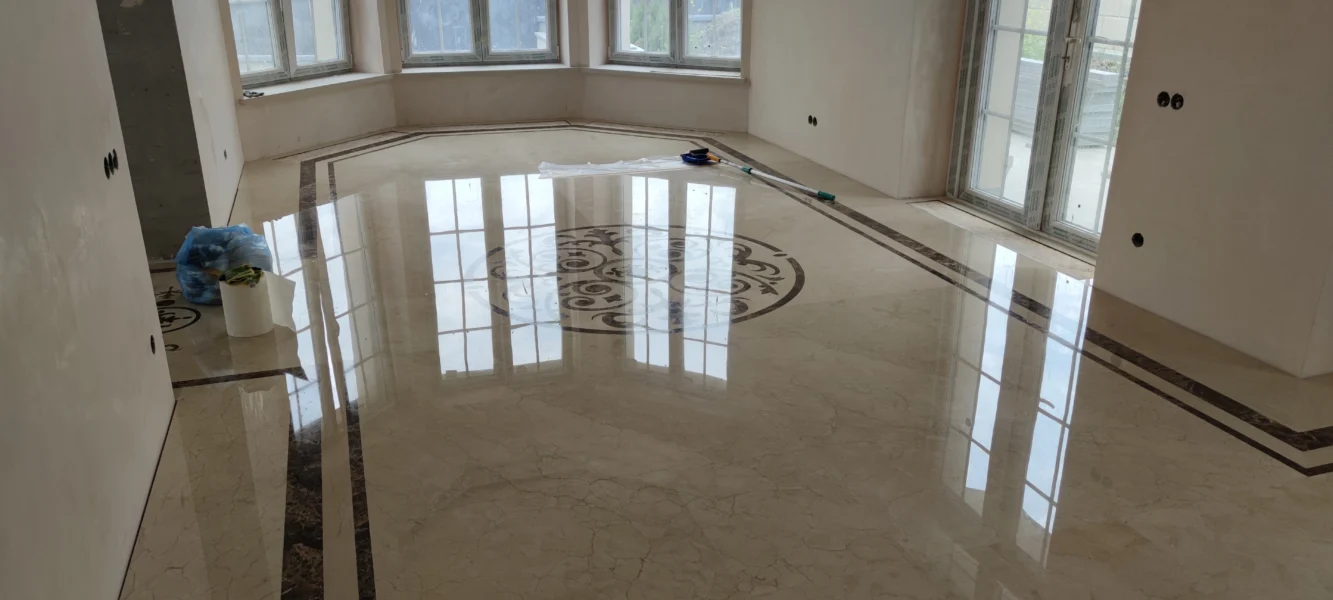
Marble floors age differently than most other flooring materials. Scratches, dull patches, and etch marks build up slowly, and most homeowners don’t notice the change day to day — until a visitor points it out, or a photo makes the wear obvious. At that point the usual question is whether the floor needs to be replaced, or whether it can be restored.
In most cases, restoration is possible. Marble is a soft, reactive stone, and the surface damage people worry about most — dullness, light scratching, cloudy spots from acidic spills — sits in the top layer of the material. That layer can be ground down and repolished without touching the structural stone underneath. This is why professional restoration almost always costs less than replacement, and why it’s worth checking before assuming the floor is beyond saving.
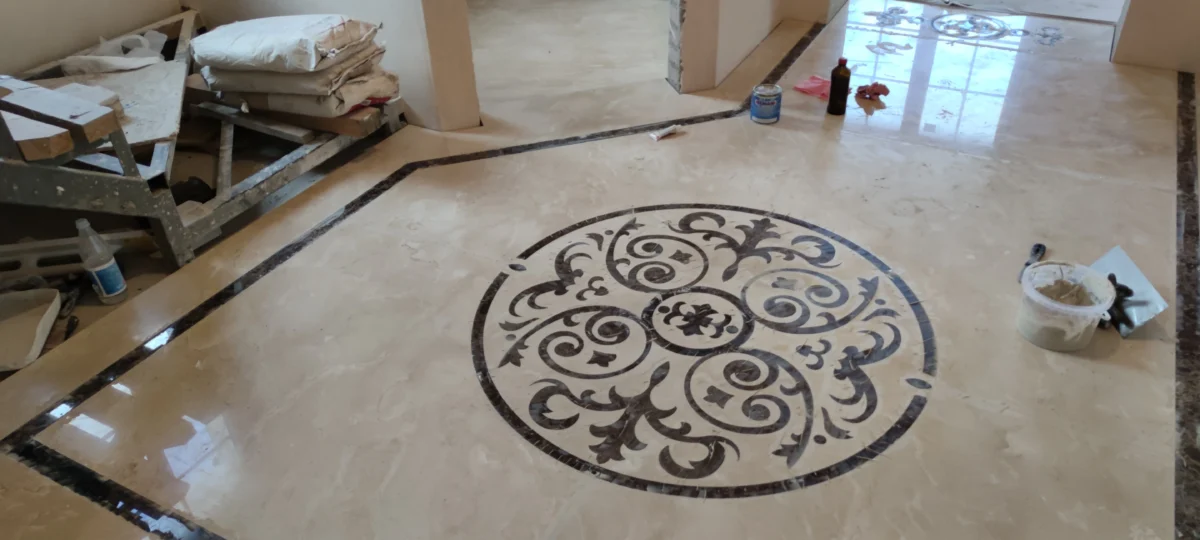
What to look for before deciding
The first thing to check is whether the damage is cosmetic or structural.
Cosmetic damage includes:
- Dull or cloudy patches, especially in high-traffic areas
- Etch marks from spilled wine, juice, or cleaning products
- Light surface scratches from furniture or foot traffic
- Loss of shine compared to when the floor was installed
This type of wear is almost always repairable through grinding, honing, and polishing. The process removes a very thin layer of stone and brings back a level, even finish.
Structural damage is a different situation, and includes:
- Deep cracks that run through the full thickness of a tile
- Chipped or broken edges and corners
- Hollow-sounding tiles (a sign the tile has separated from the substrate underneath)
- Tiles that rock or move underfoot
Cracks and chips can usually still be repaired with color-matched epoxy rather than full tile replacement, as long as the damage doesn’t affect a large area. A hollow or loose tile is the one situation where the problem isn’t really about the stone — it’s about what’s happening underneath it, and that needs to be addressed before any polishing work makes sense.
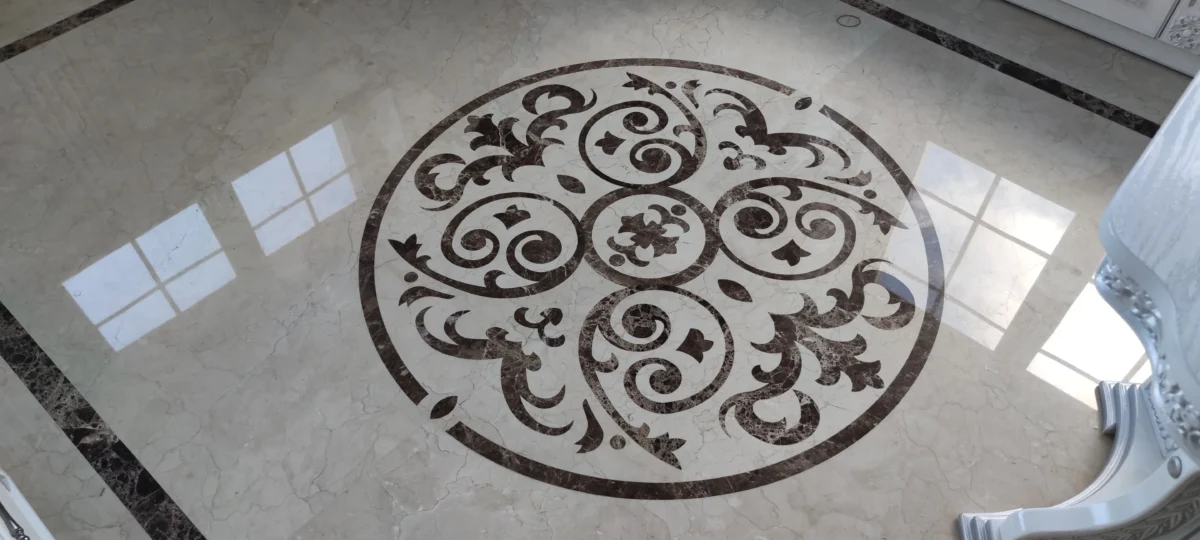
Why restoration is worth checking first
Full replacement means removing existing tile, disposing of it, sourcing new material that matches (which isn’t always possible if the original batch is no longer available), and reinstalling — with all the disruption that involves in an occupied home. Restoration, by comparison, is done in place. There’s no demolition, and in most cases the room stays usable the same day or the next.
The trade-off is that restoration has limits. If a large percentage of tiles have deep structural cracks, or if previous “repairs” were done with the wrong material and have discolored the stone permanently, replacement may genuinely be the more practical option. A straightforward way to find out is to send clear photos of the problem areas, along with the approximate size of the floor, to a stone restoration specialist before deciding either way.
A quick way to self-check
Run a hand over the surface. If it feels smooth and the dullness is only visual, that’s almost always cosmetic and fixable through polishing. If you feel a ridge, a crack edge, or movement when you press down near a seam, that’s worth a closer look before assuming a simple polish will solve it.
Marble restoration specialists like Uni-Stone in Toronto typically assess floors this way — separating what’s cosmetic from what’s structural — before recommending a repair plan, since the right fix depends entirely on which category the damage falls into.
