
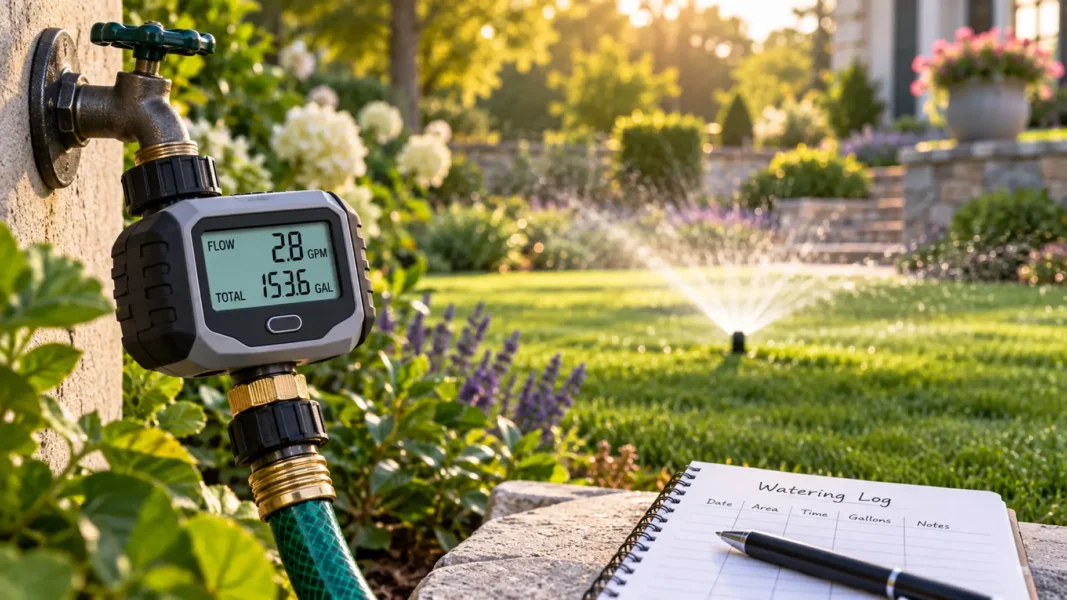
Measuring your garden water usage is the most effective way to improve outdoor watering efficiency and lower your water bill. By tracking exactly how many gallons your lawn irrigation system uses, you can stop overwatering, prevent lawn disease, and promote healthier root growth. According to the United States Environmental Protection Agency, outdoor water use accounts for about 30 percent of total household water consumption nationally. In dry regions, that number climbs even higher. The frustrating part is that most of this water never actually reaches the plant roots. It evaporates on hot pavement, runs off compacted soil, or sinks below the root zone.
If you are guilty of guessing how long to leave the hose on, you are not alone. The good news is that fixing this is easier than you might think. You just need to measure what you use. Once you see the actual numbers, improving your outdoor watering efficiency becomes surprisingly easy.
Why Measuring Garden Water Usage Matters
Turf experts generally agree that a healthy lawn needs roughly one inch of water per week, including rainfall. One inch of water per week equals approximately 0.62 gallons per square foot. To calculate your lawn’s total need, multiply your lawn’s square footage by 0.62. For example, a 1,000 square foot lawn requires about 620 gallons of water weekly. Yet most homeowners have no idea how long their sprinkler takes to deliver that single inch. Without measuring, people usually water too long.
Overwatering does not just inflate your water bill. It actually suffocates your grass roots by blocking oxygen and creates a damp environment where fungal diseases thrive. Brown patch and powdery mildew love overwatered lawns. These diseases cause irregular tan spots with dark borders that can spread quickly across bluegrass and ryegrass. Underwatering is just as bad because it forces grass into dormancy and creates weak, shallow roots. The line between a healthy lawn and a dying one is measured in inches and gallons, not guesswork.
How to Measure Irrigation Water Consumption
You do not need complex equipment to understand your water flow. Two simple methods give you all the data you need to make smart decisions.
The Catch Can Test for Sprinkler Calibration
Before you go buying expensive equipment, start with a classic do it yourself method for sprinkler calibration. The catch can test is easy and takes about fifteen minutes. Follow these steps to find your hourly application rate:
- Place 5 to 6 straight sided, empty containers like tuna cans randomly across your lawn.
- Turn on your sprinkler and let it run for exactly 15 minutes.
- Use a ruler to measure the water depth in each can.
- Calculate the average depth of all cans.
- Multiply that number by 4 to find your sprinkler’s hourly application rate.
If the cans collect a quarter inch in fifteen minutes, your sprinkler delivers one inch per hour. You can then set your timer accordingly. University extension guides recommend this audit to calibrate pop up sprinkler systems accurately.
Using a Garden Hose Flow Meter
The catch can test is great for a snapshot, but it does not track total usage over time. For ongoing monitoring, you need a device attached directly to your spigot. This is where attaching a dedicated water flow meter to your outdoor faucet pays off. Instead of estimating, you can read exact gallons per session directly from an LCD screen. These devices thread easily between the faucet and your garden hose. High quality models feature solid brass fittings and deliver accuracy within five percent. They also carry waterproof ratings like IPX6 so they survive rain and daily outdoor use.
Many modern options even offer WiFi or Bluetooth connectivity. This lets you log your usage on a smartphone app so you can spot patterns over weeks and months. Some models feature a dual zone display that shows single session volume and seven day average usage at a glance. When you pair this device with a programmable hose timer, you close the loop. You set the schedule based on real measurements, and the system delivers exactly what your lawn needs.
One thing to keep in mind when installing your meter: ensure the brass fittings are hand tightened only. Over tightening with a wrench can damage the internal turbine sensor and skew your gallons per minute readings.
Strategies to Improve Outdoor Watering Efficiency
Measuring is the diagnostic step. The next step is changing your habits to squeeze more green out of every gallon. Here are proven strategies to improve your irrigation management.
Water at the Right Time
Always water early in the morning. The window between 5 AM and 10 AM is ideal because winds are usually calm and temperatures are lower. The water has time to soak into the soil before the midday sun causes evaporation. Try to avoid evening watering because leaving grass wet overnight invites fungal diseases to take hold.
Water Deeply and Less Often
Two or three thorough watering sessions per week are much better than daily light sprinkling. Deep watering encourages roots to grow deeper into the soil where moisture lingers longer underground. This practice builds drought tolerant grass that can survive dry spells without constant intervention. Shallow daily watering, on the other hand, creates weak roots that dry out quickly and demand even more water.
Switch to Drip Irrigation
If you water flower beds or vegetable gardens, consider switching to drip irrigation. Drip systems deliver water directly to the root zone and can cut your water consumption by 30 to 50 percent compared to traditional overhead sprinklers. Agricultural studies show some drip systems save up to 80 percent of water. Because the water does not sit on the leaves, drip irrigation also reduces foliar diseases in your garden.
Maintain Your Sprinkler System
A sprinkler that waters the driveway is just wasting money. Walk through your system monthly to adjust heads that have shifted and replace clogged nozzles. A flow meter makes hidden leaks obvious. If your usage creeps up when nothing is running, you likely have an underground leak that needs fixing. Monitoring your soil moisture level alongside your GPM reading helps you fine tune the system perfectly.
Let Rainfall Do the Work
Nature provides free water, so take advantage of it. Use a simple rain gauge to track weekly rainfall. If your lawn already received three quarters of an inch of rain, scale back your irrigation for the week. Smart timers with rain delay sensors automate this process for you. They pause your scheduled watering when measurable rain falls.
Group Plants by Water Need
Thirsty lawns, moderate vegetable beds, and drought tolerant native shrubs each require different volumes. Hydrozoning means placing plants with similar water demands on the same irrigation zone. This prevents the common mistake of running the whole yard on a single schedule tuned to the thirstiest patch.
Frequently Asked Questions About Lawn Watering
How many gallons of water does a lawn need per week?
A healthy lawn needs about one inch of water per week, including rainfall. This equals roughly 0.62 gallons per square foot. A 1,000 square foot lawn requires about 620 gallons of water weekly.
What is the best time of day to water a lawn?
The best time to water is early morning, between 5 AM and 10 AM. This minimizes water evaporation and prevents fungal diseases caused by leaving grass wet overnight.
How do I know if I am overwatering my lawn?
Signs of overwatering include spongy soil, standing water, runoff, and the appearance of fungal diseases like brown patch or powdery mildew. You might also notice an increase in your gallons per minute usage on your flow meter without changing your watering schedule.
The Bottom Line on Garden Irrigation
Garden irrigation is one of the few household activities where small changes bring immediate savings. Measure what you apply, compare it to what your plants actually need, and then trim the excess. Attach a flow meter to your spigot, run a catch can test on your lawn, and adjust your timer based on the data. These simple steps can cut your outdoor water consumption by a third or more. You will keep your lawn greener, your soil healthier, and your water bills lower. In a world where water costs keep rising, data driven yard care is simply good gardening.
