
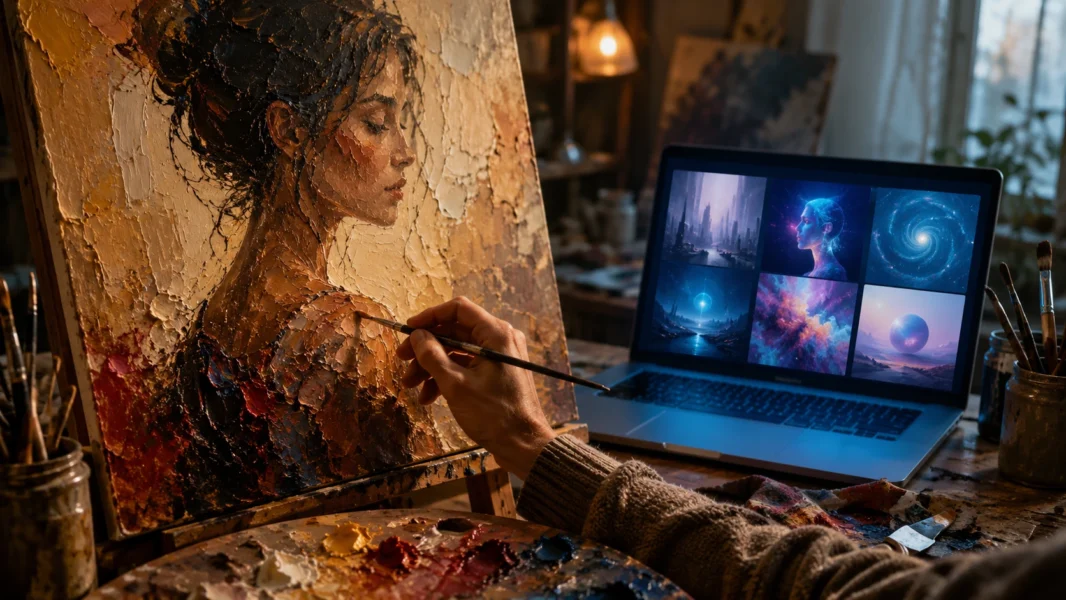
The rapid evolution of artificial intelligence has undeniably transformed the creative landscape across the globe. With the simple push of a button and a well-crafted text prompt, incredibly complex and visually stunning images can be generated in mere seconds. However, amidst this relentless digital revolution, a fascinating and powerful counter-trend is emerging. Collectors, interior designers, and everyday art enthusiasts are increasingly returning to traditional, tangible mediums. Platforms like TryArtWork are witnessing a renewed appreciation for physical creations. People are beginning to ask themselves what truly gives a piece of art its lasting value and soul, leading to a massive resurgence in the demand for hand-painted art. This comeback is not simply a nostalgic reaction to new technology; rather, it is a profound recognition of the unique, irreplaceable qualities that only human hands can provide. As we become increasingly saturated with flawless digital imagery, our eyes and minds are naturally seeking out the warmth and authenticity of traditional craftsmanship.
The Craving for Authenticity and Emotion
One of the primary reasons for this widespread resurgence is the universal human craving for genuine authenticity. Artificial intelligence operates purely on complex algorithms, processing billions of existing data points to create a mathematically synthesized output. While the end results can undoubtedly be beautiful and visually striking, they fundamentally lack personal experience, authentic emotion, and deliberate intention. A human artist, on the other hand, pours their current mood, their complex personal history, and their unique worldview into every single deliberate brushstroke. When you stand before a large, hand-painted canvas, you are not just passively looking at a pleasing arrangement of contrasting colors; you are actively engaging in a silent, profound dialogue with the creator. This deep emotional resonance is something that even the most advanced lines of code cannot replicate. Buyers are increasingly seeking out this genuine psychological connection, heavily preferring artworks that carry the undeniable signature of a living, breathing person who has actually lived and felt the real world they are depicting.
The Power of Texture and Physical Presence
Another critical factor driving the enthusiastic return to hand-painted art is the uncompromisingly physical nature of the medium itself. Digital images, whether viewed on a compact smartphone screen or a massive high-definition monitor, are ultimately completely flat. They exist permanently trapped behind a layer of glass, confined to a strictly two-dimensional realm. Hand-painted art, particularly those pieces utilizing traditional mediums like thick oil paints or heavy-body acrylics, boasts an inherent and undeniable three-dimensionality. The classic impasto technique, where oil paint is laid on the stretched canvas in remarkably thick layers, creates actual physical shadows, catches the ambient light, and almost invites the viewer to reach out and touch its surface. The physical presence of a painting actually changes as the natural light in a room shifts from morning to evening. This dynamic, ever-changing interaction between the artwork and its physical environment provides an ongoing sensory experience that flat, backlit digital images simply cannot offer, no matter how high their resolution might be.
The Appeal of Human Imperfection
In the rapidly expanding realm of artificial intelligence, absolute perfection is the default state of being. Digital algorithms are explicitly designed to automatically smooth out rough edges, balance complex compositions flawlessly, and ensure mathematically accurate lighting in every single generation. However, human art inherently thrives on its distinct imperfections. A slightly asymmetrical face in a portrait, an unpredictable and chaotic splash of bright color, or a seemingly uneven brushstroke often becomes the most captivating and memorable element of a physical piece. These supposed mistakes are actually the unique fingerprints of the human artist. They serve to constantly remind us that the physical creation process is entirely organic, wonderfully messy, and deeply human. In a modern world that is increasingly dominated by highly polished, error-free digital content and heavily filtered media, these raw, unrefined elements of hand-painted art offer a incredibly refreshing and much-needed contrast. They celebrate the innate beauty of human fallibility and the spontaneous nature of real artistic expression.
Investment Value and True Scarcity
From a serious collector’s and investor’s standpoint, the fundamental principles of economics heavily favor traditional, physical art. The long-term financial value of any highly sought-after collectible is closely tied to its ultimate scarcity. AI-generated images, by their very digital nature, can be downloaded, copied, widely distributed, and printed an infinite number of times with absolutely zero degradation in overall visual quality. In the digital realm, there is no such thing as a true, singular original. In stark contrast, a hand-painted piece of fine art is a completely singular, unique physical entity. Even if a master artist attempts to faithfully recreate their very own painting, it will never be an exact, pixel-perfect duplicate. This inherent, uncompromising one-of-a-kind nature makes physical art a far more reliable and stable store of financial value. Serious collectors and investors recognize that owning an original canvas means proudly owning a unique piece of cultural history that simply cannot be cloned or generated by a machine. As the digital market becomes completely flooded with billions of easily generated AI images, the true rarity of a genuine, hand-crafted painting only sharply increases its financial and cultural worth.
The Irreplaceable Role of the Human Painter
The current age of artificial intelligence is absolutely not spelling the end of traditional human artistry; rather, it is powerfully highlighting its irreplaceable value in our society. AI will undeniably continue to serve as an incredibly powerful tool for rapid ideation, commercial illustration, and mass digital entertainment. However, the distinct and elevated role of the dedicated human painter remains completely secure. Hand-painted art is making a truly triumphant comeback because it offers fundamental human experiences that machines simply cannot provide. To clearly summarize the enduring power and appeal of traditional physical art in our modern, technology-driven era:
- It consistently provides a direct, highly emotional, and deeply psychological connection to the original human creator.
- It offers a completely tactile, highly textural visual experience that interacts dynamically and constantly with physical interior spaces.
- It warmly embraces human imperfection, openly celebrating highly organic and deeply spontaneous creative expression.
- It securely guarantees true market scarcity and absolute uniqueness, solidly securing its long-term financial value for modern collectors.
As we collectively navigate an increasingly virtual and heavily digitized world, our innate human desire to securely anchor ourselves with physical, deeply meaningful, and truly human creations will only continue to rapidly grow. Hand-painted canvases serve as a constant reminder of our own humanity, offering a grounded, authentic experience that the digital world, for all its infinite possibilities, can never truly replace.