
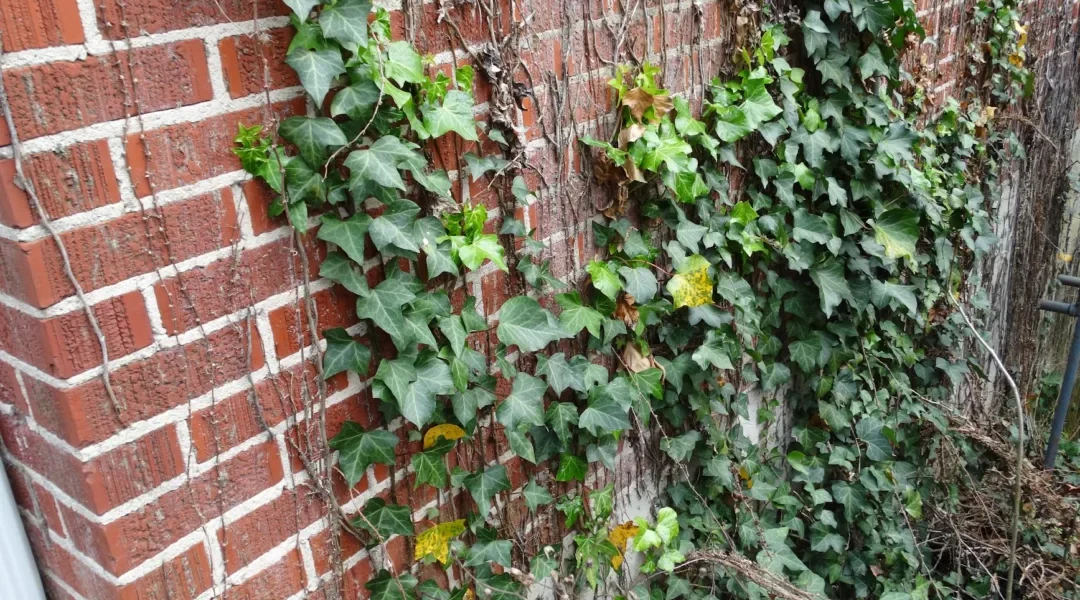
A brick house covered in climbing ivy is one of the most romantic images in residential design. It looks established, it softens hard edges, and it can keep a wall cooler in summer. It is also one of the most debated subjects among masons and homeowners, because what looks charming from the street can be quietly working on the wall underneath.
The honest answer is that it depends on the age and condition of the brick, the type of mortar, and the type of plant. This guide explains how climbing plants interact with masonry, which situations are low-risk, and when removal is the better choice.
How Climbing Plants Attach to Brick
Different plants grip walls in different ways, and the method of attachment determines most of the risk.
- Clinging roots and pads. English ivy produces small aerial rootlets, and Boston ivy and Virginia creeper use adhesive pads. These plants attach directly to the surface and can work into small cracks and pores.
- Twining vines. Plants like wisteria wrap around supports and can exert enough pressure to lift trim, gutters, or loosely fixed items.
- Trellis-supported climbers. Roses and clematis grown on a separate frame do not attach to the wall itself and pose much less risk.
Where the Damage Comes FromMoisture Retention
A thick mat of leaves keeps the wall in shade and slows evaporation. Brick that stays damp is more vulnerable to freeze-thaw damage, which is the leading cause of spalling in Ontario. Over time, constantly damp brick and mortar may also develop algae, mould, and efflorescence.
Entering Cracks and Joints
Rootlets seek out small openings. If mortar joints are already cracked or recessed, roots can work into them, widen them, and hold moisture in place. On sound, well-pointed walls with hard mortar, this effect is much smaller.
Soft Mortar and Older Brick
Older homes with lime-based mortar and softer brick are the most at risk. The surface is more porous, so plants penetrate and hold onto it more easily, and the damage can be significant when the plant is eventually removed.
Interference With Gutters, Roofing, and Windows
Vines that reach the roofline can lift flashing, clog gutters, and push into eaves. Shoots that find their way behind shutters, trim, or window frames can cause water entry in places that are hard to inspect.
Hidden Inspection Problems
Perhaps the biggest practical issue is that foliage hides the wall. Cracks, rust-stained lintels, failing mortar, and active leaks can go unnoticed for years behind a green screen.
When Ivy Is Lower Risk
- The wall is modern brick veneer with hard, well-maintained mortar
- Joints are tight and the brick surface is dense and sound
- The plant is on a trellis or wires set slightly off the wall
- The vegetation is kept trimmed, with gutters, windows, and the roofline left clear
- The wall is inspected regularly, with the plant pulled back temporarily when needed
When to Remove It
- The mortar is soft, sandy, or already crumbling
- The brick shows spalling or flaking
- The home is older, with historic brick and lime mortar
- You see damp patches or leaks on interior walls
- The plant is entering the roofline, gutters, or window frames
- You want to repair or repoint the wall
How to Remove Climbing Plants Properly
The way plants are removed affects how much damage is left behind.
- Cut the main stems at the base. Leave a section of the stem above ground, and cut away any attached growth from ground level up to about a foot or two.
- Let the plant die back. Leaving the upper growth for several weeks to dry makes removal much easier and reduces tearing.
- Peel gently. Pull the dead vines away slowly from the top down, avoiding yanking, which can take chunks of mortar or brick face with it.
- Treat the stump. Cut stems may regrow, so they should be treated or dug out according to the plant type.
- Clean the leftover rootlets. Remaining traces can be softened with water and brushed away with a stiff nylon brush. Avoid wire brushes, harsh acids, and high-pressure washing.
- Inspect the wall. Once exposed, look closely at mortar, brick faces, and any areas of staining or damage.
What You May Find Underneath
It is common to uncover a wall that needs attention. Typical findings include eroded mortar joints, small spalled areas, and discolouration where the plant held moisture. Mortar damage in particular calls for repointing before the wall sees another winter. Professional brick repair usually starts by repairing joints and replacing damaged units so the wall is sound again.
Where the damage is widespread, a more comprehensive brick restoration plan may be a better approach, treating the whole elevation as a single project and matching colour and mortar to what was there before.
Alternatives That Keep the Look
- Trellis systems. A freestanding frame or wire grid a few inches off the wall lets climbers grow without attaching to the brick.
- Espaliered shrubs and fruit trees. These are trained flat against supports and maintained with pruning.
- Planters and foundation beds. Plants placed in front of the wall give a green look while leaving the surface open for air and inspection.
- Seasonal climbers. Annual vines can be grown on strings each year and removed at season’s end.
Timing and Local Considerations
Removal is easiest in late fall or early spring, when growth is dormant and the wall is dry. Any repointing afterwards should happen once temperatures stay above about 5°C. Homeowners with established vines on older houses, including those searching for Thornhill masonry services, often have the plants removed in early spring so repairs can begin as soon as the season opens.
FAQ
Is Boston ivy safer than English ivy?
Both attach directly to walls, and both can cause issues on weak mortar or soft brick. Boston ivy tends to leave more visible pad marks, while English ivy is more aggressive in cracks. Neither is risk-free on an older wall.
Will removing ivy damage the brick?
It can, especially if it is torn off while still alive and firmly attached. Cutting at the base and letting the plant die back first reduces the damage considerably.
Does ivy help insulate a house?
Dense foliage can provide some shade and a modest cooling effect in summer, but the benefit is small and is rarely worth the risk to older masonry.
Can I keep ivy if my walls are in good condition?
Often yes, provided the mortar is sound, the plant is trimmed away from gutters and windows, and you inspect the wall regularly. If problems appear, the plant can be removed before they get worse.
