
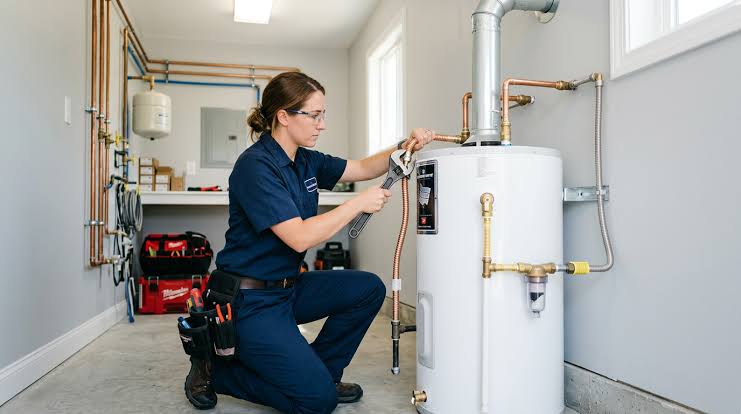
Replacing an old water heater with a new one sounds like a straightforward swap, but current code requirements often demand upgrades that weren’t necessary when the original unit went in years or decades ago. Expansion tanks, once optional in many jurisdictions, are now frequently required alongside a new installation to accommodate pressure changes from thermal expansion, a requirement that surprises homeowners expecting a simple like-for-like replacement. A page like https://www.thehotwaterheaterpros.com/water-heater-services/water-heater-installation/ typically walks through these code triggers upfront, since discovering mid-installation that additional parts and labor are required tends to frustrate homeowners who budgeted only for the unit itself.
Seismic strapping requirements add another layer in regions prone to earthquakes, mandating that tank water heaters be secured to prevent tipping during seismic activity. Older installations sometimes predate these requirements entirely, meaning a straightforward replacement still needs new strapping added to meet current standards even though the previous unit operated for years without it. Venting requirements have also evolved for gas units, and a new installation sometimes requires venting modifications to meet current clearance and combustion air standards, even when the old unit’s venting technically still functioned.
Correct Sizing Prevents Problems That Don’t Show Up Until Later
Choosing a replacement unit based simply on matching the old unit’s capacity assumes the original sizing was correct in the first place, which isn’t always true. Household water usage changes over time — a family that’s grown, added a dishwasher, or renovated to include an additional bathroom may have outgrown a tank sized for the household’s needs a decade earlier. Installing a like-for-like replacement in these situations reproduces whatever sizing shortfall already existed, leaving homeowners frustrated by inadequate hot water supply despite having just paid for a full installation.
Tankless units complicate sizing further, since their output capacity depends on flow rate and temperature rise calculations specific to a household’s peak simultaneous demand rather than simple tank volume. A tankless unit undersized for a household’s actual peak usage will struggle noticeably when multiple fixtures run hot water simultaneously, a problem that doesn’t appear during single-fixture testing but becomes obvious during normal household mornings when several people are getting ready at once. Proper sizing calculations before installation prevent this scenario, but they require more detailed assessment than simply matching a new unit’s rated capacity to an old unit’s tank size.
What Actually Happens During Installation Day Affects More Than People Expect
Installation involves more steps than simply disconnecting an old unit and connecting a new one. Proper disposal of the old water heater matters both environmentally and logistically, since these units contain materials that shouldn’t go directly into standard waste streams, and responsible installers handle this disposal as part of the service rather than leaving homeowners to arrange it separately afterward. Testing after installation should include checking for leaks at every connection point, verifying proper temperature calibration, and confirming pressure relief valve function, steps that protect against problems surfacing days or weeks after an installer has already left.
Homeowners sometimes assume installation quality only matters for complex systems like tankless units, overlooking that even standard tank installations involve enough technical steps that shortcuts create real problems. Improperly tightened connections can develop slow leaks that go unnoticed until they’ve caused water damage, while incorrect temperature and pressure valve installation creates safety risks that may not manifest until unusual operating conditions trigger a failure. Choosing an installer based on thoroughness during this process, rather than simply the lowest quoted price, tends to prevent the kind of preventable problems that turn a routine replacement into a costly repeat service call within the unit’s first year of operation.