
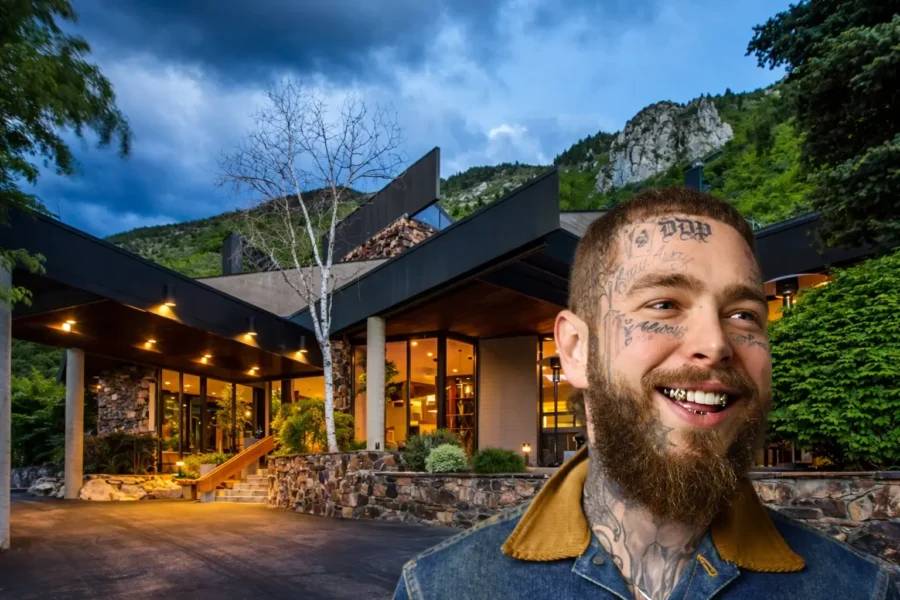
Post Malone’s house is a 13,000-square-foot estate in Cottonwood Heights, Utah. He bought it in 2018 for $3,093,750. The property sits on 6.75 acres at the mouth of Big Cottonwood Canyon.
Nationally recognized architect Guy Dreier designed the home. It features a reported underground bunker built for 30 people. You will also find floor-to-ceiling windows, a wine cellar, and a basketball court. The materials palette blends rustic white oak with imported stone.
This is the Grammy-nominated artist’s primary residence. He chose it for three reasons: privacy, mountainous terrain, and self-sufficiency potential.
I have spent over a decade evaluating luxury residential properties. What makes this estate compelling is not the celebrity owner. It is the architectural thinking behind every choice. Dreier’s modernist design meets a client who wanted fortress-like security. The result is a property worth studying for anyone interested in how high-end homes balance beauty, safety, and daily function.
Quick Facts: Post Malone’s Utah Home
| Detail | Information |
|---|---|
| Purchase Price | $3,093,750 (2018) |
| Location | Cottonwood Heights, Salt Lake City, Utah |
| Lot Size | Approximately 6.75 acres |
| Square Footage | 13,000 sq ft |
| Bedrooms / Bathrooms | 5 bedrooms, 7 bathrooms |
| Original Build Year | 1986 |
| Architect | Guy Dreier (nationally recognized modern architect) |
| Buying Entity | LLC named “Wow Cool House” |
| Notable Features | Underground bunker (30-bed capacity), bulletproof glass, wine cellar, pool, basketball and tennis courts |
| Adjacent Land | Thousands of acres of conservation land |
Key property details for Post Malone’s Cottonwood Heights estate
Where does Post Malone live?
Post Malone lives in Cottonwood Heights, Utah, in a 13,000-square-foot estate at the mouth of Big Cottonwood Canyon. The property sits on roughly 6.75 acres and borders thousands of acres of protected conservation land. He purchased the home in 2018 for $3.09 million and it has served as his primary residence since. The property includes five bedrooms, seven bathrooms, a private recording studio, a resort-style pool, and a reported underground bunker. While he previously rented in Beverly Hills and San Fernando Valley, Utah remains his main home.
Why Utah? The Location Strategy Behind the Purchase
Post Malone, born Austin Post, bought this property after speaking openly about government overreach. He worried about the risks of living in dense urban areas. In a 2018 interview with Montreality, he urged people to “move somewhere” remote. The clip later went viral on TikTok. He warned about infrastructure collapse and limited escape routes if martial law were declared.
The Cottonwood Heights location was not a random pick. It sits at the mouth of Big Cottonwood Canyon. The property backs into thousands of acres of conservation land. That land cannot be developed. In practical terms, this means no neighbors behind you. No future construction. Just a natural buffer that provides real, lasting privacy.
Most coverage misses the strategic intelligence of this placement. Cottonwood Heights is far enough from Salt Lake City to avoid urban density. Yet it remains close to international airports, medical facilities, and supply chains. The area also sits near four major ski resorts: Brighton, Solitude, Snowbird, and Alta.
For a property marketed as apocalypse-ready, the balance between isolation and access is critical. This location gets it right. You get the distance. You keep the infrastructure. That is hard to find.
Architecture & Design: Guy Dreier’s Modernist Mountain Estate
The Architect and His Design Language
Guy Dreier is a nationally recognized modern architect. He is known for homes that erase the line between indoor and outdoor living. His designs often feature dramatic glass walls and open floor plans. He favors natural textures over synthetic finishes every time.
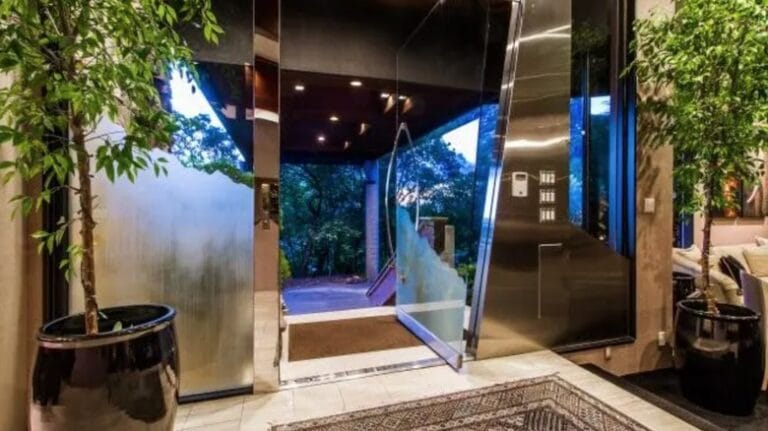
The Post Malone estate fits that approach perfectly. Expansive pocketing glass walls open the interior to canyon and mountain views. The material palette relies on rustic white oak and imported stone. These choices ground the home in its mountain setting.
What stands out to me is the three-story atrium. It allows natural light to reach deep into the home’s core. In a 13,000-square-foot structure, dark interior zones are a common design failure. The atrium solves this by creating vertical light channels.
But there is a real trade-off here. Three stories of glass in a mountain climate with heavy snowfall means high heating costs. Utah’s altitude and temperature swings are demanding. Most architects would only make this choice when the client puts views and natural light above energy efficiency. That appears to be the case here.
Materials and Interior Palette
The interior palette of rustic white oak and imported stone deserves closer attention. White oak is a strong choice for mountain homes. Its tight grain resists warping in low-humidity environments. That matters at Utah’s elevation. Softer woods like pine or cedar struggle in these conditions. White oak holds its shape across wide temperature swings.
The imported stone, likely limestone or sandstone, serves a structural purpose. It provides thermal mass. The stone absorbs heat during the day and releases it slowly at night. This passive temperature management works alongside the home’s HVAC system. It is a smart, quiet system that most people would never notice.
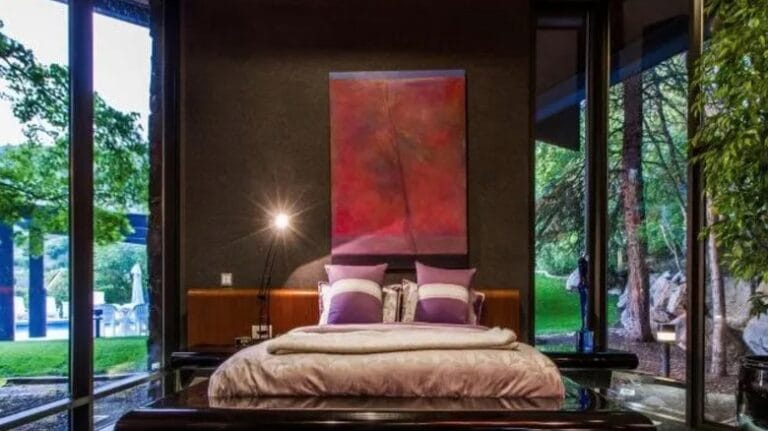
The bulletproof floor-to-ceiling glass sets this home apart from standard luxury builds. Ballistic-rated glazing uses multiple laminated layers of glass and polycarbonate. Each window panel becomes significantly heavier. This demands reinforced structural framing and specialized installation. Both drive up construction costs. The payoff is clear: uninterrupted views with physical security that standard glass cannot match. It is a functional upgrade that also preserves the design intent.
Key Features Analysis: What Makes This Property Unique
The Underground Bunker: Functional Shelter or Statement Piece?
In a 2017 H3 Podcast appearance, Post Malone said he planned to install “30 bunk beds” underground. This bunker has become the most talked-about feature of the property. But from a construction standpoint, it raises serious questions.
A three-level underground bunker carved into a mountainside is a major build. It requires extensive excavation. It needs waterproofing, ventilation, and independent power and water supplies. To function as a genuine long-term shelter, it would also need its own air filtration, waste management, and food storage.
In reality, most celebrity residential bunkers function as panic rooms or fortified storage. They are not fully self-sustaining shelters. Without verified details on dedicated systems, the true survival capability of this bunker remains unclear.
What we do know is this: the home’s location, water access, conservation land buffer, and reinforced construction provide real disaster resilience. It exceeds what typical residential builds offer. Whether the underground space works as a 30-person compound or a reinforced private retreat, it adds a layer of security rarely seen in luxury real estate.
Layout Efficiency: 5 Bedrooms, 7 Bathrooms in 13,000 Square Feet
Five bedrooms across 13,000 square feet breaks down to roughly 2,600 square feet per bedroom. That is exceptionally generous. For context, a typical luxury master suite occupies 500 to 800 square feet. This property allocates three to five times that per sleeping room.
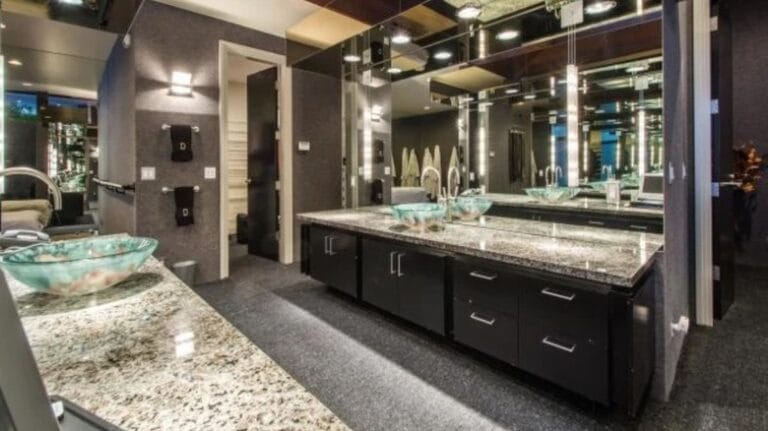
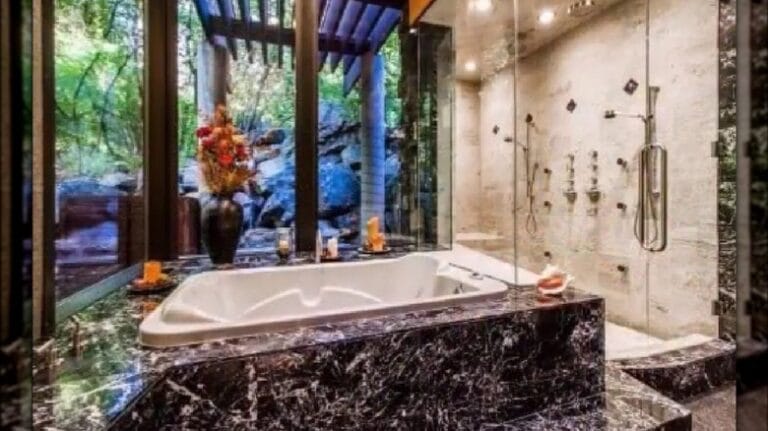
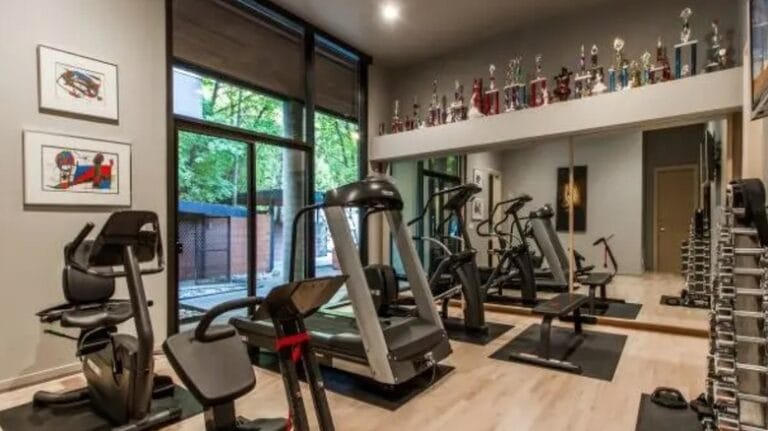
What this tells me is that the real square footage goes to shared spaces. The guest quarters, private office, and recreational amenities claim the majority of the footprint. The two extra bathrooms beyond the bedroom count likely serve the gym, pool area, and guest quarters. They are not en-suite additions.
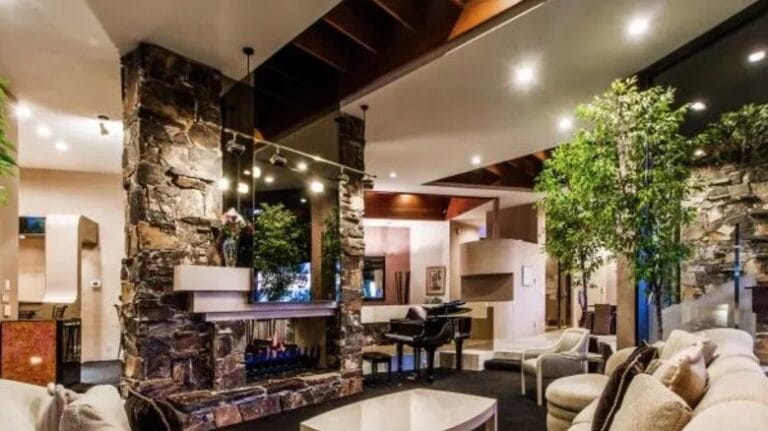
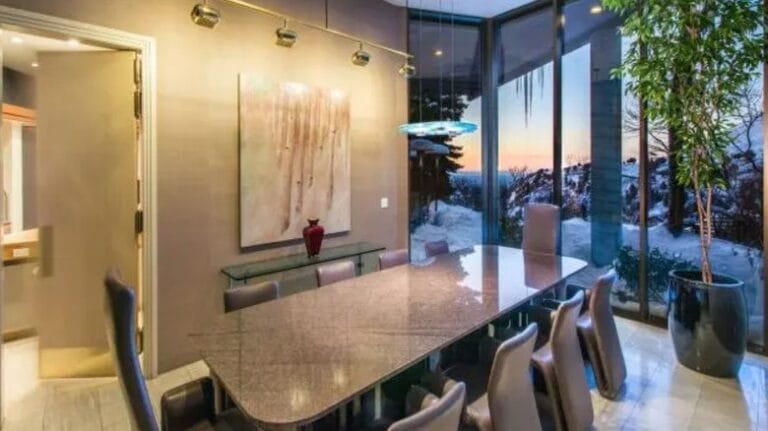
The open-concept living and dining area flows into a gourmet kitchen. A separate bar area serves the main living room. This layout supports entertaining at a large scale. The separate guest quarters and private office create functional zones. Guests or staff can use the property without disrupting the primary living areas.
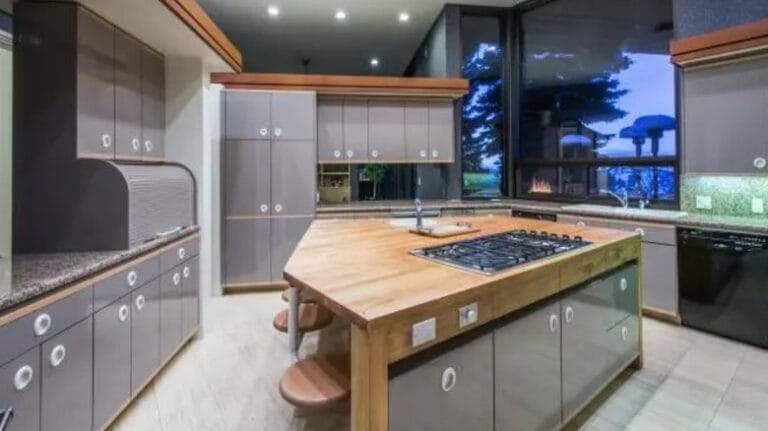
For someone who values privacy, this zoned approach works better than a standard open plan. In a fully open layout, every space is visually and acoustically connected. Here, you get separation without losing the feeling of a grand, unified home.
Outdoor Amenities and Mountain Living Practicality
The outdoor amenities include a resort-style pool, a hot tub, an outdoor kitchen, and a fireplace. There is also a basketball court and a tennis court. On 6.75 acres, these features fit without creating a crowded layout.
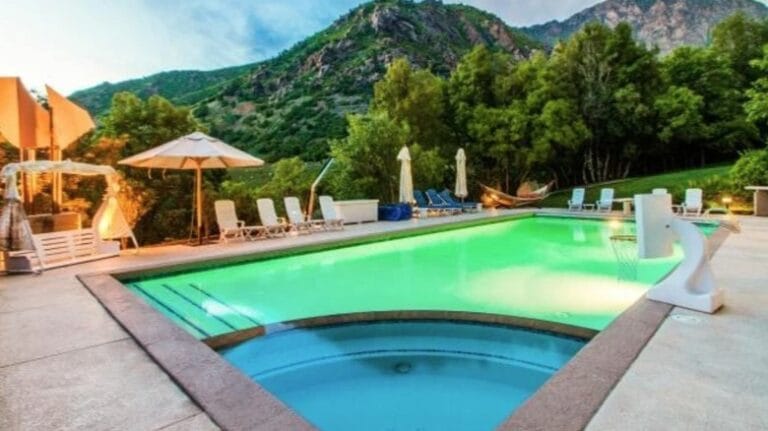
What matters from a design perspective is how these spaces relate to the home’s sight lines. The pool and hot tub area, paired with the outdoor kitchen, create a secondary living zone. This extends the home’s usable area during Utah’s warmer months, roughly May through September.
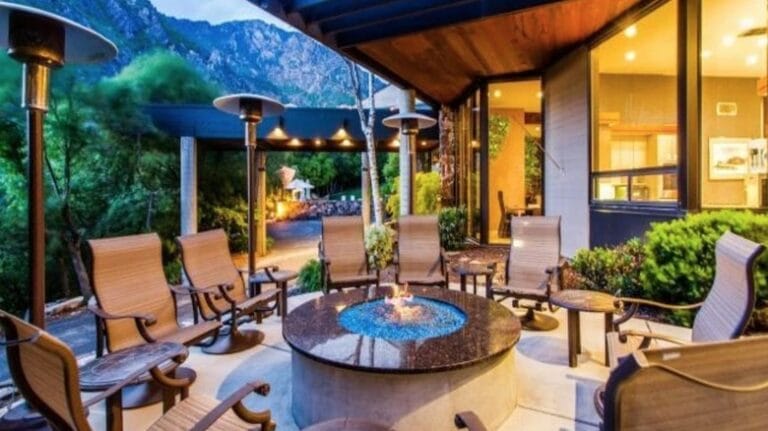
The outdoor fireplace has a clear dual purpose. It provides warmth on cool mountain evenings. This extends the outdoor season by weeks on both ends. It also serves as a visual anchor for the exterior gathering space.
In Cottonwood Heights, evening temperatures drop fast, even in summer. The elevation makes a well-placed fire feature functionally essential, not just decorative. The basketball and tennis courts benefit from the flat terrain at the canyon mouth. This geography naturally supports level playing surfaces without heavy grading work.
Value Assessment: Was $3 Million a Fair Price?
At $3,093,750 for 13,000 square feet on 6.75 acres, the per-square-foot cost was about $238 at the time of purchase. By luxury standards, even in 2018, that is remarkably low. Comparable properties in the Big Cottonwood Canyon area with similar acreage and views typically sell for much more per square foot.
The main reason for the lower price was the build year. The home was originally constructed in 1986. Despite Guy Dreier’s architectural pedigree, a 32-year-old structure carried implicit costs. Mechanical, electrical, and plumbing systems have a finite lifespan. Code compliance upgrades may also be needed. A buyer must factor in the cost of modernizing older infrastructure.
Fast forward to 2026, and the picture looks very different. Utah’s luxury mountain market has seen consistent appreciation. Current comparable properties in the Cottonwood Heights canyon corridor are now trading between $550 and $650 per square foot. Applying that range to this 13,000-square-foot estate puts today’s estimated value between $7.15 million and $8.45 million. Conservative estimates from recent real estate coverage place the property around $7.4 million. That represents more than a 140% increase from the 2018 purchase price.
Several factors drive this appreciation. The conservation land adjacency ensures permanent privacy. The Big Cottonwood Canyon location has become more desirable, not less. The celebrity association adds a premium that compounds over time. And the property’s unique combination of architectural pedigree, bunker infrastructure, and acreage is difficult to replicate. For a buyer who prioritizes location, privacy, and architectural character over move-in-ready modernity, this was a remarkably smart acquisition. The numbers confirm it.
Frequently Asked Questions
Where is Post Malone’s house located?
Post Malone’s house is in Cottonwood Heights, a suburb of Salt Lake City, Utah. It sits at the mouth of Big Cottonwood Canyon on roughly 6.75 acres. The property borders thousands of acres of conservation land.
How much did Post Malone pay for his Utah home?
He purchased the property in 2018 for $3,093,750. The transaction was recorded under an LLC named “Wow Cool House,” according to Utah property records.
Does Post Malone’s house actually have a bunker?
Yes. Post Malone confirmed in a 2017 interview that he planned to install 30 bunk beds in an underground bunker. The property reportedly includes a three-level underground space. While the full specs of its self-sufficiency systems have not been publicly verified, the reinforced construction and conservation land buffer provide real disaster resilience beyond standard residential builds.
Who designed Post Malone’s Utah mansion?
The home was designed by Guy Dreier, a nationally recognized modern architect. He is known for integrating luxury homes with natural landscapes. The property was originally built in 1986.
How big is Post Malone’s house?
The home spans approximately 13,000 square feet. It includes five bedrooms, seven bathrooms, a wine cellar, fitness room, indoor spa pool, home theater, basketball and tennis courts, and separate guest quarters.
Why did Post Malone move to Utah?
Post Malone moved from Los Angeles to Utah seeking privacy, space, and distance from urban celebrity life. He has called the property his “oasis.” He has also spoken openly about wanting self-sufficiency and a retreat far from densely populated areas.
