
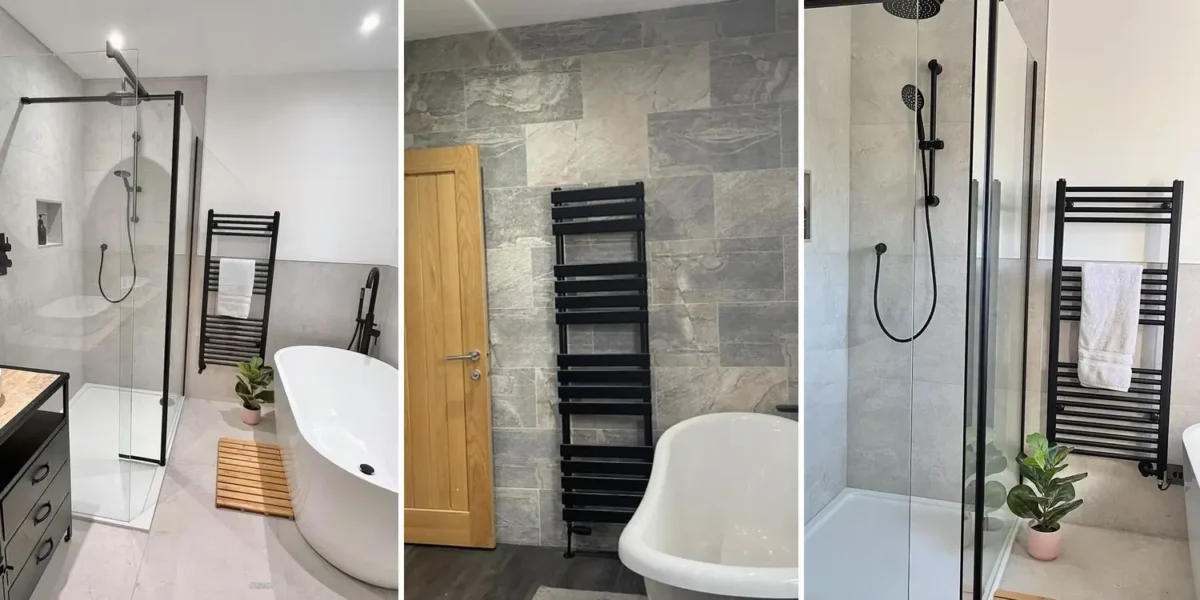
Small bathrooms present a familiar design challenge: every centimetre of wall space matters. Between the shower, basin, storage and door clearance, finding room for a heated towel rail can be surprisingly difficult. A narrow matt-black towel radiator offers one possible solution, combining a compact footprint with a contemporary finish — provided its dimensions, heating output and installation requirements suit the room.
The starting point is how the room will be used. A guest cloakroom has different demands from an en-suite used by two people every day. Before choosing a rail, consider who needs to reach it, how many towels usually hang in the room and which other fittings need access around it. A radiator that looks neatly positioned in an empty room can become awkward once a door opens or a bath towel hangs over its bars.
How much wall space does a towel radiator need?
Measure the usable wall rather than simply the gap between two objects. Skirting, pipework, window ledges and the side of a vanity can all affect the installation. Note the proposed radiator’s height, width and projection from the wall, then check the manufacturer’s drawing for valves, brackets and required clearances. The advertised width is only one part of the space the complete installation will occupy.
Pipe centres are the distance between the centres of the connection points shown on the product drawing. Do not assume that this measurement equals the overall radiator width. For example, the 350mm-wide black towel radiators in the linked range specify 300mm pipe centres, meaning the connections sit 50mm closer together than the radiator’s overall width. The exact dimensions should always be confirmed against the manufacturer’s technical drawing. If you are replacing an existing rail, record both the pipe positions and available wall space, then ask your installer to check the new model and valve arrangement before ordering. A rail can fit the wall while still requiring changes to the pipework.
A paper template or a rectangle marked with removable tape can make those dimensions easier to understand. Stand at the basin, open the bathroom door and move through the room as you normally would. Check that the proposed position leaves space for cleaning and for operating the valves. It is much easier to adjust a mark on the wall than to discover a conflict after the pipework has been prepared.
When is a 350mm-wide towel radiator useful?
Where horizontal wall space is limited, a narrow towel radiator can offer a practical alternative to a standard-width model. A 350mm-wide design may fit spaces that cannot accommodate a 500mm or 600mm radiator, provided sufficient installation clearance is available. Ranges such as Coventry Towel Radiator’s narrow black towel rails illustrate how different heights can accommodate varying layouts and heating requirements. The final choice should be based on available wall space, heat output and installation specifications.
Height deserves the same attention as width. A taller design may offer more bars, but the upper section must remain practical for the people using it. Think about the reach of children or anyone with limited mobility. Also consider how you fold or drape your towels: the amount of usable hanging space depends on the arrangement of the bars and the size of the towels, rather than the overall outline alone.
Keep the daily routine in view
The most convenient position is often one that connects naturally with the bath or shower routine, while respecting the installation requirements for the chosen model. A location that forces someone to reach around a screen or step through the main doorway can be frustrating. Equally, putting the rail behind an opening door may make the wall appear efficient on a drawing while limiting access in practice.
Try the layout with a real towel. Its folded width and hanging length can change how the space feels, particularly beside drawers or a narrow passage. The towel should not obstruct controls or another fitting. Planning this ordinary detail helps avoid a room that photographs beautifully but becomes cluttered during everyday use.
Give black a deliberate role
Matt-black towel radiators can complement modern UK bathroom schemes featuring walk-in showers, minimalist furniture and neutral stone-effect tiles. Their darker finish creates a defined contrast against lighter walls, while coordinating with black taps, shower frames or accessories can produce a cohesive appearance. In a compact room, the radiator’s outline becomes part of the visual composition, so consider its position alongside the other main fittings.
Look at samples together where possible. Finishes described as black may differ in sheen and texture, especially under bathroom lighting. Warm wood tones and softer wall colours can balance the contrast, while a restrained choice of accessories leaves the room easier to read. The aim is a deliberate relationship between the main elements, with enough uncluttered surface to keep the space feeling calm.
Can a narrow towel radiator heat the whole bathroom?
Choosing a rail that fits the wall does not establish whether it can provide the room’s required heating. Ask your installer to assess the bathroom’s heating needs and compare those with the output of the exact model under the intended operating conditions. Dimensions and colour are not substitutes for the published specification. Avoid assuming that a narrow rail will be sufficient simply because the room is small.
A towel radiator may be the room’s sole heat emitter or work alongside another heat source. Tell the installer which role it must fulfil. If the home uses a heat pump, ask specifically about output at the proposed water temperatures. Energy Saving Trust’s heat pump guidance explains why heating-system temperatures and radiator sizing need to be considered together.
The heating arrangement also needs resolving before purchase. Check whether the selected product is intended for your proposed central heating, electric or dual-fuel setup, and what additional components are required. Have a suitable installer confirm compatibility, mounting requirements and any restrictions on positioning. An electric installation requires particular attention to the manufacturer’s instructions and the bathroom location.
Before ordering a narrow towel radiator
- Measure the finished wall space and check valve clearances.
- Confirm the radiator height and 300mm pipe centres for the chosen 350mm model against its technical drawing.
- Check towel access and door movement.
- Compare the radiator’s heat output with the room’s heating requirement.
- Confirm the intended heating configuration and installation requirements.
Frequently asked questions
Is a 350mm-wide towel radiator suitable for every small bathroom?
No. It can suit a narrow wall, but the complete installation must fit and the exact model must meet the intended heating role. Check height, projection, valves, pipe centres and access as well as width.
Can I use the existing pipes when replacing a towel radiator?
Possibly, but matching the radiator’s width is not enough. Compare the technical drawing and connection positions with the existing installation, and have an installer confirm the valve arrangement.
Does choosing black establish better heating performance?
No. Colour is a design choice, not a reliable way to select heating output. Use the exact model’s published performance at the relevant operating conditions.
