
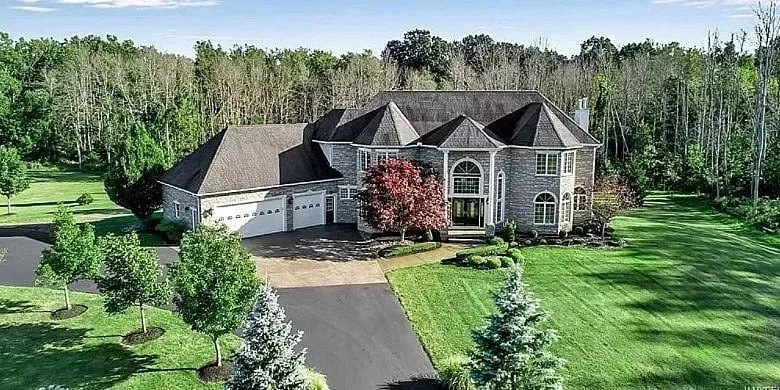
When headlines describe Josh Allen living in a “Buffalo mansion,” the image that comes to mind is usually pure extravagance. But the reality behind the Bills quarterback’s Western New York estate tells a much more deliberate story—one rooted in performance, privacy, and long-term career planning rather than flash.
Allen’s home is best understood not as a celebrity showpiece, but as a QB1 compound: a private, purpose-built environment that supports the physical, mental, and logistical demands of leading an NFL franchise. From its location just minutes from the stadium to its resort-style amenities designed for recovery and decompression, the property reflects how elite quarterbacks increasingly think about real estate as infrastructure, not indulgence.
This distinction matters for readers, fans, and searchers alike. In an era where athlete homes are often reduced to square footage and price tags, Allen’s Buffalo-area estate stands out because it answers a different question: How does a franchise quarterback live when winning, routine, and longevity are the priority?
Location Strategy: Why Orchard Park Beats Downtown Buffalo
Although often labeled a “Buffalo mansion,” Josh Allen’s home is located in Orchard Park, a detail that reveals more about strategy than semantics.
Orchard Park is where the Buffalo Bills play—and more importantly, where daily NFL life actually happens.
Eight Minutes That Matter
Allen’s estate sits roughly eight minutes from Highmark Stadium. For an NFL quarterback, that short commute is not a convenience—it’s a competitive advantage. During the season, players spend long days moving between meetings, workouts, rehab, and film study. Eliminating a long drive reduces fatigue, tightens routines, and increases recovery time, especially late in the season.
Privacy Over Prominence
Unlike downtown Buffalo or high-profile waterfront neighborhoods, Orchard Park offers:
Lower population density
Larger land parcels
Fewer casual onlookers and media traffic
For a high-profile quarterback, this translates to controlled visibility. Allen can live close to work without sacrificing privacy, a balance that many superstar athletes struggle to achieve in larger metro areas.
A Proven Choice for Bills Players
Orchard Park has long been favored by Bills players and staff, not for glamour but for functionality. The area supports large estates, private driveways, and gated properties—key factors for athletes who value security and discretion. Allen’s choice aligns him with a long-standing local pattern rather than a celebrity outlier move.
In short, the location reinforces the theme that defines this home: it is built around the job of being QB1 first, and everything else second.
Acquisition Details: A Privacy-First Ownership Strategy
Josh Allen’s Buffalo-area estate wasn’t acquired with fanfare—and that’s exactly the point.
Public records and reporting indicate that the quarterback purchased the 31-acre property in 2021 for approximately $500,000, with the transaction completed through a limited liability company (LLC) rather than in his personal name. Among elite athletes and high-net-worth individuals, this approach is standard—but rarely explained.
Why Elite Athletes Use LLCs
For a franchise quarterback like Josh Allen, an LLC offers several advantages:
Privacy protection by limiting easy public-name searches
Security benefits, reducing unwanted attention or targeting
Flexibility for future property management or restructuring
This structure helps separate Allen’s personal life from his public identity, a critical consideration in a market as passionate—and observant—as Buffalo.
The Timing Matters
The 2021 acquisition coincided with Allen’s rise into the NFL’s elite tier, shortly after establishing himself as the Bills’ unquestioned QB1. Rather than upgrading impulsively, the timing suggests intentional long-term planning—securing land first, then shaping a compound that could evolve with his career.
This was not a turnkey mansion purchase. It was the foundation of a controlled, custom-built environment.
Property Scale and Master-Planning Logic
At 31 acres, Josh Allen’s Orchard Park estate is significantly larger than what most suburban luxury buyers—or even professional athletes—typically own.
To put the scale into perspective:
31 acres equals roughly 1.35 million square feet
That’s closer to a private resort footprint than a residential lot
But the size isn’t about excess. It’s about functional zoning.
Built for Separation, Not Sprawl
Large estates like this allow for intentional layout planning, separating daily life into distinct zones:
Residential living (main home and private spaces)
Training and activity areas
Recovery and leisure features
Natural buffers for privacy and security
Instead of placing everything in a single oversized structure, the land enables flow—movement between spaces without crowding or exposure.
A Buffer That Works Overtime
For a high-profile quarterback, acreage also functions as:
A visual buffer from roads and neighbors
A noise buffer during gatherings or workouts
A security buffer against unwanted access
This is a subtle but powerful difference between true celebrity compounds and conventional luxury homes. The land itself becomes part of the lifestyle design.
Athletic Amenities Designed for a QB1
Where many celebrity homes emphasize spectacle, Josh Allen’s estate stands out for utility aligned with elite performance.
Multi-Use Sports Court
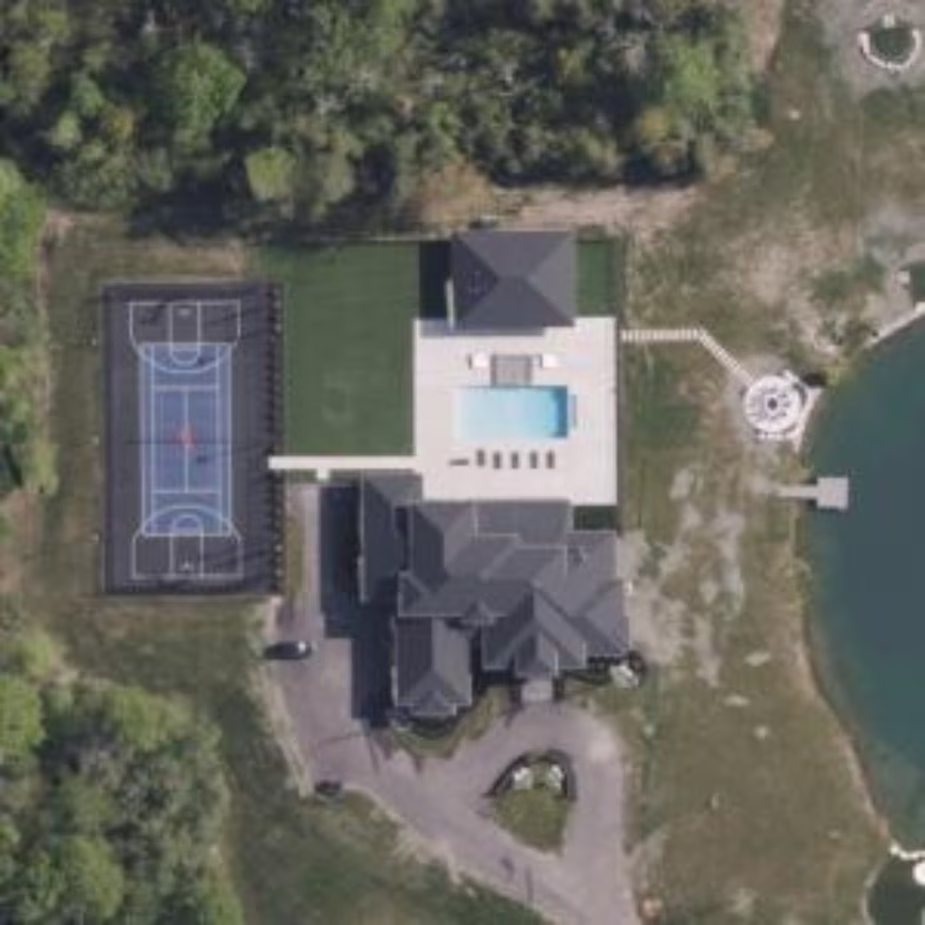
One of the most distinctive features reported on the property is a private sports court, designed to accommodate both basketball and tennis.
For a quarterback, this kind of space supports:
Footwork and agility training
Cardiovascular conditioning without gym travel
Competitive, low-pressure movement during the offseason
Unlike novelty courts seen in some athlete homes, a multi-use surface increases year-round relevance.
Pool and Pool House: Recovery First, Luxury Second
The estate also includes a pool and dedicated pool house, a pairing often misunderstood as pure luxury.
In reality, for an NFL quarterback:
Pools support low-impact recovery and conditioning
Water resistance aids strength without joint stress
Pool houses act as transition zones between training and relaxation
This setup mirrors recovery environments used by elite athletes worldwide, blending physical care with mental decompression.
Together, these amenities reinforce a clear theme: this is not a show home built to impress visitors. It’s a performance-supportive environment designed to keep a franchise quarterback healthy, focused, and insulated from distraction.
The Private Lake Feature: A Rare Luxury With Purpose
One of the most distinctive—and least common—features of Josh Allen’s Orchard Park estate is its private on-property lake. While pools and sports courts are increasingly standard in athlete homes, private lakes remain rare, especially in NFL-centric suburban markets.
More Than a Scenic Backdrop
The lake is reported to include:
A small dock
A dedicated waterfront seating area
Direct steps leading from the pool area down to the shoreline
This layout is significant. Rather than treating the lake as a distant visual feature, the property integrates it directly into daily movement and use. The pool-to-lake transition mirrors the design logic found in high-end wellness resorts, where water features are layered to encourage relaxation, circulation, and mental reset.
Recovery, Decompression, and Mental Reset
For a quarterback operating under constant performance pressure, access to water environments plays a real role in:
Stress reduction
Mental clarity
Offseason recovery routines
Unlike indoor amenities, a private lake introduces nature-driven decompression, something sports psychologists increasingly recognize as critical for elite performers. It also provides privacy that public waterfront properties simply cannot.
This is the kind of feature that quietly separates a “luxury house” from a true athlete compound.
A Buffalo Paradox: A Summer-Optimized Estate in a Cold-Weather Market
At first glance, a resort-style estate in Western New York might seem counterintuitive. Buffalo is synonymous with snow, wind, and cold-weather football—but that contrast is exactly what makes this property interesting.
Built for the NFL Calendar, Not the Weather Stereotype
NFL quarterbacks don’t experience Buffalo the way fans do. Their year is divided into:
Offseason and training camp (late spring through summer)
Preseason preparation
Regular season grind
Allen’s estate is clearly optimized for late summer and preseason living, when outdoor recovery, conditioning, and rest are most valuable. The pool, lake, and open grounds become daily-use assets during the most physically demanding preparation phase of the year.
A Private Warm-Weather Escape—Without Leaving Town
Instead of maintaining an offseason home elsewhere, this property allows Allen to:
Stay close to the team facility
Control his environment
Avoid travel disruption during critical training windows
In that sense, the home functions like a private warm-weather retreat, embedded directly within a cold-weather football market. It’s a strategic contradiction—and a smart one.
Comparison: Josh Allen’s Earlier Orchard Park Home
Before establishing his current compound, Allen reportedly owned a more traditional upscale home in the same general area—often referenced when discussing his progression as a homeowner.
The Earlier Residence at a Glance
Reported details of the previous property include:
Approximately 3,600 square feet
Four bedrooms and five bathrooms
Around 15 acres of land
Purchase price reported under $700,000
This home fit the profile of a successful young NFL starter: spacious, private, and comfortable, but still conventional.
What Changed With the New Estate
The shift to a 31-acre compound signals a clear evolution:
From house to infrastructure
From privacy-conscious to privacy-engineered
From comfort-driven to performance-driven design
Rather than upgrading square footage alone, Allen upgraded functionality, control, and long-term viability. The newer estate reflects not just increased wealth, but increased clarity about what supports an elite quarterback’s lifestyle over time.
What This Estate Reveals About Josh Allen as QB1
Viewed through the right lens, Josh Allen’s Orchard Park estate is less about real estate and more about identity.
For Josh Allen, the home reflects a quarterback who understands that elite performance is built off the field as much as on it. Every reported element of the property—its proximity to the stadium, layered privacy, athletic amenities, and recovery-focused layout—aligns with the demands of being a long-term franchise leader.
Routine as a Competitive Edge
Quarterbacks thrive on consistency. By living minutes from the stadium in a controlled environment, Allen minimizes friction in his daily routine:
Less travel stress
More predictable schedules
Faster transitions between work, recovery, and rest
That stability compounds over a season, particularly in December and January when physical and mental fatigue peak.
Privacy as Performance Protection
The scale of the property and the use of an LLC point to a quarterback who values mental insulation. Reduced exposure means fewer distractions, fewer disruptions, and greater autonomy—intangibles that matter enormously at the NFL’s highest level.
In short, the estate signals maturity. It’s the home of a quarterback who is not chasing celebrity, but sustaining excellence.
How Allen’s Home Compares to Other Elite NFL Quarterback Estates
Across the NFL, superstar quarterbacks often gravitate toward high-visibility luxury—urban penthouses, waterfront mega-mansions, or sprawling estates in warm-weather markets. Allen’s approach stands apart.
Privacy Over Publicity
Unlike quarterbacks who choose celebrity-heavy locations, Allen’s home prioritizes:
Seclusion over scenery
Function over flash
Long-term usability over short-term prestige
This places his estate closer in philosophy to legacy athlete compounds than trend-driven luxury builds.
One-Home Efficiency vs. Multi-Home Lifestyles
Many elite quarterbacks maintain:
A primary residence near the team
A second offseason home elsewhere
Allen’s Orchard Park compound effectively combines both roles. Its resort-style amenities reduce the need for seasonal relocation while keeping him anchored near the team year-round.
A Cold-Weather Market Advantage
While warm-weather estates dominate headlines, Allen’s setup highlights an underappreciated reality: comfort and recovery are design-driven, not climate-dependent. His estate proves that a cold-weather NFL city can still support a world-class athlete lifestyle when the property is built correctly.
More Than a Mansion—A Strategic Asset
Calling Josh Allen’s Orchard Park estate a “Buffalo mansion” undersells what it truly represents.
This is not a house purchased to impress. It’s a strategic asset—one designed to protect privacy, reinforce routine, support recovery, and extend peak performance years. From the 31-acre footprint to the lake-integrated backyard and performance-oriented amenities, the property mirrors the mindset of a quarterback focused on longevity, leadership, and control.
In an era where celebrity homes often blur into excess, Allen’s stands out for its restraint and intention. It’s luxury with logic. And for a franchise quarterback in his prime, that may be the most valuable feature of all.
