
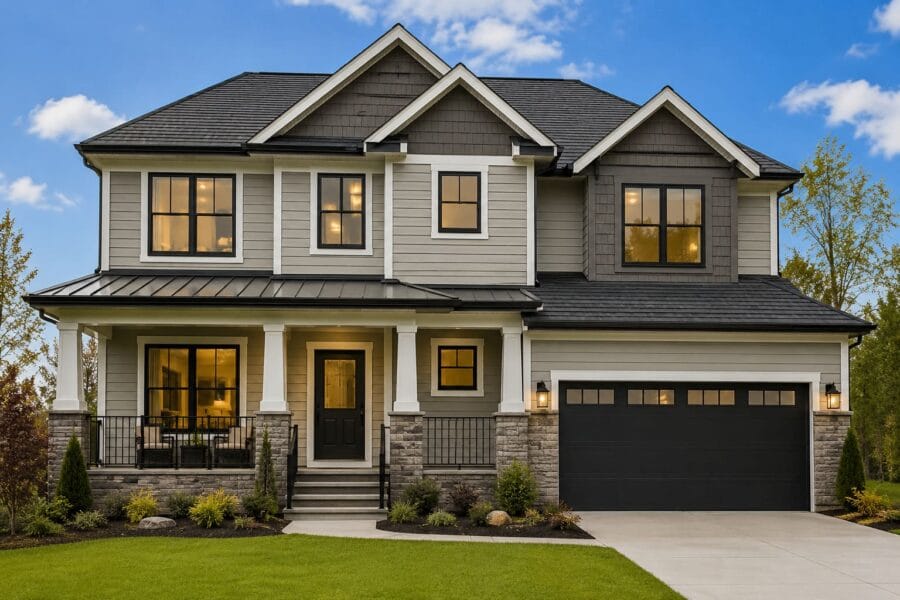
Are you planning a new home build, or trying to figure out if a tree on your property will eventually block your second-floor view? Understanding structural dimensions is critical for zoning laws, privacy setups, and construction budgeting. If you are trying to determine exactly how tall two story house structures get, or specifically how many feet is two stories in a typical building layout, you are in the right place. While heights vary based on architectural styles, knowing the standard averages can keep your project safely within local legal limits.
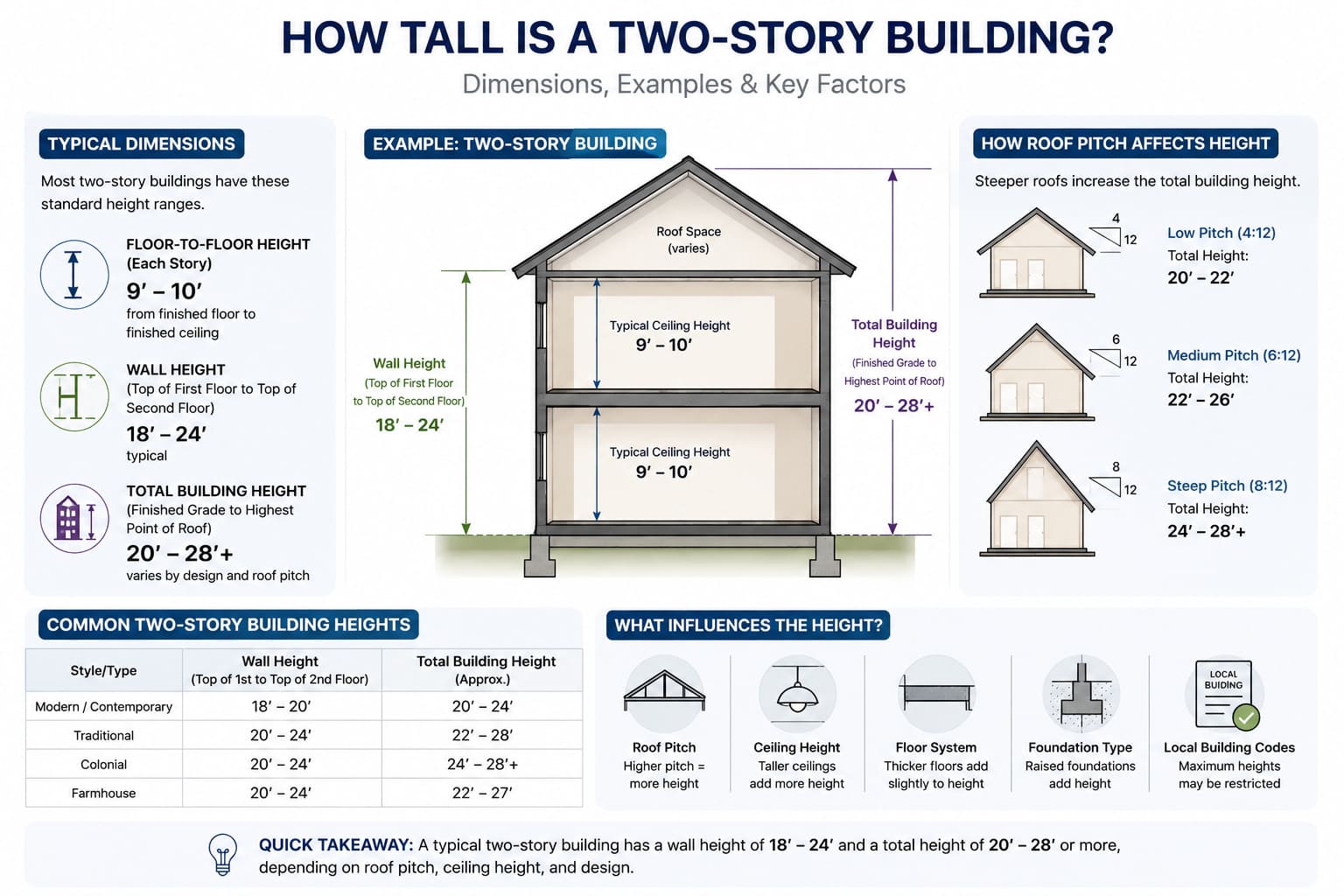
The standard height of a two-story residential building typically ranges between 20 and 30 feet (6 to 9.1 metres). This variation exists because a building’s final height depends heavily on its architectural design, roof pitch, and whether it is a residential home or a commercial office space.
Average Height Breakdown: How Many Feet is Two Stories?
To understand the total height, we look at the individual components of each floor level. Here is a direct comparison of typical heights:
| Building Type | Average Total Height | Average Ceiling Height (Per Floor) | Typical Infrastructure Space |
|---|---|---|---|
| Residential Home | 20 – 30 feet (6.1 – 9.1 m) | 8 – 9 feet (2.4 – 2.7 m) | 1 foot (0.3 m) per floor |
| Commercial Office | 28 – 32 feet (8.5 – 9.8 m) | 10 – 12 feet (3.0 – 3.7 m) | 2 – 4 feet (0.6 – 1.2 m) per floor |
Key Components of Floor Height
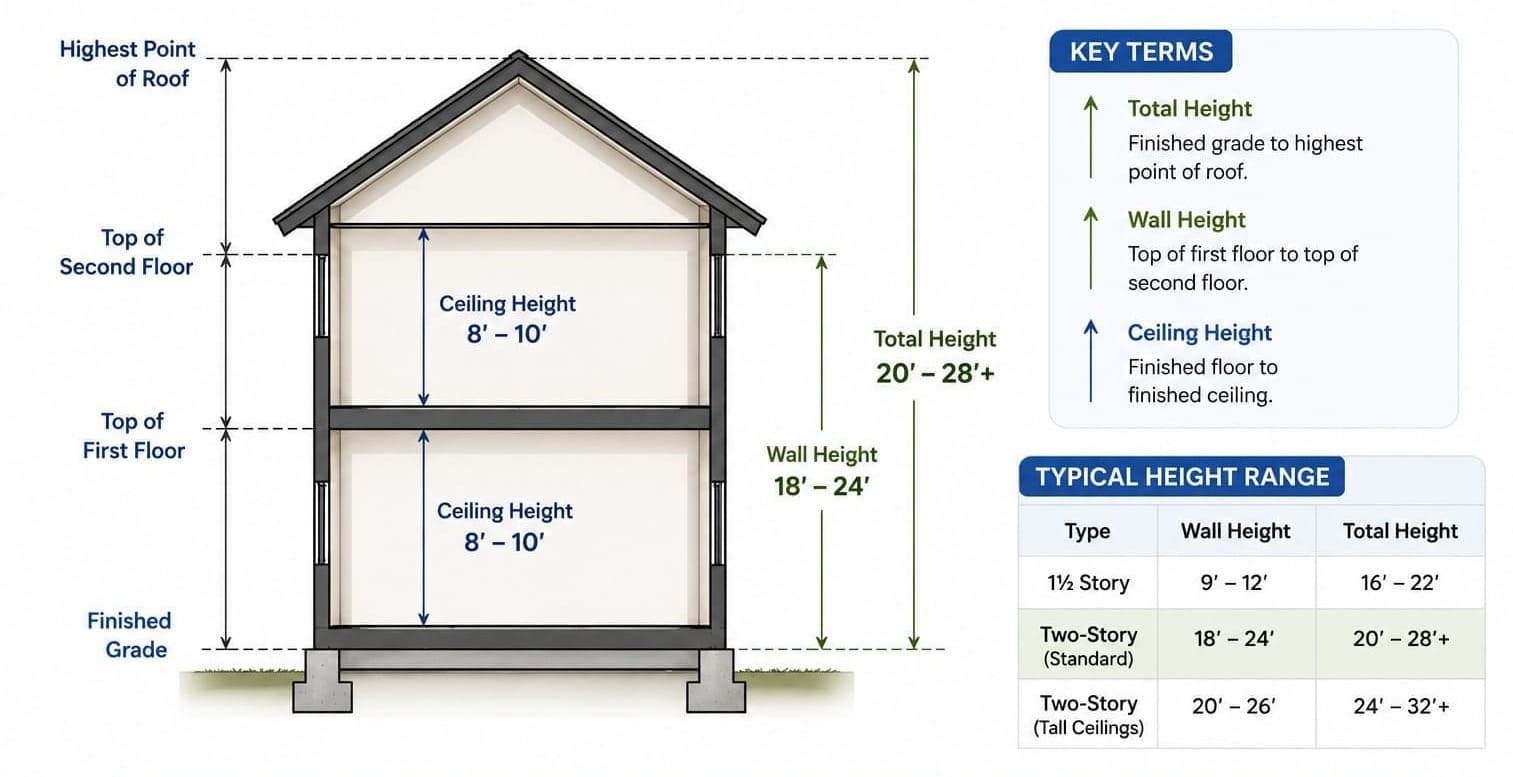
The total height of a two-story building is calculated by adding several individual vertical structural layers together:
- Foundation/Slab Height: The distance the ground floor sits above the dirt line. A concrete slab adds only a few inches, while crawlspaces or pier-and-beam foundations add 1 to 3 feet.
- Ceiling Height: The clear usable space from the finished floor to the finished ceiling.
- Infrastructure Thickness (Plenum Space): The structural floor gap between the first-floor ceiling and the second-floor floor. This area holds floor joists, plumbing, electrical wiring, and HVAC ducts. It usually measures 1 foot in homes and up to 4 feet in commercial properties.
- Roof Structure: The style of the roof dictates the top-end height. A flat roof adds minimal height (under 1 foot), while a steep-pitched roof (like a Gable or Mansard style) can add 4 to 12 feet to the overall structure.
How Tall is a 2 Story House? (Step-by-Step Calculation)
If you need a quick mathematical estimation for your project, use this standard architectural formula:
Total Height Calculation Formula:
Foundation Height + (First Floor Ceiling + Mid-floor Gap) + (Second Floor Ceiling + Attic Gap) + Roof Peak Height = Total Height
Example Calculation: For a standard home built on a flat slab, featuring 9-foot ceilings, a 1-foot mid-floor infrastructure gap, and a standard 6-foot roof peak, the math works out as follows:
- Ground floor structure: 9 feet (ceiling) + 1 foot (joists) = 10 feet
- Second floor structure: 9 feet (ceiling) + 1 foot (attic floor joists) = 10 feet
- Roof peak: 6 feet
- Total Height: 10 + 10 + 6 = 26 feet tall
How tall is a two-story house with an attic?
If you are wondering exactly how tall a two-story house with an attic is, the total height generally ranges between 28 and 35 feet (8.5 to 10.7 metres). The attic space introduces an extra vertical layer because its joists and peak configuration differ from a standard roof setup. While an unused, non-habitable attic space might only add 5 to 7 feet for structural trusses, a finished, livable attic requires a steeper roof pitch to allow for legal headroom clearance. This steeper pitch can easily push the total building height up by an extra 8 to 12 feet from the second-floor ceiling line.
Residential vs. Commercial Height Differences
Commercial structures differ significantly when analyzing exactly how many feet is two stories versus a standard home layout:
- Commercial Buildings: Require taller ceilings to feel spacious for customers and employees. They also require larger plenum spaces hidden above the ceiling tiles to house heavy-duty commercial ventilation units (HVAC), industrial fire suppression sprinklers, and complex internet infrastructure.
- Residential Homes: Prioritise energy efficiency and cosy spaces. Smaller rooms are easier to heat and cool, which keeps ceiling heights lower. Use this scale to estimate exactly how tall two-story house frames sit compared to adjacent commercial developments.
Zoning Laws and the “Height Definition” Trap
Municipalities enforce strict height restrictions on residential builds (often limiting homes to 28, 30, or 35 feet). However, before submitting blueprints, you must check how your local planning department defines “height”:
- To the Peak: Measured from the ground grade straight to the highest tip of the roof.
- To the Eave: Measured from the ground only to the point where the roof line meets the exterior wall.
- Midpoint Measure: Measured from the ground to the exact halfway point between the eave and the roof peak (very common with sloped roofs).
Frequently Asked Questions
Does a chimney count toward building height?
In most municipal zoning codes, chimneys, antennas, and mechanical equipment vents are exempted and do not count toward the maximum allowable residential building height limit. Always verify this with your local building department.
Can a two-story house be 30 feet tall?
Yes. A two-story home can easily reach or exceed 30 feet if it features 10-foot ceilings on both floors, sits on an elevated crawl space foundation, or uses a steep roof pitch (such as a Victorian, Tudor, or Colonial architectural design).
How high is the second floor floor-line from the ground?
In a standard residential home, the floor of the second story sits roughly 10 feet above the ground level outside. This includes 9 feet of interior clearance for the first floor plus 1 foot of structural joist spacing.
