
Does your dryer take longer to dry clothes, or do you find more lint on your clothes than usual? These are all red flags that your vent needs some attention, and residential dryer vent cleaning is all about that.
Lint regularly accumulates in dryer vents if residential dryer vent cleaning is not performed regularly. If the air fails to flow, it will take longer to dry, and the machine will have to operate harder. It’s not something you should leave to the last minute because a clogged vent is a fire hazard too.
Importance of Clean Dryer Vents
Cleaning your dryer vents at home helps your dryer run safely and efficiently. A clogged vent doesn’t only slow you down; it can impact your home, clothes and energy bills more than you realise.
- Longer dry times: They will increase your energy bill because you will be drying for longer.
- Fire risk: lint can easily catch fire, and because there is no place for the heat to go, dryer vent fires occur annually.
- Clothing – damaged fabrics overheat because there is poor air circulation, so the clothing fades, shrinks or wears out sooner.
- A strain on the dryer causes the parts to degrade more quickly and reduces the life of the dryer.
- Indoor air quality problems: blocked vents can cause heat, moisture and lint to be pushed back into the house and can lead to mould, dust and allergens.
Signs That Dryer Vents Need to Be Cleaned
Your dryer runs most of the time without a sound, but if the following happen, it’s time to give it a deep cleaning:
- Your clothes are taking longer to dry
- The air around the vent is hotter than usual
- You smell a burning odour when you turn on the dryer
- You see lint accumulating around the vent or lint trap
- The outside airflow is weak
- Your laundry room is more humid than usual, or
- You notice bugs, rodents, or birds nesting near the vent
Best Time to Clean a Dryer Vent
It’s not necessary for most homes to constantly scrub their vent. A general guideline is to do a deep clean every 1-3 years, though you may need to clean it more or less often depending on how often you do laundry and your vent configuration.
- Household use: every 1 to 3 years
- Dryers (vacant houses, etc.) which are seldom used: every 3 years or more
- Every 6-9 months: Heavy use, homes with pets or long/bendy vents
Step-By-Step Guide on How to Clean a Dryer Vent
Step 1: Unplug the dryer
Unplug it, and if it is gas, immediately turn off the gas valve.
Step 2: Take off the vent duct
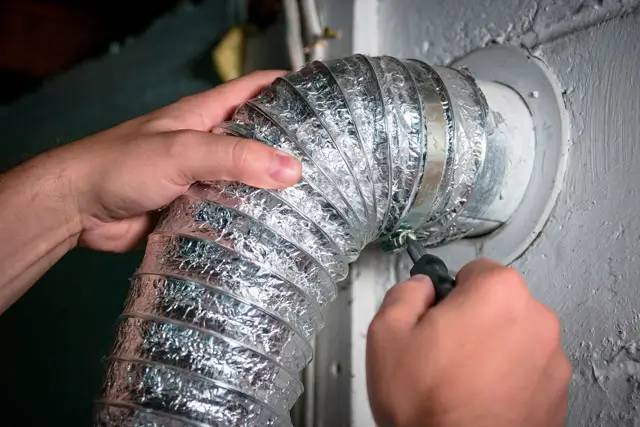
Remove the dryer from the wall, unscrew or loosen the duct clamp and remove the duct.
Step 3: Vacuum first.
Vacuum around the vent opening, inside & out; put on gloves and a mask. Hand-sweep loose lint before using a long vacuum hose to clean the duct. Vacuum from the opposite end (outside) after removing the vent cover.
Step 4: Do duct deep cleaning.
Using a long brush, turn and push it back and forth to loosen lint, dust and moisture that may become trapped in it until it feels clear.
Step 5: Reassemble.
Check the duct for damage, reconnect and tighten clamps, and seal gaps with metal foil tape. Reconnect the dryer and run a brief air-dry cycle to test airflow.
Homeowners who can’t handle the task themselves can hire professionals for residential dryer vent cleaning Toronto, which can not only save time but also ensure nothing is missed.
How To Maintain Vent Cleanliness for Longer
There are a few things you can do to prevent lint build-up between cleanings:
- Remove lint from the lint trap before each use to increase ventilation and reduce the amount of lint to vent.
- Clean around the lint trap area regularly with a vacuum, as lint can also hide and accumulate around the area of the lint trap.
- Clean a sticky or clogged lint trap using warm, soapy water and rinse and dry thoroughly before using again.
- Maintain a clean space around the dryer; vacuum and wipe down to prevent loose lint from being drawn into the dryer.
Residential dryer vent cleaning Toronto keeps your home, clothes, and dryer safe, lowers energy costs, reduces fire risk, and saves you more.