
TL;DR
Residential irrigation design has moved well beyond the old goal of simply keeping lawns green. Better systems now account for plant type, soil behavior, pressure, runoff risk, weather, controller logic, and long-term maintenance.
The biggest change is how professionals think about water use. Efficient irrigation is no longer measured by how much water a system can apply. It is measured by how accurately the system applies water where plants can use it, with as little waste, overspray, runoff, and overwatering as possible.
Introduction
For many years, residential irrigation was treated as a convenience feature. Install enough heads, cover the lawn, set the timer, and adjust when the grass looked stressed.
That approach worked tolerably well when water was cheap, landscapes were simpler, restrictions were limited, and homeowners were less focused on efficiency. It also produced a lot of waste. Overspray onto sidewalks, mixed plant zones, high-pressure misting, poorly placed heads, shallow watering, and fixed schedules were accepted as normal parts of residential irrigation.
That attitude has changed.
Today, good residential irrigation design is more deliberate. It considers how water moves across a property, how different plants use moisture, how soil accepts water, and how the system will be operated by homeowners who may not want to think about irrigation every week. The better designs are quieter, more precise, easier to manage, and less forgiving of sloppy assumptions.
The Old Standard Was Coverage
If you have inspected older residential systems, you have probably seen the same pattern repeatedly: heads placed to cover visible turf, zones assembled around installation convenience, and schedules set by habit rather than site conditions.
The installer’s main concern was often whether every part of the lawn got wet. That is not the same as efficient irrigation.
Coverage-based design tends to miss several practical issues:
- different areas of the yard dry out at different rates
- turf, shrubs, trees, and planting beds need different watering strategies
- slopes and compacted soil can create runoff
- shaded areas may receive far more water than they need
- narrow strips are difficult to irrigate well with conventional sprays
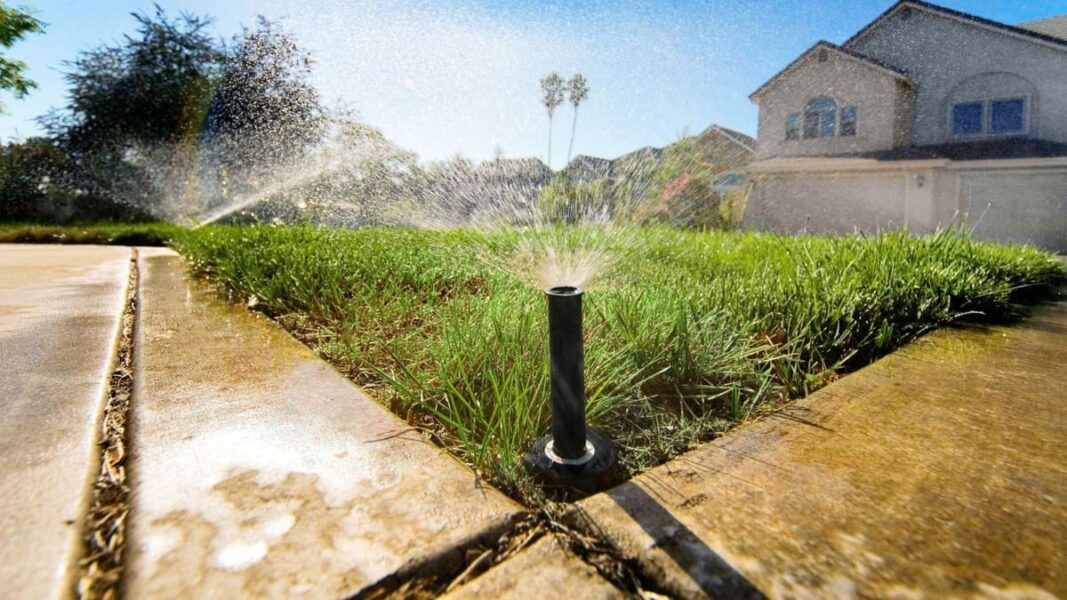
- high pressure can turn useful water into mist and drift
The result is a system that appears to work because everything gets wet. But appearance can be misleading. Wet pavement, soggy corners, dry patches, and frequent schedule adjustments usually reveal the limits of that approach.
Modern Design Starts With the Site, Not the Sprinkler Head
A better residential system begins with observation.
Where does the sun hit hardest? Where does water naturally collect? Which areas are shaded by the house or trees? Where is the soil compacted? Are there slopes, narrow strips, retaining walls, raised beds, or separate planting zones? Is the homeowner maintaining turf, ornamental beds, vegetable gardens, young trees, or drought-tolerant landscaping?
These questions influence the design before any component is selected.
The best residential irrigation professionals do not begin by asking, “How many heads do we need?” They ask how the property behaves. That shift changes the entire system.
A front lawn with full sun, sandy soil, and wind exposure should not be managed like a shaded backyard with clay soil. A foundation planting bed should not be watered like a turf area. A narrow side yard should not receive the same approach as a broad open lawn.
Efficiency improves when the design reflects those differences.
Zoning Has Become More Thoughtful
Poor zoning is one of the most common reasons residential systems waste water.
A zone should group areas with similar water needs and similar irrigation behavior. Older systems often grouped areas by convenience: whichever heads were easiest to connect together ended up on the same valve. That might reduce installation effort, but it creates long-term inefficiency.
Modern residential design is more careful about separating:
- turf from shrub beds
- sunny areas from shaded areas
- slopes from flat areas
- spray zones from drip zones
- clay soils from faster-draining soils
- established plants from new plantings
- high-water-use areas from low-water-use areas
This gives the controller meaningful control. Without proper zoning, even the smartest controller is forced to compromise.
A homeowner may think they need a new timer when the real issue is that one valve serves three different landscape conditions. Design determines whether scheduling can work.
Drip Irrigation Has Changed Planting Bed Watering
One of the most significant improvements in residential irrigation has been the wider use of drip and low-volume irrigation in planting beds.
Spray irrigation can still be appropriate in some situations, especially for turf. But in shrub beds, foundation plantings, hedges, vegetable gardens, and narrow areas, drip irrigation often gives far better control. It applies water closer to the root zone, reduces overspray, limits evaporation from exposed surfaces, and helps avoid wetting walls, fences, windows, and hardscapes.
That said, drip irrigation has to be designed properly. Layout, emitter spacing, pressure regulation, filtration, tubing for irrigation, and maintenance access all influence performance.
A poorly installed drip zone can create dry gaps, clogged emitters, or uneven plant growth. A well-designed drip zone can quietly support healthier plants with less visible waste.
The lesson for homeowners is practical: drip is not efficient because it is hidden. It is efficient when it is designed, filtered, regulated, and maintained correctly.
Pressure Regulation Has Become a Bigger Part of the Conversation
Many older residential systems operate at pressures that are too high for the devices installed.
You can often see the evidence: misting heads, drifting spray, water blowing onto sidewalks, and uneven coverage on windy days. High pressure may look powerful, but it often reduces actual irrigation quality.
Modern design pays more attention to pressure regulation. Pressure-regulated spray bodies, drip regulators, properly sized valves, and better pipe sizing help keep water application closer to the intended rate.
This has practical benefits:
- less misting
- better droplet size
- reduced overspray
- improved uniformity
- less stress on components
- more predictable scheduling
Pressure management is not glamorous. Homeowners rarely ask about it. But it is one of the most reliable ways to improve system performance without changing the entire landscape.
Smart Controllers Are Useful, But They Are Not Magic
Smart irrigation controllers have changed residential irrigation management. Weather-based scheduling, seasonal adjustment, rain sensors, soil moisture inputs, and mobile control can all reduce unnecessary watering.
But a smart controller cannot fix a poorly designed system.
If turf and shrubs are on the same zone, the controller still has to choose one watering pattern. If heads are poorly spaced, the controller cannot create uniform coverage. If pressure is too high, the controller cannot prevent misting. If a drip zone is clogged, automation may simply continue watering an underperforming line.
Good controls work best when the physical system is already sound.
The practical order should be:
- correct the layout
- improve zoning
- regulate pressure
- verify distribution
- then optimize scheduling
When that sequence is respected, smart controllers become valuable tools rather than expensive timers attached to inefficient systems.
Narrow Spaces Forced Better Design Thinking
Residential properties include many areas that are difficult to irrigate well: parkways, side yards, planting strips, fence lines, slopes, and small turf panels surrounded by hardscape.
Older systems often used standard spray heads in these locations, which led to overspray, runoff, and water waste. You can still see this on many properties: sprinklers watering the sidewalk more reliably than the plants.
Modern design handles these spaces more selectively. Depending on the area, the better answer may be dripline, subsurface drip, rotary nozzles, redesigned planting, hardscape conversion, or eliminating irrigation altogether.
The bigger point is that not every space deserves the same irrigation method. Efficient design recognizes when conventional spray is the wrong tool.
Landscape Choices and Irrigation Design Now Influence Each Other
Residential irrigation used to be designed after the landscape was chosen. Today, better projects consider both together.
That is a meaningful change. Plant selection determines water demand. Plant grouping determines zoning. Mulch, soil preparation, grading, and root depth influence irrigation scheduling. Turf placement affects system size and water use.
When landscape design and irrigation design are coordinated, efficiency improves before water ever enters the system.
A practical example: reducing turf in narrow or awkward areas can eliminate zones that are inherently wasteful. Grouping low-water plants together allows longer intervals between irrigation. Using mulch in planting beds reduces evaporation and moderates soil temperature. Improving soil before installation can reduce runoff and support deeper rooting.
Water-efficient irrigation is not only a mechanical issue. It is also a site planning issue.
Maintenance Is Now Part of Good Design
A residential irrigation system may be installed once, but it operates for years.
Heads settle. Nozzles clog. Drip lines get damaged. Filters need cleaning. Plants grow and block spray patterns. Roots interfere. Controllers are adjusted by multiple people over time. Landscapes change, but the irrigation system often stays the same.
Modern design increasingly accounts for this reality.
Valves should be accessible. Filters should be serviceable. Drip zones should be flushable. Spray heads should be placed where they will not be damaged constantly by mowers or foot traffic. Components should be understandable to the homeowner or maintenance provider.
Efficiency declines when small maintenance tasks become inconvenient. A system that is easy to inspect and adjust will usually use water more responsibly over its service life.
Codes, Rebates, and Water Restrictions Have Raised Expectations
In many regions, residential irrigation design has been shaped by outdoor water restrictions, utility rebates, drought planning, and updated local standards.
These programs have encouraged the use of rain sensors, pressure regulation, efficient nozzles, smart controllers, drip irrigation, and reduced turf areas. Some homeowners respond only because rules or rebates push them in that direction. Others are motivated by water bills, plant health, or environmental concerns.
From a practical standpoint, these external pressures have helped raise the baseline. They have made inefficient practices harder to ignore.
Still, compliance should not be confused with good design. A system can meet minimum requirements and still perform poorly. The better approach is to use standards and incentives as a starting point, then make decisions based on the property’s actual conditions.
Homeowners Now Expect Better Information
Another change is that homeowners are more aware of irrigation performance than they used to be.
They notice water bills. They notice runoff. They receive alerts from controllers. They see local watering restrictions. They compare plant health with neighbors. They may ask why the system runs after rainfall or why one area is always wet.
This creates an opportunity for better professional guidance.
A good contractor or consultant should be able to explain the system in practical terms:
- which zones serve which areas
- how often each zone should generally run
- where drip is used and why
- where filters or regulators are located
- what seasonal adjustments are needed
- what signs indicate a leak, clog, or pressure issue
An efficient system should not be mysterious. Homeowners do not need to become irrigation experts, but they should understand enough to avoid working against the design.
Retrofitting Older Systems Can Deliver Fast Gains
Not every property needs a full redesign.
Many older residential systems can be improved through targeted retrofits. Replacing nozzles, adding pressure-regulated heads, converting planting beds to drip, separating mismatched zones, installing a smart controller, repairing leaks, adjusting head placement, or adding rain sensors can reduce waste substantially.
The challenge is knowing where to start.
A retrofit assessment should look for:
- overspray onto pavement
- misting from excessive pressure
- zones serving mixed plant types
- heads blocked by mature plants
- recurring runoff
- constantly wet or dry areas
- missing or malfunctioning sensors
- damaged drip lines or clogged filters
- controller schedules that no longer match the landscape
The best retrofit is not always the most expensive one. It is the one that corrects the cause of waste rather than masking the symptom.
Efficient Design Is About Control
The evolution of residential irrigation design can be summed up in one word: control.
Older systems focused on applying water broadly. Better systems control where water goes, how fast it is applied, how often it runs, how pressure behaves, and how each part of the landscape is managed.
That control gives homeowners and professionals more room to make good decisions. It reduces the need for guesswork. It makes problems easier to diagnose. It protects plant health while reducing avoidable waste.
A system with better control does not necessarily look more complicated. In many cases, it looks simpler because each zone has a clear purpose and each component is doing the job it was selected to do.
Conclusion
Residential irrigation design has evolved from basic coverage toward precise, site-responsive water management.
The strongest systems now account for zoning, pressure, soil, plant type, weather, runoff, maintenance, and homeowner usability. They use better components and smarter controls, but their real strength comes from thoughtful design.
Water efficiency is not achieved by installing the newest device alone. It comes from building a system that understands the property, applies water deliberately, and remains manageable over time.