
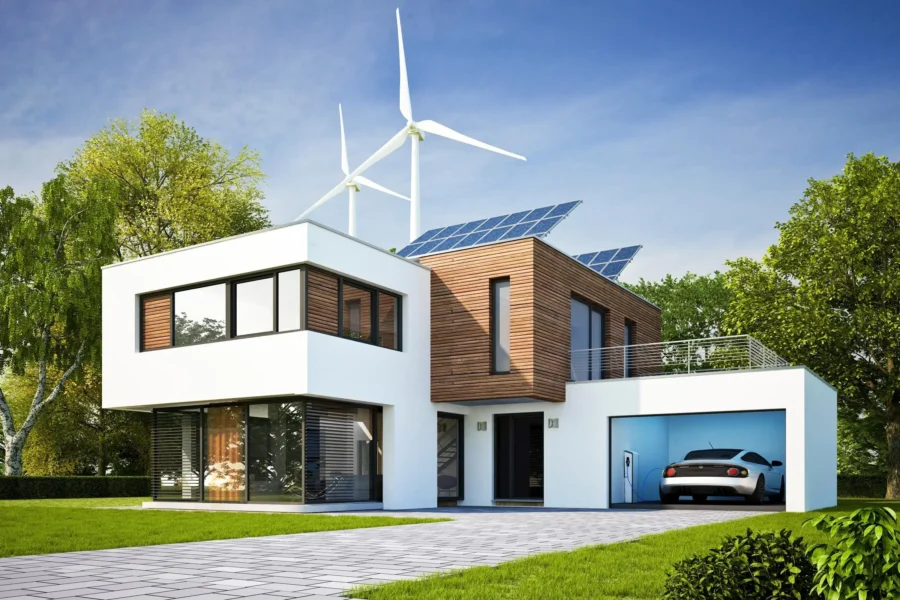
The most impressive luxury homes are no longer defined by size alone. Their distinction is often invisible: stable temperatures, clean air, quiet rooms and reliable systems.
Sustainable home design is replacing visible excess with intelligent performance. High-end buyers increasingly expect comfort, wellness, resilience and lower operating costs. Sotheby’s International Realty identified sustainability as a factor influencing luxury buyers. Knight Frank also reported that 61% of ultra-high-net-worth individuals looked for energy-efficiency ratings, while 48% considered on-site renewable power.
Quick Facts
| Design priority | Luxury benefit | Practical impact |
|---|---|---|
| Passive orientation | Consistent comfort | Reduces unwanted heat gain and loss |
| High-performance envelope | Quiet, stable interiors | Lowers heating and cooling demand |
| Solar and batteries | Energy independence | Reduces grid reliance and supports resilience |
| Low-impact materials | Better long-term value | Favours durable, repairable finishes |
| Water-efficient design | Luxury without waste | Cuts water and hot-water energy use |
| Healthy interiors | Everyday wellbeing | Supports clean air, daylight and acoustic comfort |
| Climate resilience | Asset protection | Helps the home handle heat, storms and outages |
Sustainable Luxury Is About Performance, Not Sacrifice
Sustainable design was once treated as an optional upgrade. In current luxury architecture, it increasingly shapes the entire brief.
This matters because buildings and construction consume 32% of global energy and contribute 34% of global carbon dioxide emissions, according to the United Nations Environment Programme.
The best response is not to cover an inefficient mansion with green technology. It is to reduce demand through architecture first, then meet the remaining demand efficiently.
That approach produces a better home. Rooms feel less draughty. Temperatures vary less between floors. Mechanical systems run more quietly.
The Building Envelope Is the First Luxury Upgrade
A high-performance home begins with its orientation, structure and envelope. These decisions affect comfort for decades and are difficult to correct later.
Orientation, Shading and Thermal Mass
Passive design uses orientation, insulation, glazing, shading and thermal mass together. It captures useful sun and breezes while limiting unwanted heat gain or loss. Australia’s official Your Home guidance treats these elements as one coordinated system.
This coordination is critical in luxury homes with large windows, tall ceilings and open-plan volumes. These features can create dramatic interiors, but they also increase thermal loads.
Correctly sized overhangs can block high summer sun. Well-positioned windows admit lower winter sun. Thermal mass then absorbs and releases heat slowly.
The result is a controlled interior with fewer hot spots and less dependence on intensive air conditioning.
Glazing, Insulation and Airtight Construction
Expansive glass remains central to modern luxury design. Yet its specification must suit climate, orientation and exposure.
High-performance glazing works best alongside insulation, weather sealing and external shading. Australian guidance warns that glazing cannot deliver strong thermal performance when separated from the rest of the building.
In my experience evaluating renovations, this is where expensive homes often underperform. Premium stone cannot compensate for overheated rooms, condensation or poor acoustic separation.
A well-detailed envelope also protects timber flooring, cabinetry, artworks and specialist finishes from extreme temperature and humidity changes.
Energy Independence Is Becoming a Premium Amenity
The future luxury home is moving towards electrification. Solar generation, efficient hot water, batteries, heat pumps and smart controls increasingly operate as one system.
For Australian projects, integrated solar and home energy systems can combine rooftop generation, solar or heat-pump hot water, battery storage, EV charging and energy management. Solahart’s residential range reflects this move from isolated products towards coordinated home-energy ecosystems.
Solar Power and Storage
Solar panels are most effective when planned with the roof. Pitch, orientation, shading, cable routes and equipment access should be resolved during design.
Battery storage can shift solar energy into evening hours. It may also support selected loads during outages, depending on system design.
In a luxury home, equipment should be discreet but serviceable. Inverters need ventilation, batteries need compliant locations and panels require maintenance access.
Efficient Water and Space Heating
Water heating is typically one of the largest household energy uses after space heating and cooling. Efficient distribution is therefore as important as the heater.
The US Environmental Protection Agency recommends limiting the water stored between the hot-water source and fixtures. This reduces waiting time, water waste and energy use.
Heat pumps also offer strong efficiency. The International Energy Agency notes that a typical household heat pump can deliver several units of heat for each unit of electricity used.
The practical lesson is simple. Plant rooms, kitchens and bathrooms should be planned as a connected network. Long pipe runs are wasteful, even in large homes.
Material Quality Now Includes Carbon and Durability
Luxury materials were traditionally judged by rarity and appearance. Sustainable luxury also considers lifecycle performance, responsible sourcing and repairability.
Embodied Impact Matters
Embodied energy includes the energy used to mine, manufacture, transport, install, repair and replace materials. Choices made before construction can therefore shape a home’s total impact for decades.
This does not mean avoiding concrete, steel or stone. It means using them precisely and for a clear structural or design reason.
Durable local stone may outperform a fragile imported finish. Reclaimed timber can add character, while recycled metal can deliver refined detailing with fewer virgin inputs.
The Best Materials Age Gracefully
A sustainable luxury home should improve with use. Solid timber can be refinished. Natural stone can develop patina. Mineral finishes can often be repaired locally.
Thin decorative layers may look polished at handover but become difficult to repair or match later.
Material quality also affects health. Low-emission finishes, good ventilation and moisture control matter more than decorative branding. LEED’s latest framework places health, efficiency and resilience at the centre of green building performance.
Water Efficiency Can Still Feel Indulgent
Luxury bathrooms, pools and landscaped gardens can consume substantial water. Sustainable design reduces waste without making the experience feel restricted.
Layout comes first. Bathrooms near hot-water sources respond faster. Zoned irrigation serves plants accurately. Rainwater can support suitable non-drinking uses where permitted.
EPA WaterSense homes are designed to be at least 30% more water-efficient than typical new construction. Labelled products must also meet efficiency and performance requirements.
For large gardens, climate-responsive planting usually needs less irrigation and intensive maintenance.
Wellness Is Designed Into the Architecture
Wellness rooms attract attention, but healthy design starts with the building itself.
Natural light, useful views, acoustic separation and fresh air affect every room. Courtyards, terraces and shaded outdoor areas can extend living space without increasing conditioned floor area.
The key is control. Windows should provide daylight without glare. Natural ventilation should work when conditions allow. Mechanical ventilation should protect air quality when the home is closed.
A quiet bedroom with stable temperatures may provide more daily value than an oversized formal room used twice a year.
Resilience Is the New Form of Prestige
Climate resilience is becoming part of luxury asset protection. A valuable home should remain safe and functional during heat, storms, water restrictions or power disruption.
Resilience is location-specific. Coastal homes may need corrosion-resistant fixings. Bushfire-prone sites require compliant materials, defensible space and careful detailing. Hot climates need shading and cooling strategies that remain effective under pressure.
Durable envelopes, controlled drainage, protected equipment and backup power can reduce disruption and repair costs.
A resilient home is designed around continuity, not fear.
Smart Technology Should Work Quietly
Home automation can support sustainability when it simplifies operation.
Useful systems coordinate shading, lighting, climate control, solar generation, batteries and EV charging. They can reduce waste and help owners understand performance.
However, complexity creates risk. A home should still operate when an app fails. Manual controls, accessible equipment and interoperable systems remain important.
The most refined smart home is not the one with the most screens. It is the one that maintains comfort with minimal attention.
What Luxury Buyers Should Examine
Sustainable claims need evidence. Buyers should request ratings, specifications and commissioning records.
Review the home’s energy rating, insulation, glazing, solar capacity, heating systems, water strategy, material certifications, resilience measures, warranties and service access.
Independent certification can help. Systems such as LEED provide recognised frameworks for assessing healthy, efficient and lower-impact buildings.
The Future of Luxury Living Is Measured in Ease
Sustainable home design is not making luxury smaller or less beautiful. It is making luxury more intelligent.
The strongest homes use architecture to reduce demand. They add efficient systems after the building works well on its own. They favour materials that last and technology that remains useful.
As of recent market reports, sustainability, wellness and energy performance are already influencing high-end buying decisions.
Future luxury homes will not be judged only by what visitors see. They will be judged by how quietly, comfortably and reliably they support everyday life.
Frequently Asked Questions
What Is Sustainable Luxury Home Design?
Sustainable luxury design combines high-quality architecture with lower energy demand, responsible materials, efficient water use and healthy interiors. It prioritises comfort and long-term performance. The aim is not to remove premium features, but to deliver them with less waste and stronger resilience.
Do Sustainable Features Increase a Luxury Home’s Value?
Sustainable features can strengthen buyer appeal when they are documented and easy to maintain. Energy ratings, renewable power and wellness features increasingly influence affluent buyers. Poorly integrated technology may add complexity, so verified performance matters more than a long equipment list.
Which Sustainable Features Matter Most?
The building envelope usually matters most. Orientation, shading, insulation, glazing and airtightness reduce demand and improve comfort. Efficient heating, solar power, storage and water systems should build on that foundation. Durable materials and climate-specific resilience protect long-term performance.
Can an Existing Luxury Home Become More Sustainable?
Yes. A retrofit can improve insulation, glazing, shading, heating, cooling, hot water, lighting and renewable energy. Work should begin with an energy and condition assessment. This prevents owners from installing expensive technology before fixing heat loss, moisture, air leakage or poor solar control.