
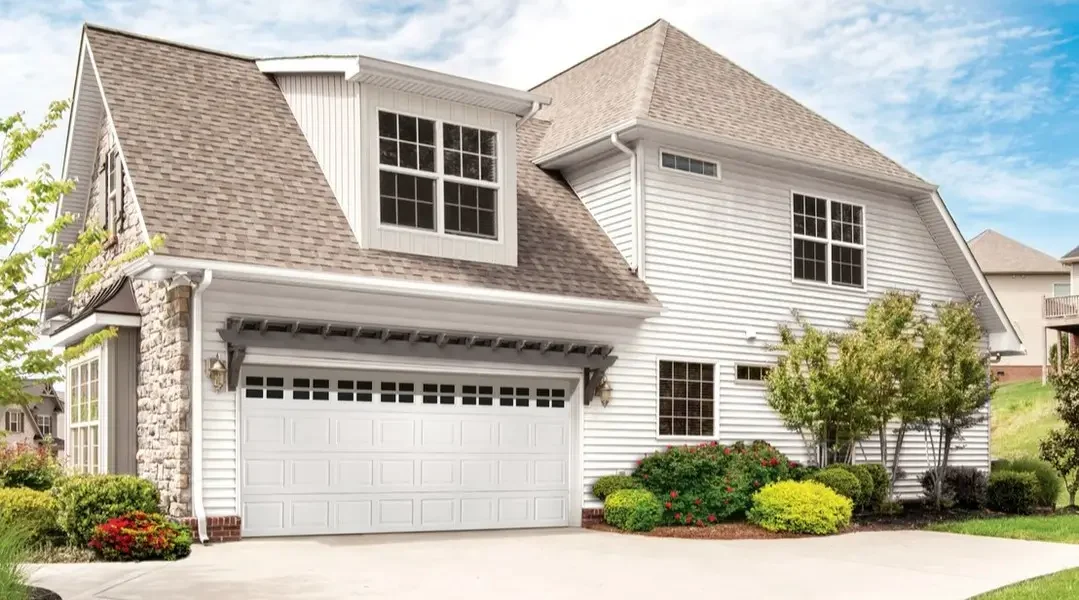
When people scroll through celebrity home tours or luxury real estate features, garage doors often fade into the background—yet they quietly signal status, lifestyle, and maintenance expectations.
In celebrity homes, garage doors are frequently custom Solid Cedar, Mahogany, or full-view tempered glass, chosen for aesthetics over practicality. In residential subdivisions, however, PVC (Polyvinyl Chloride) vinyl garage doors are gaining traction for very different reasons.
This article breaks down whether vinyl garage doors truly deserve the hype by comparing celebrity standards with real-world homeowner needs, focusing on cost, tensile strength, maintenance, thermal resistance, longevity, and design.
The Celebrity Standard vs. Everyday Reality
Celebrity homes are designed as showcases. Budgets are expansive, staff handle maintenance, and resale value is tied closely to visual impact. In this context, real wood garage doors remain a status symbol. They offer unmatched customization, rich grain patterns found in Redwood or Hemlock, and architectural prestige. But they also demand constant care—regular sanding, sealing with polyurethane, and staining to prevent dry rot, warping, or fading.
For most homeowners, this level of upkeep is unrealistic. Vinyl garage doors appeal not because they outshine luxury materials, but because they solve everyday problems: UV exposure, physical wear, and time-consuming maintenance. The “hype” around vinyl is rooted in practicality, not glamour.
Vinyl vs. the Celebrity Standard
Maintenance
Wood garage doors in celebrity homes require ongoing professional maintenance to preserve their appearance. Exposure to sun, rain, and humidity accelerates wear, especially in coastal regions like Florida or the California coast.
Vinyl garage doors, typically made from UPVC (Unplasticized Polyvinyl Chloride), require almost no upkeep. They don’t need painting, staining, or sealing. Cleaning typically involves nothing more than a hose, mild detergent (like dish soap), and water. For homeowners who want curb appeal without seasonal chores, vinyl offers a clear advantage.
Durability
Galvanized steel garage doors are common in residential neighborhoods due to affordability, but they dent easily from impacts like bicycles or basketballs and can succumb to oxidation (rust) in humid environments.
Vinyl is both flexible and rust-proof. It relies on a thermoplastic polymer structure that absorbs minor impacts and rebounds without denting, making it especially well-suited for families with children or homes in salty air climates. While wood can warp due to hygroscopic expansion and steel can corrode, vinyl remains structurally stable over decades.
Aesthetics
This is where vinyl faces its strongest criticism. While modern vinyl doors have improved significantly, they still offer fewer color and texture options compared to wood or fiberglass composite faux-wood doors. Lower-grade vinyl can appear glossy or “plastic-like,” particularly in direct sunlight.
That said, higher-quality vinyl models feature clean, modern lines and subtle textures that work well with Mid-Century Modern, Coastal Contemporary, and transitional homes. Faux-wood vinyl finishes are also growing in popularity, offering the warmth of Walnut or Driftwood tones without real wood maintenance—though steel or composite often delivers a more convincing wood grain.
Upfront Cost Breakdown (Real-World Estimates)
Cost is one of the biggest drivers separating celebrity garage doors from real-world residential choices, yet it is often oversimplified. Here is a more realistic breakdown based on current U.S. market pricing for standard double garage doors, excluding installation:
- Vinyl (PVC) Garage Doors: Typically range from $1,500 to $3,000, depending on insulation, reinforcement, and finish quality. Premium vinyl models with internal steel frames and factory insulation sit at the higher end of this range.
- Steel Garage Doors: Entry-level, non-insulated steel doors can start as low as $800 to $1,200, making them the most budget-friendly option upfront. Insulated, triple-layer steel doors usually range from $1,200 to $2,500.
- Wood Garage Doors (Cedar or Mahogany): Custom or semi-custom wood doors often begin around $3,000 and can exceed $6,000 to $10,000 depending on wood species, design complexity, and finish.
While vinyl costs more upfront than basic steel, its long-term value comes from reduced maintenance and slower cosmetic degradation, which lowers total cost of ownership over time.
Insulation, Door Weight, and Warranty Implications
Vinyl garage doors are often misunderstood when it comes to insulation. Many vinyl doors are sold uninsulated or lightly insulated to maintain panel flexibility. To improve thermal performance, insulation is frequently added either at the factory or through aftermarket retrofitting.
Factory-Insulated Vinyl Doors
Factory-installed insulation is the safest option. These doors are engineered with insulation weight in mind and typically include reinforced hinges, upgraded torsion springs, and manufacturer-backed warranties. This approach preserves structural integrity and avoids mechanical strain.
Retrofitting Insulation
Aftermarket insulation kits can increase R-value, but they come with trade-offs:
- Increased Door Weight: Added insulation can significantly increase panel weight, placing additional stress on hinges, rollers, tracks, and the garage door opener.
- Opener Requirements: Heavier vinyl doors often require high-torque or belt-driven openers. Standard chain-drive motors may wear prematurely.
- Warranty Risks: Many manufacturers void panel or hardware warranties if non-approved insulation kits are installed post-purchase.
Because vinyl is already heavier than basic steel, insulation decisions should be made before purchase rather than added later.
Energy Efficiency Comparison
Insulated steel doors, particularly triple-layer models with polyurethane foam cores, still offer the highest R-values per pound. Vinyl performs well once insulated but should be selected for durability and maintenance benefits first, with insulation as a secondary consideration.
Pro Tip: If you are choosing an insulated vinyl garage door, confirm that the torsion spring system and opener are rated for the door’s final weight, not the base model. Undersized hardware is one of the most common causes of premature failure in vinyl installations.
Longevity and Long-Term Value
Vinyl garage doors are built for longevity. With no risk of rust or rot, they often maintain their original appearance longer than steel or wood. Over 20 to 30 years, this “stays-new” factor can offset the higher upfront cost.
Steel doors may last just as long structurally, but cosmetic damage accumulates. Wood doors, while beautiful, typically require refinishing multiple times over their lifespan, increasing total TCO (Total Cost of Ownership).
Is Vinyl Really Worth the Hype?
Vinyl garage doors are worth the investment if your priorities align with durability, minimal maintenance, and long-term appearance. They are especially well-suited for:
- Coastal areas with salty air (preventing saltwater corrosion)
- Homes with active children (resisting impact damage)
- Homeowners who want to avoid repainting or refinishing
- Buyers focused on longevity rather than luxury signaling
However, vinyl may not be the best choice if:
- Maximum insulation (High R-Value) is your top priority
- You want a perfectly authentic wood look
- Architectural detailing (like Craftsman or Victorian styles) matters more than convenience
In those cases, insulated steel or wood-grain composite doors may be a better fit.
Reputable Vinyl Garage Door Manufacturers
Not all vinyl garage doors are created equal. Much of the criticism surrounding vinyl aesthetics and durability comes from low-grade products. Homeowners looking for high-quality vinyl should focus on manufacturers with reinforced panel construction and proven warranties.
Well-regarded brands in the vinyl garage door category include:
- Clopay
Known for reinforced vinyl panel systems and residential doors designed for coastal environments. Their vinyl lines often include internal steel frames for added rigidity. - Amarr
Offers vinyl doors engineered for high-humidity regions with UV-resistant surfaces and limited lifetime warranties on select components. - Wayne Dalton
Produces vinyl and hybrid garage doors with commercial-grade track options and reinforced stiles, commonly used in wind-load-rated installations.
Mentioning these brands helps homeowners differentiate between commodity vinyl doors and structurally engineered systems intended for long-term use.
Popular Vinyl Garage Door Colors and Finishes
Vinyl garage doors lean toward timeless, low-maintenance colors that age well:
- Classic White / Off-White: Clean, versatile, and compatible with nearly all architectural styles.
- Charcoal & Dark Gray: Modern and sophisticated without the harshness of black.
- Matte Black: Bold, contemporary, and effective at hiding dirt and imperfections.
- Warm Neutrals: Beige, taupe, sand, and clay tones blend seamlessly with brick veneer and natural stone.
- Earthy Greens & Deep Blues: Sage, olive, and navy offer subtle personality while remaining elegant.
- Faux-Wood Finishes: Golden Oak, Dark Walnut, and Mahogany tones provide warmth without ongoing upkeep.
Final Takeaway
Celebrity homes prioritize visual impact and exclusivity, often at the cost of practicality. Real homes demand durability, efficiency, and low maintenance.
Vinyl garage doors don’t compete with luxury materials on prestige—but they outperform them in everyday performance. The hype isn’t about imitation of celebrity homes; it’s about choosing a material that fits real life.
Have you installed a vinyl door in a coastal area? Share your experience in the comments below.
