
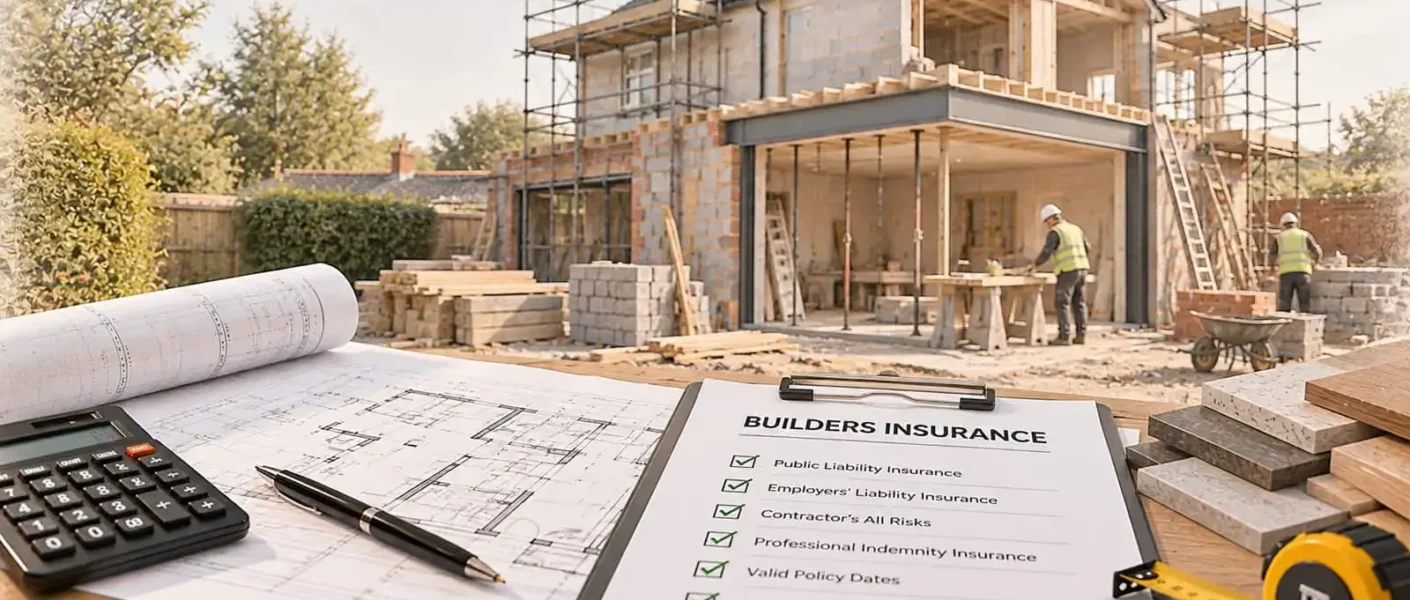
Skipping proper insurance coverage is one of the fastest ways to turn a profitable project into a financial disaster. One lawsuit, one fire, one injured worker, and an uninsured builder can face costs that wipe out months of earnings in a matter of weeks.
Knowing which insurance types matter isn’t optional for builders, it’s what keeps a construction business alive after its first serious setback. The six coverage types below address the risks builders run into most often on job sites around the country.
General Liability Insurance
General liability is what most project owners and general contractors want to see before you show up on site. Builders who carry insurance for commercial builders at an adequate limit can meet those contract requirements without holding up the job. The coverage pays third-party bodily injury and property damage claims, so if a visitor trips on your equipment or you accidentally crack a client’s foundation, your policy picks up the tab instead of your bank account.
Most states also make general liability a condition of holding a contractor’s license. The minimums differ by state, but many contracts call for at least $1 million per occurrence and $2 million in aggregate. Check your state licensing board’s requirements before you price your first bid, because an inadequate limit can kill your contract compliance just as surely as having no coverage at all.
Workers’ Compensation Insurance
Workers’ comp is legally required in almost every state the moment you hire your first employee. It covers medical bills and lost wages for a worker injured on the job, and it protects you from lawsuits those same workers could otherwise file against you directly.
Construction ranks consistently among the most injury-prone industries in the country. The U.S. Bureau of Labor Statistics reported over 150,000 nonfatal injuries in construction in 2023 alone. A single fall from scaffolding can generate a six-figure medical bill. Without workers’ comp, that bill lands on you, plus any penalties your state imposes for operating without required coverage.
Even if you work alone now, it’s worth carrying voluntary coverage on yourself. Many project owners and GCs won’t hire a sole proprietor who can’t produce a workers’ comp certificate, because it shifts their liability exposure.
Builder’s Risk Insurance
Builder’s risk covers a structure and its materials while construction is actively underway. Fire, theft, vandalism, and certain weather events are the most common triggers. It’s project-specific, so each policy is typically written for a single job and expires once the structure is complete and the owner takes possession.
The coverage amount should reflect the total completed value of the structure, not just the materials on-site at any given moment. That’s a common mistake builders make when they first purchase this coverage, underinsuring the project value and finding out the hard way that a partial claim only pays out proportionally.
Some contracts require the owner to carry builder’s risk, while others put that responsibility on the general contractor. Read every contract carefully before the project kicks off so there’s no gap in coverage between what the owner carries and what you’re responsible for.
Commercial Auto Insurance
Your personal auto policy won’t cover a vehicle once it’s used for business purposes. Commercial auto insurance fills that gap. It covers owned, leased, and hired vehicles your business uses to haul equipment, transport workers, or pull trailers to and from job sites.
The distinction matters because personal insurers can and do deny claims when they determine a vehicle was in commercial use at the time of an accident. If your pickup tows a trailer full of tools and gets rear-ended on the way to a job, a personal policy might leave you unprotected.
And if you have employees who use their own vehicles for work-related errands, you likely need hired-and-non-owned auto coverage as well. It sits alongside a commercial auto policy and covers liability arising from employee vehicles used on the job, even if the vehicles themselves aren’t owned by your business.
Tools and Equipment Insurance
A contractor’s tools are the business. Table saws, compressors, power tools, laser levels, replacing them out of pocket after a job site theft can cost thousands before you’ve earned your next dollar.
Tools and equipment coverage, sometimes called inland marine insurance in the broader sense, protects portable equipment against theft, accidental damage, and loss anywhere it travels. Some policies cover equipment while it’s in transit; others only protect it on a named job site. Know which you have.
Standard commercial property insurance typically won’t cover tools stored in a vehicle or left at a job site overnight. That’s a gap that catches a lot of builders off guard. If your tools are worth more than a few thousand dollars combined, a dedicated policy is worth the premium.
Excess and Umbrella Insurance
General liability and auto policies have limits. Serious accidents, those involving catastrophic injury, structural collapse, or multiple injured parties, can push claims past those limits fast. That’s where excess and umbrella coverage steps in.
An umbrella policy sits above your base coverage and pays once an underlying policy limit runs out. It doesn’t expand what’s covered; it extends how much is covered. A $2 million umbrella added to your general liability policy means your total exposure on a third-party injury claim can reach $3 million before you’re paying anything personally.
Larger project owners and developers often require an umbrella as a contract condition. Even when they don’t, umbrella policies tend to cost relatively little for the financial protection they add. If you’re bidding on higher-value commercial work, carrying one makes you a more credible contractor to hire.
Conclusion
Every builder carries some risk, but the right coverage turns most of it into manageable claims rather than business-ending losses. General liability, workers’ comp, builder’s risk, commercial auto, tools and equipment, and excess coverage together address the scenarios most likely to cause serious financial damage on a construction project. Review your current policies against this list, confirm your limits meet any contract requirements, and talk to a licensed agent who knows the construction industry before your next project starts. Guessing here isn’t a strategy.
