
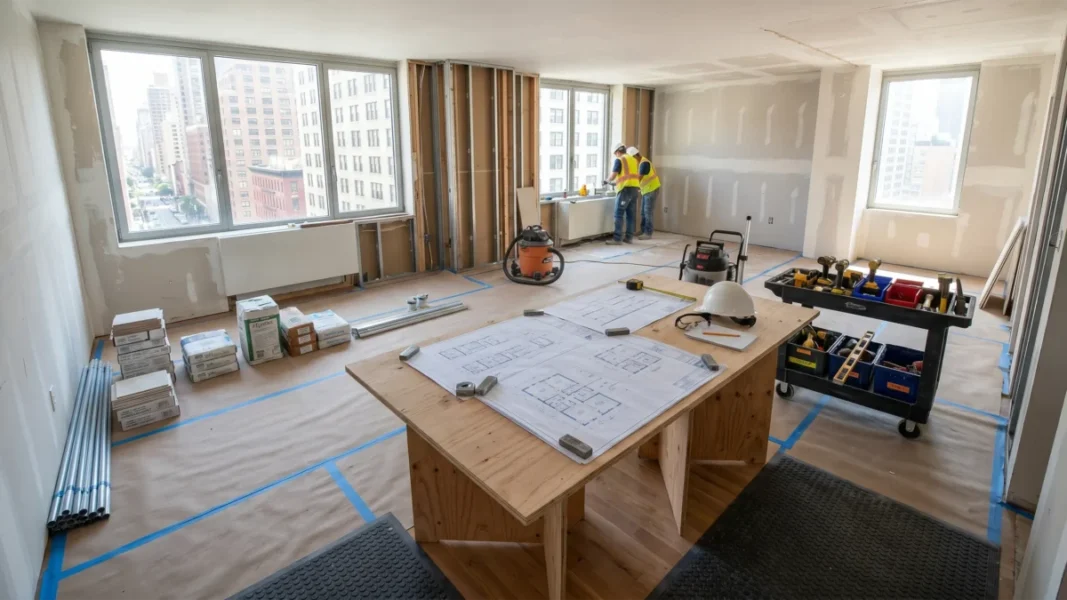
Most renovation projects in New York City go sideways because someone skipped a step with the NYC Department of Buildings and found out about it at the worst possible moment. Whether you own a co-op on the Upper West Side, a condo in Tribeca, or a brownstone in Park Slope, the permit process is the invisible infrastructure your project runs on. Understanding how it works before you hire anyone can save you months of delays, thousands in stop-work fines, and a very uncomfortable conversation with your building’s board.
The NYC Department of Buildings and What It Actually Does
The NYC Department of Buildings is the city agency responsible for enforcing zoning resolutions, the NYC Construction Codes, and the energy code across all five boroughs. It processes hundreds of thousands of NYC DOB permits each year, coordinates licensed professionals, and inspects active job sites.
The agency also maintains Buildings Information System (BIS) records that are publicly searchable, which means any neighbor, buyer, or mortgage lender can see exactly what work was done on your unit and whether it was done legally. NYC DOB codes govern everything from structural loads and egress requirements to electrical systems and sprinkler installations. Work done without a permit, or work that deviates from an approved plan, can result in a civil penalty, a lien on your property, or a requirement to restore the space to its original condition at your expense.
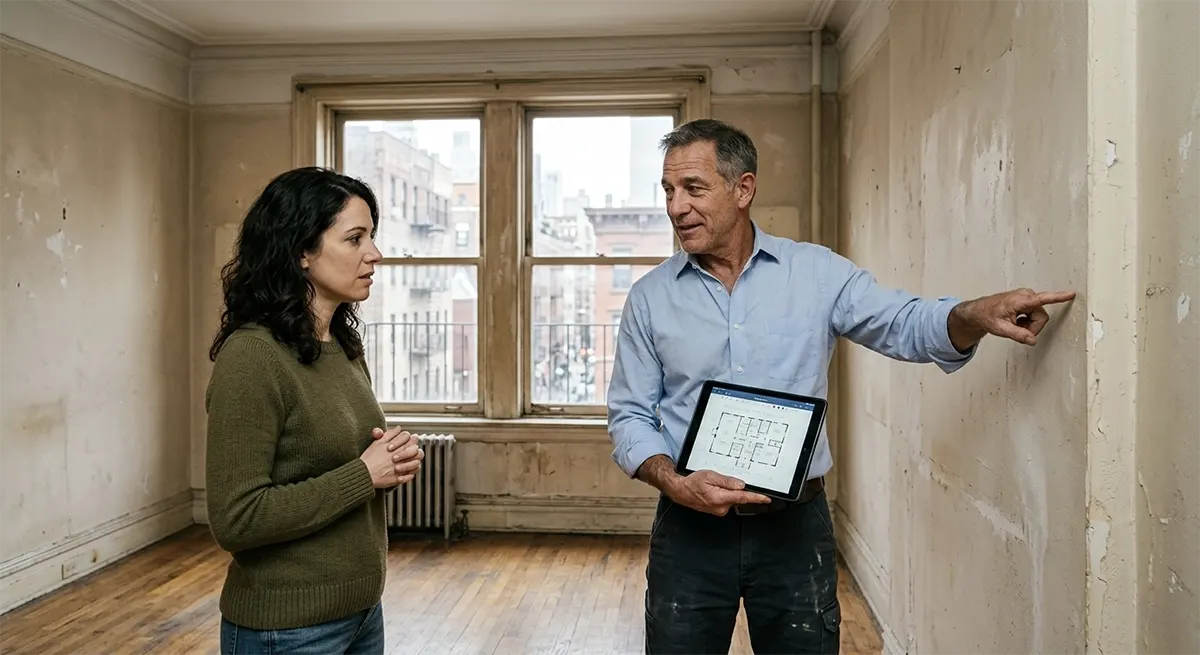
NYC Building Department Permit Types: A Practical Overview
The NYC building department permit system is organized around job types. This surprises many property owners who assume that small projects are automatically exempt.
Alt 1 (Full Alteration)
Required when the occupancy classification or egress configuration of a space changes. Combining two apartments, converting a residential floor to commercial use, or adding a floor to an existing building all fall into this category.
Alt 2 (Partial Alteration)
Covers structural changes, plumbing work that goes beyond a direct fixture replacement, HVAC modifications, and any renovation that requires a licensed professional’s stamp. This is the most common permit category for full gut renovations in Manhattan and Brooklyn.
Alt 3
Applies to minor, non-structural work that still requires a building permit but can be self-certified by a registered architect or engineer without a DOB plan review. Work type is separate from job type. A single Alt 2 filing might include multiple work types:
- PL – Plumbing
- EL – Electrical
- SD – Sprinkler
Each work type requires the appropriate licensed subcontractors and may trigger separate inspections.
When a Demolition Permit Is Required
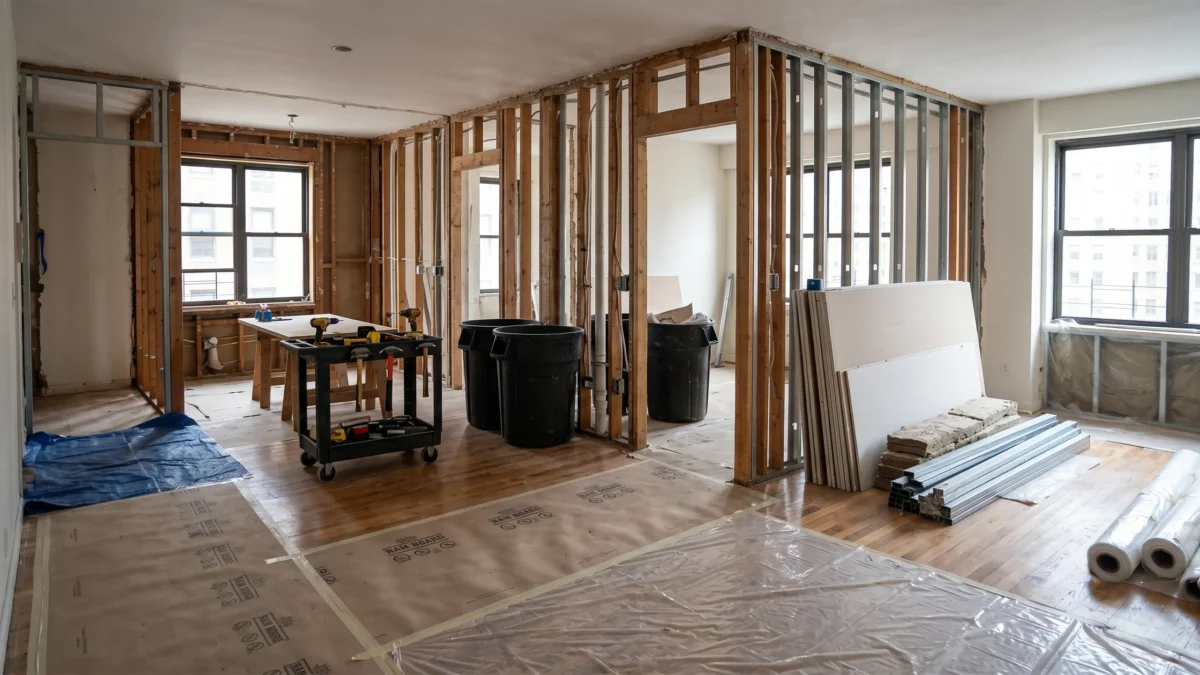
A demolition permit in NYC is not reserved for taking down entire structures. Partial demolition, including gut-renovating a full apartment floor to the studs, removing structural walls, or tearing out load-bearing elements, typically requires a separate demolition permit filed before the alteration permit can be approved. The demolition permit process involves submitting plans to the DOB, identifying a licensed contractor, and in some cases notifying adjacent property owners if the work poses risk to neighboring foundations or party walls. For landmark buildings or properties in historic districts, the Landmarks Preservation Commission must review and approve demolition scope before the DOB will accept the filing. Attempting to perform gut work under a general alteration permit without the demolition component filed properly is one of the most common triggers for stop-work orders on residential renovation sites across the city.
The Co-op and Condo Layer: Board Approval Before Permits
The NYC DOB process and your building’s internal approval process are completely separate, and building approval almost always has to come first. Condo board approval for renovation work is governed by each building’s proprietary alteration agreement and house rules. Some buildings in Manhattan require professional renderings, noise impact statements, and a security deposit before they will even schedule an alteration review meeting. Boards in pre-war co-ops often have additional restrictions on:
- Work hours and freight elevator bookings
- Wet-over-dry clauses that prohibit moving kitchens or bathrooms to spaces above a lower unit’s bedroom
- Requirements that all licensed professionals carry specific levels of liability insurance naming the building as an additional insured
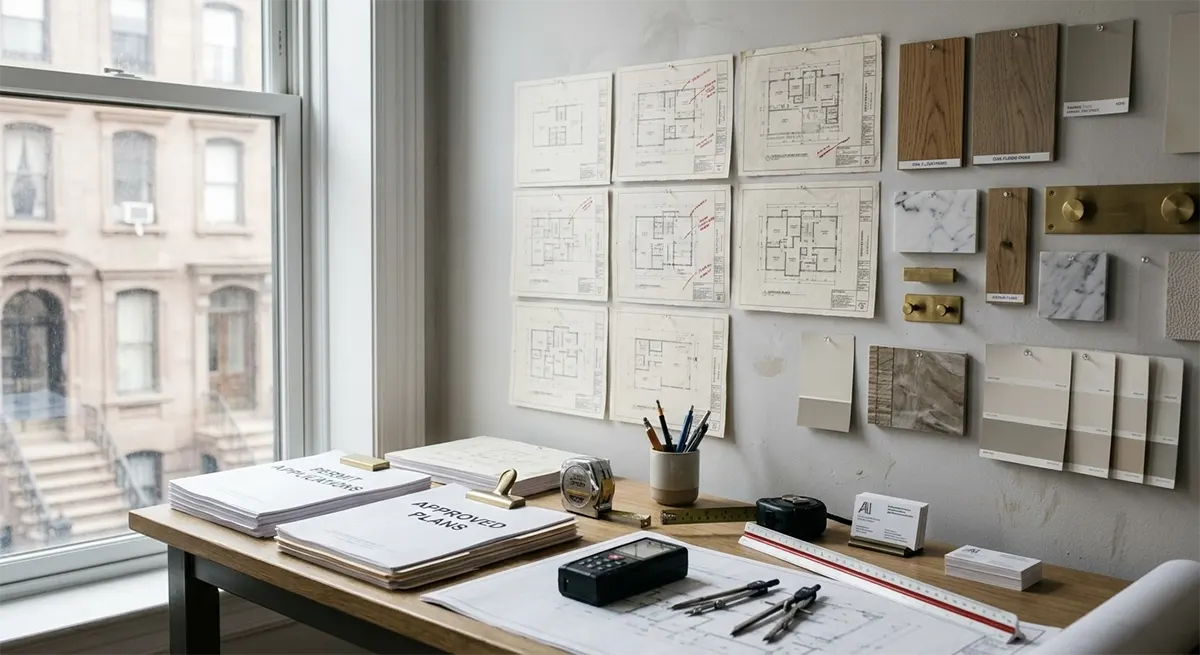
The board review timeline varies widely. A straightforward kitchen renovation in a well-run co-op may take four to six weeks. A full gut renovation involving structural changes in a landmarked building can take four to six months before you ever submit a permit application to the DOB. Budgeting for that timeline up front, both in your project schedule and your carrying costs, is essential.
What the Permit Filing Process Looks Like in Practice
For most Alt 2 projects, the filing sequence runs roughly as follows:
- Architect or engineer prepares drawings and files them with the DOB.
- DOB assigns a job number and either approves the plans or issues objections.
- Objections are resolved by the architect.
- Permit is issued.
- Construction begins.
- Required inspections are completed at required stages.
- All inspections pass and the job is signed off.
- Letter of Completion is issued.
That sequence covers six to eighteen months of real-world calendar time on a large Manhattan renovation, depending on the complexity of the filing and current DOB workload. Expeditors – licensed filing representatives who specialize in navigating the DOB system – are routinely engaged on projects above a certain scope because their familiarity with the system, the inspectors, and the objection resolution process can compress that timeline significantly. 
NYC Local Law 196 and Mandatory Safety Training
Since 2017, NYC Local Law 196 has required that workers on most permitted job sites complete a minimum number of hours of safety training through a Site Safety Training (SST) card:
- Workers: 40 hours of OSHA-equivalent training
- Supervisors: 62 hours of training
Any contractor or subcontractor who cannot provide documentation of compliant training puts your permit at risk and exposes the site to DOB enforcement action. Asking for SST cards before signing contracts is standard practice among experienced renovation managers and is increasingly required by co-op and condo boards as a condition of alteration agreement approval.
Permits, Certificates of Occupancy, and Resale
Open permits follow the property, not the owner. If the previous owner of your apartment pulled a permit for a bathroom renovation and never got it signed off, that open permit is your problem the moment you close on the purchase. It will surface in a title search, flag in a buyer’s due diligence, and can complicate your ability to refinance. Checking the DOB website for open or expired permits before you buy is straightforward and takes about five minutes. Resolving an inherited open permit after the fact, especially if the original contractor is unreachable or the work was done without a professional of record, can take considerably longer and cost considerably more. 
Frequently Asked Questions About NYC DOB Permits
Do I need a permit to renovate my NYC apartment?
Most renovation work beyond cosmetic changes like painting, flooring, or replacing fixtures in kind requires a permit from the NYC Department of Buildings. Structural changes, plumbing and electrical modifications, HVAC work, and anything that affects egress or occupancy all require formal permit filings. If you are unsure whether your specific scope triggers a permit requirement, a licensed architect can advise you quickly.
How long does it take to get a building permit in New York City?
Timeline depends heavily on project type and complexity. Simple Alt 3 filings with self-certification can be approved in days. Alt 2 projects requiring full plan examination may take six weeks to several months for DOB approval, and that timeline sits on top of however long your co-op or condo board takes to approve the alteration agreement.
What happens if I renovate without a permit in NYC?
The DOB can issue a stop-work order, assess civil penalties, and require you to expose and restore work to prove it was done correctly. In some cases, unpermitted work must be demolished and redone. Open violation notices attach to the property record and will surface in any future sale or refinancing transaction.
What is the difference between Alt 1, Alt 2, and Alt 3 permits?
Alt 1 covers changes to occupancy or use. Alt 2 covers structural, plumbing, mechanical, or electrical alterations that require a licensed professional’s sign-off but do not change occupancy. Alt 3 covers minor work that still requires a permit but can move through a streamlined self-certification process. The right category for your project should be determined by your architect or expeditor early in the planning process.
Is condo board approval the same as a DOB permit?
No. These are two entirely separate processes. Condo board approval is an internal building requirement governed by your alteration agreement and house rules. DOB permit approval is a government regulatory process. Most buildings require internal approval before you submit to the DOB, so the board review typically has to happen first.
What is a demolition permit in NYC and when do I need one?
A demolition permit is required when work involves the removal of structural elements, a full gut of a space to the studs, or any scope that qualifies as partial or full demolition under the NYC Construction Code. It is filed separately from an alteration permit and must be in place before certain types of gut work can legally begin. For projects in landmarked buildings or historic districts, Landmarks Preservation Commission review is also required.
Can I use an expeditor instead of hiring an architect directly?
Expeditors and architects serve different functions. An expeditor is a filing representative who specializes in navigating DOB processes, resolving objections, and managing permit logistics. An architect or engineer of record is required to prepare and stamp the construction drawings and certify code compliance. Most significant renovation projects use both.