
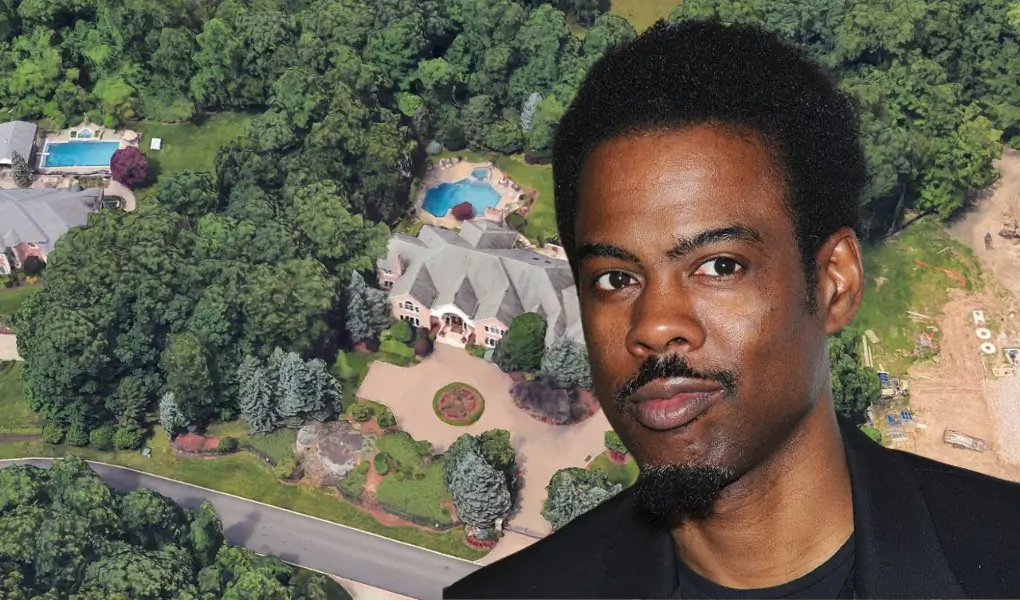
The most revealing fact about Chris Rock’s mansion is not its headline value. It is how much privacy and usable land the estate delivers near Manhattan. Chris Rock lives in Alpine, New Jersey, where he has owned a large single-family estate since 2001.
The Chris Rock house in Alpine spans 10,359 square feet on 2.06 acres. Public records show a $3 million purchase, not a $10 million sale. The higher figure describes its current luxury-market positioning and needs that context.
Quick Facts About Chris Rock’s Alpine Mansion
| Detail | Publicly documented information |
|---|---|
| Location | Alpine, Bergen County, New Jersey |
| Property type | Single-family luxury estate |
| Year built | 1999 |
| Purchase | $3 million in December 2001 |
| Interior area | 10,359 square feet |
| Lot size | 2.06 acres, or 89,734 square feet |
| Public room count | Four bedrooms and four bathrooms |
| Recorded exterior features | In-ground pool, broad lawn, gated entrance, curved driveway and landscaped grounds |
| 2025 tax assessment | $4,586,800 |
| 2025 property tax | $38,391 |
| Current status | Off market; no public sale after 2001 |
| $10 million context | Not a recorded purchase price or tax assessment |
Property facts and tax data: Realtor.com public-record profile and New Jersey tax-record entry
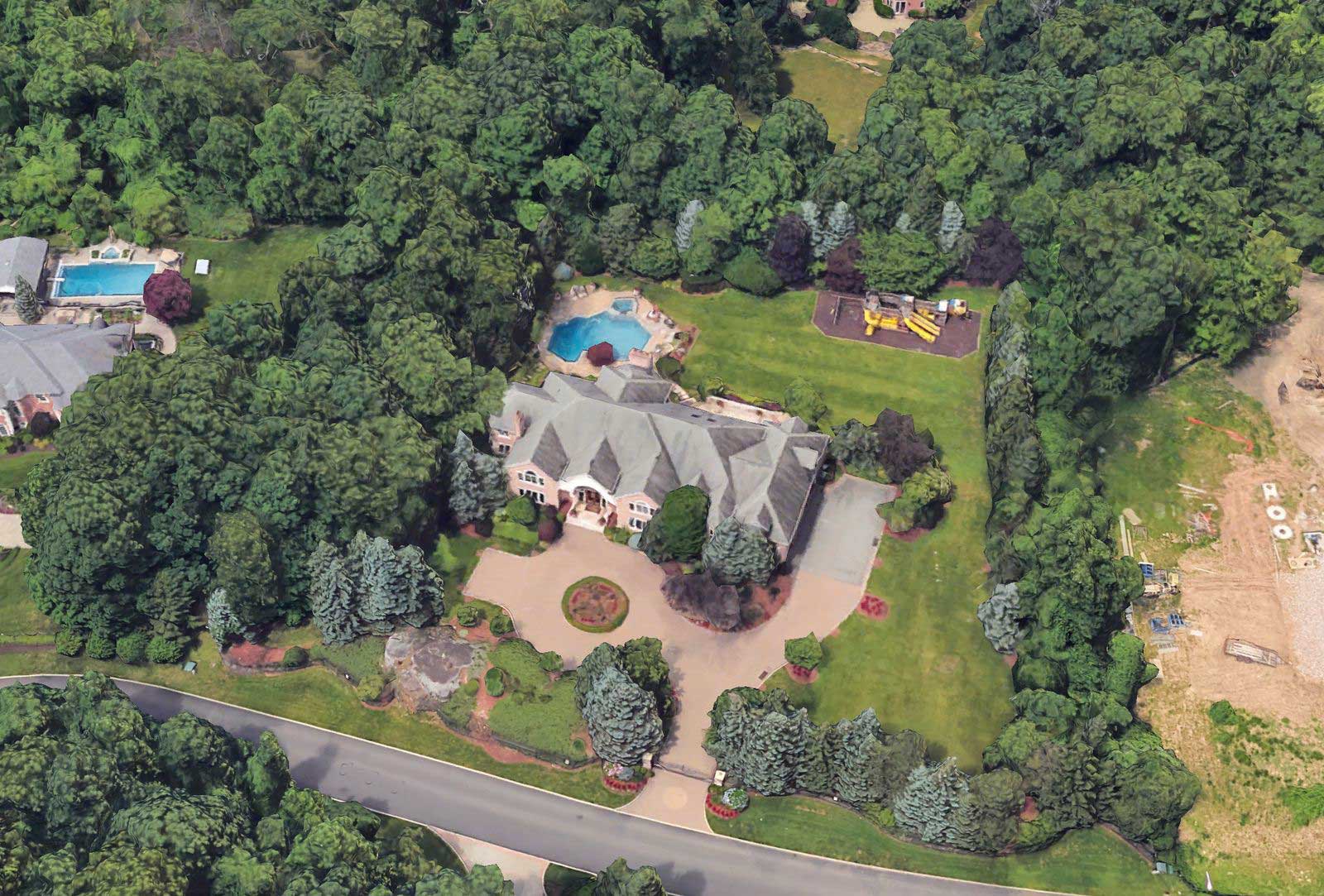
The two-acre site separates the residence, pool and lawn into distinct outdoor zones. Image: Jersey Digs via Google Earth
What the Public Record Confirms
The house was built in 1999 and sold to Rock in December 2001 for $3 million. Its 2.06-acre parcel equals almost 90,000 square feet. That land-to-building ratio leaves substantial room for setbacks, landscaping and outdoor use.
The public record lists 10,359 square feet, four bedrooms and four bathrooms. Those figures should not be expanded into an invented room-by-room tour. No reliable public floor plan or interior photo set documents the Alpine home.
Exterior coverage confirms a large pool, broad lawn, formal planting and a curving paved approach. A wrought-iron gate and masonry piers define the entrance. These details are visible in the published aerial and street imagery.
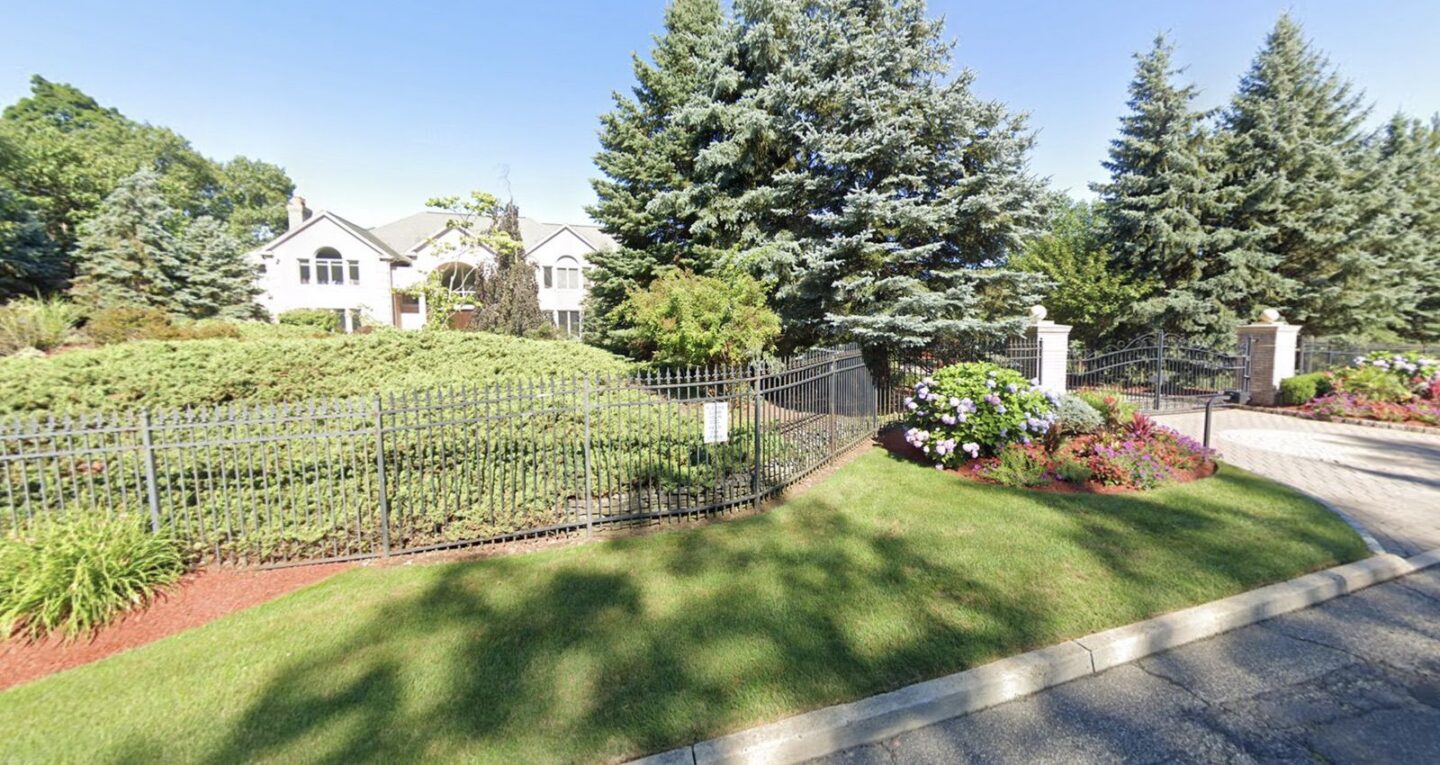
Figure 2. The gated approach and mature evergreen screen create layered privacy from the road.
The Architecture Favors Presence Without Maximum Height
A late-1990s estate composition
The public exterior images show a broad, two-story composition with steep roof planes. Multiple projecting bays break down the long facade. A central arched entry creates the primary visual axis.
This approach gives a very large house a lower, more residential profile. The cost is roof complexity. More valleys, ridges and intersections create more drainage points that require regular inspection.
Why the massing works on this site
The house spreads across the parcel instead of concentrating its volume vertically. That improves the connection between ground-floor rooms and the garden. It also allows several facade sections to face different outdoor zones.
The long footprint needs more exterior envelope than a compact plan. That increases maintenance area for roofing, windows, gutters and wall finishes. On an estate of this scale, maintenance access matters as much as appearance.
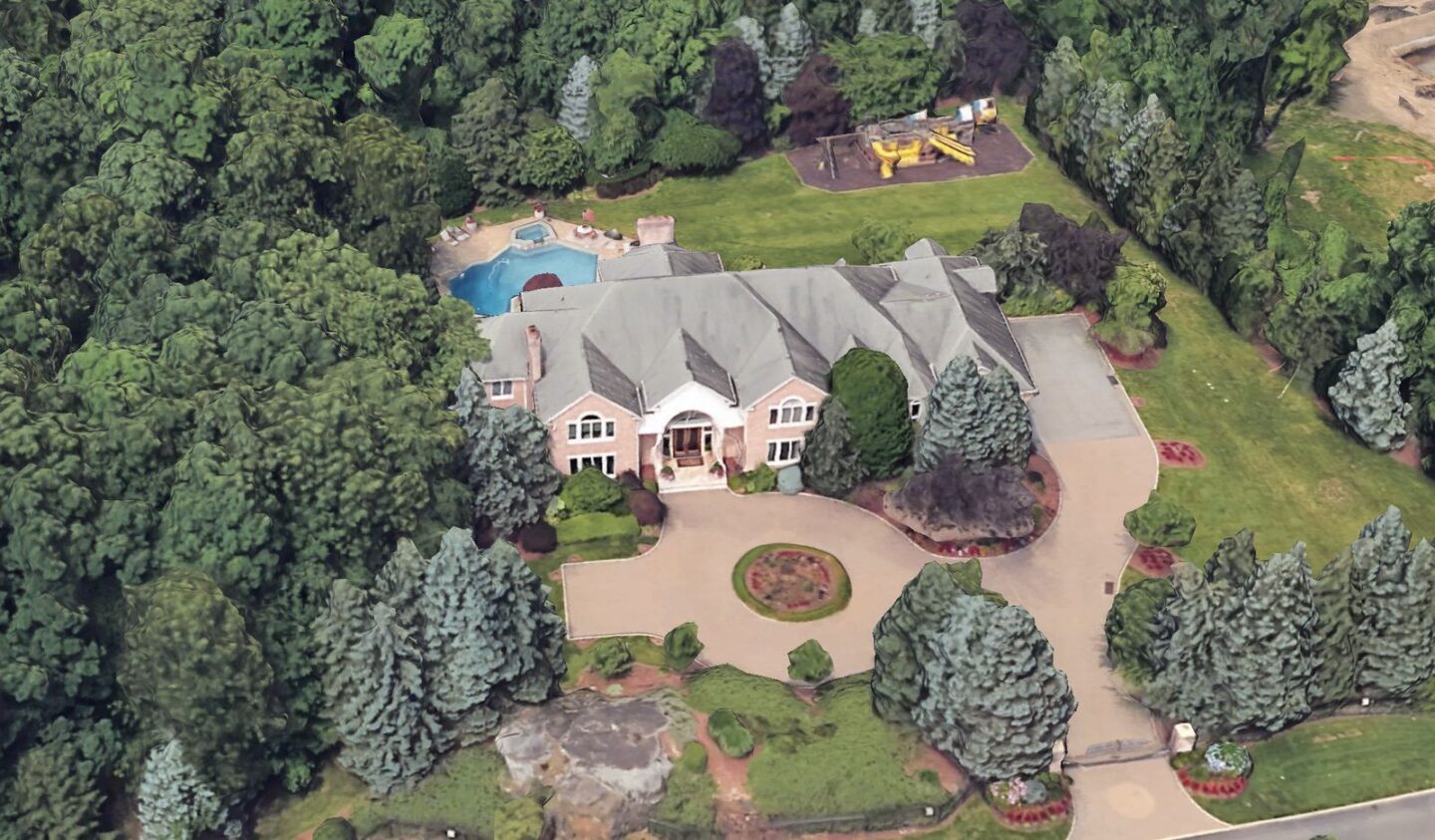
Figure 3. The central entry, varied roofline and wide motor court organize the formal arrival sequence. Image: Jersey Digs via Google Earth
How the Grounds Perform in Real-World Living
Arrival, parking and privacy
The curved driveway creates distance between the gate and front door. It also gives arriving vehicles room to slow, turn and queue. That function is valuable for a high-profile owner and a large household.
Mature trees screen much of the property from surrounding roads and homes. Evergreens are especially useful because they retain cover in winter. The tradeoff is ongoing tree care near roofs, paving and utility lines.
Pool placement and outdoor zoning
The pool sits beside the house rather than at the far end of the lot. That shortens service routes from the residence. A separate lawn preserves open recreation space instead of letting the pool dominate the grounds.
The layout separates arrival, swimming and lawn activity. Good zoning reduces conflicts between cars, guests and outdoor recreation. It also helps a large property feel organized rather than simply oversized.
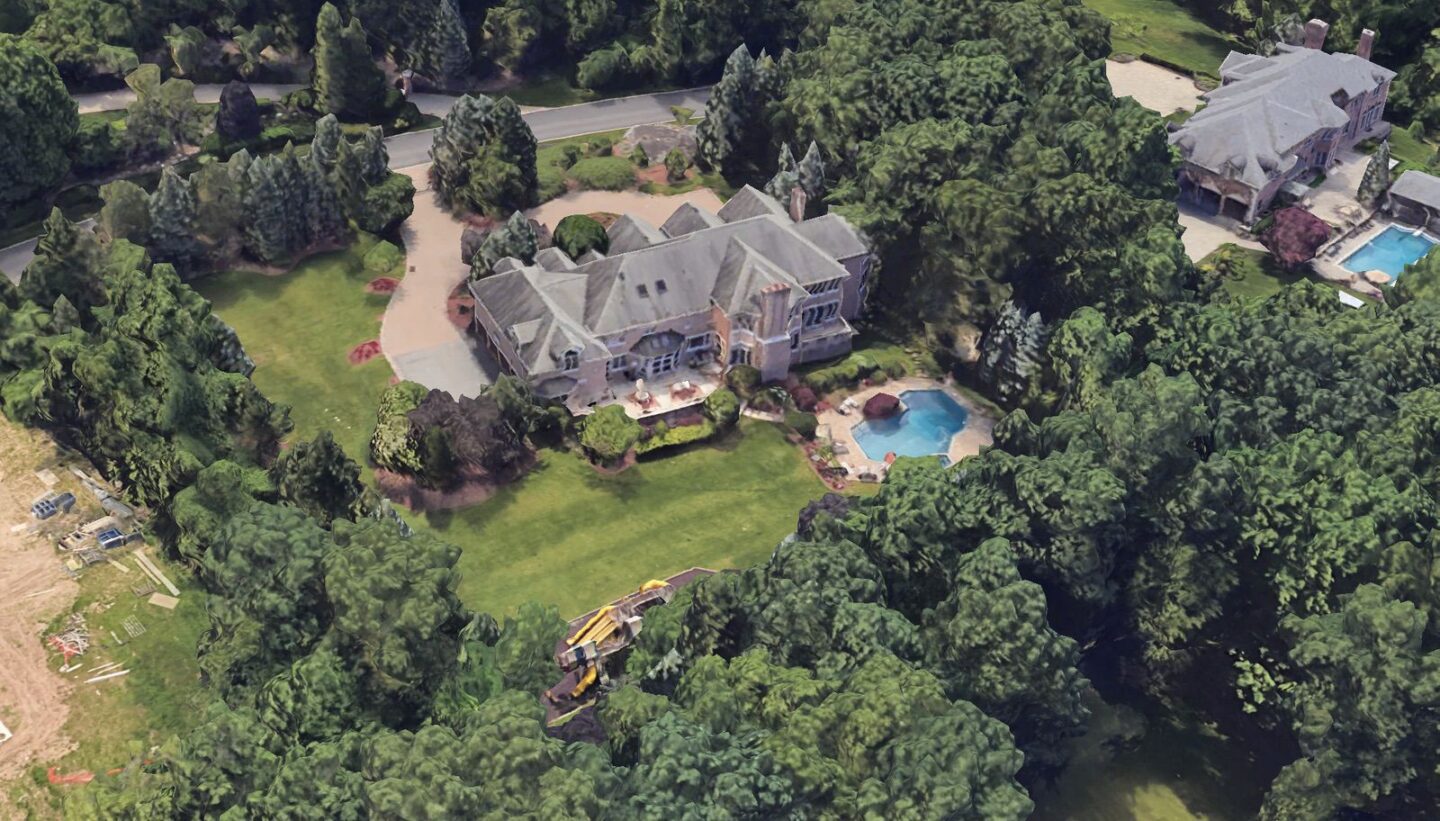
The pool remains close to the house while the larger lawn stays open and flexible.
Ownership, Assessment and the $10 Million Question
The ownership structure is not hidden behind an LLC
The assessor-facing ownership entry lists Chris Rock and Malaak in personal names. It does not identify a limited liability company or trust as the owner. That is the public-facing tax entry, not a complete estate-planning record.
The home carried a 2025 assessment of $4,586,800. The corresponding tax bill was $38,391. The assessment divides into $1.83 million for land and $2.7568 million for improvements.
Why $10 million is not a confirmed property value
No public record shows that Rock paid $10 million for this estate. The last recorded sale remains $3 million in 2001. The 2025 assessment also sits well below the headline figure.
As of July 2026, the property remains off market. Automated estimates vary sharply, which makes them poor substitutes for an appraisal. A $10 million label should therefore be read as market positioning, not a documented valuation.
Why Alpine Still Supports Mansion-Level Pricing
Alpine combines large residential lots with fast access to New York City. Its supply is naturally limited by its small housing stock and established estates. That scarcity supports values even when individual homes differ widely in age and finish.
Redfin recorded a May 2026 median sale price near $4 million, up 8.8 percent year over year. Only one home sold that month. Such thin volume makes the median useful for direction, but weak for valuing one estate.
Current market data: Redfin Alpine housing market
For Rock’s property, the strongest value drivers are its 2.06 acres, privacy and established site plan. The biggest unknown is interior condition. Without a current inspection and comparable-sales analysis, a precise 2026 market value would be speculative.
Chris Rock’s Earlier Brooklyn Property
Rock’s best-documented former home is a Clinton Hill carriage house in Brooklyn. He bought it in 1994 and later rented it out. The 3,700-square-foot property sold for $3.35 million in 2017.
That home offered a very different design model. Its exposed brick, timber beams, roof terrace and two-car garage suited dense city living. The Alpine estate trades urban character for land, separation and outdoor capacity.
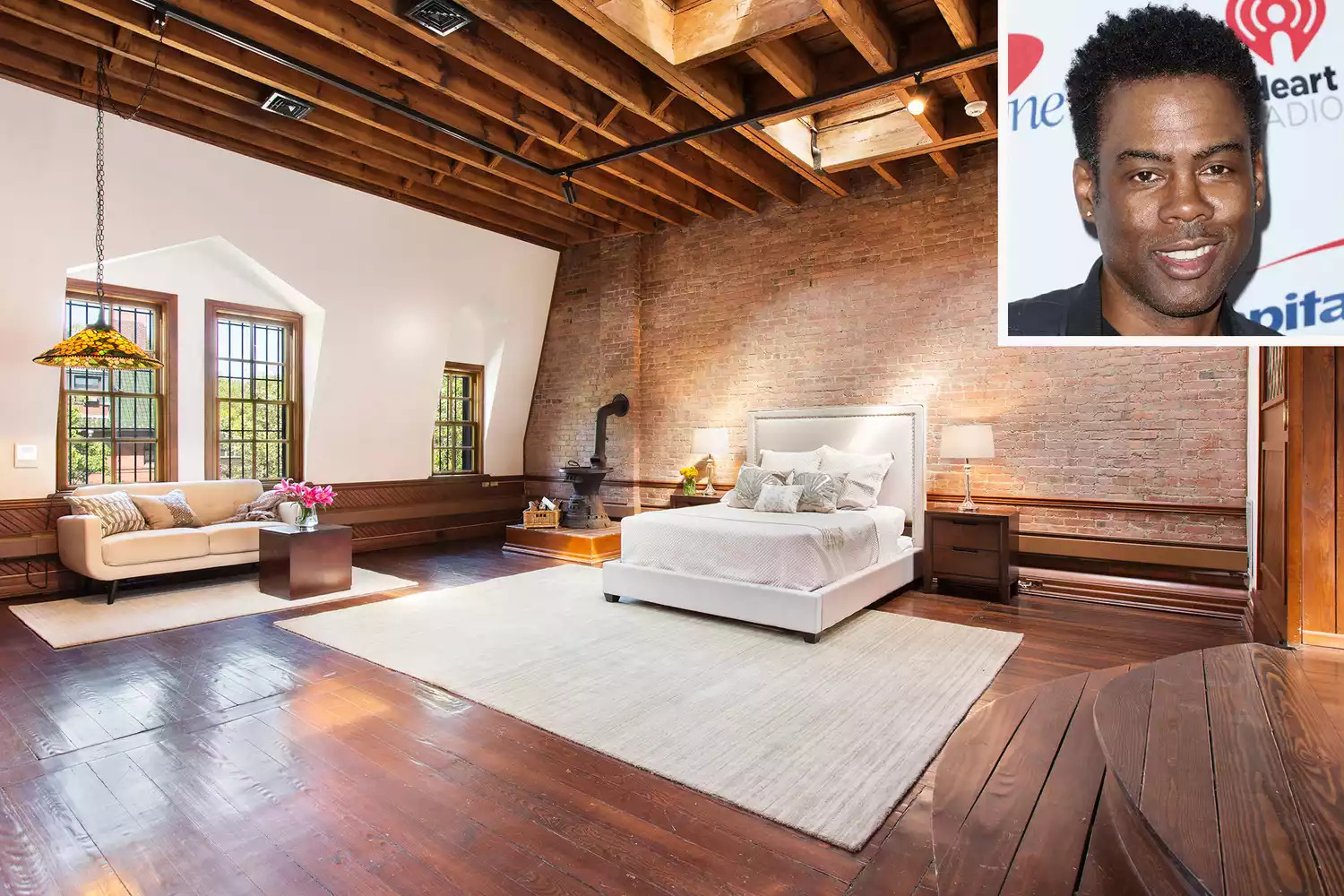
The former Brooklyn carriage house retained exposed brick, timber beams and a loft-like interior.
Frequently Asked Questions
Where does Chris Rock live?
Chris Rock lives in Alpine, New Jersey. He bought his 10,359-square-foot estate there for $3 million in 2001. The property occupies 2.06 acres in Bergen County and remains off market.
How much is Chris Rock’s house worth?
The home’s 2025 tax assessment was $4,586,800. No $10 million sale or official appraisal appears in the public record. A precise current value requires an on-site appraisal and recent comparable sales.
How big is Chris Rock’s Alpine house?
The Alpine estate contains 10,359 square feet of interior space. It stands on 2.06 acres, or 89,734 square feet. Public sources list four bedrooms and four bathrooms.
When did Chris Rock buy the New Jersey mansion?
Chris Rock bought the Alpine property in December 2001 for $3 million. The house was completed in 1999. Public property data show no later sale through July 2026.
Does Chris Rock still own his Brooklyn house?
No. Rock’s former Clinton Hill carriage house sold for $3.35 million in 2017. The sale closed below its $3.85 million asking price. His Alpine estate remained his New Jersey base.
Final Design Assessment
Chris Rock’s Alpine mansion succeeds because the site plan supports the building. The driveway, pool, lawn and tree cover each have a clear role. That clarity matters more than adding another showpiece amenity.
From a renovation and performance perspective, the roof network and long exterior envelope deserve the most attention. Both create maintenance exposure. The mature landscape also needs planned care to preserve privacy without threatening drainage or building fabric.
The estate’s real strength is long-term usability. It offers privacy, flexible outdoor zones and substantial space close to Manhattan. Those qualities explain its lasting relevance in Alpine’s luxury market.
