
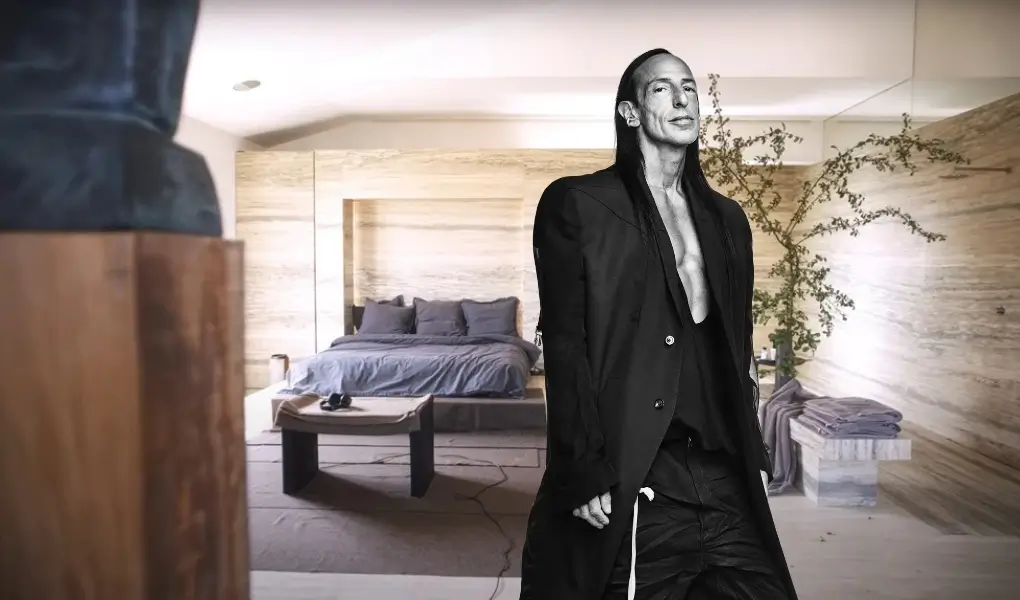
Step inside the home of Rick Owens, and the mood shifts instantly as the air grows noticeably heavier. Because sound softens against raw surfaces while light falls differently across stone and concrete, it becomes immediately clear that this is not a home built for comfort. Rather, it is a controlled environment designed to sharpen perception and eliminate distraction.
While many high-profile creatives opt for sprawling, amenity-rich estates, such as the hyper-modern, entertainment-focused Travis Scott house, Owens takes an entirely different approach.
Instead of merely decorating, Owens constructs spaces with deep intention, utilizing architecture as an extension of his overarching fashion language. Consequently, every surface, object, and void reflects his signature discipline, restraint, and profound awareness of material.
The Paris Residence: A Concrete Power Statement
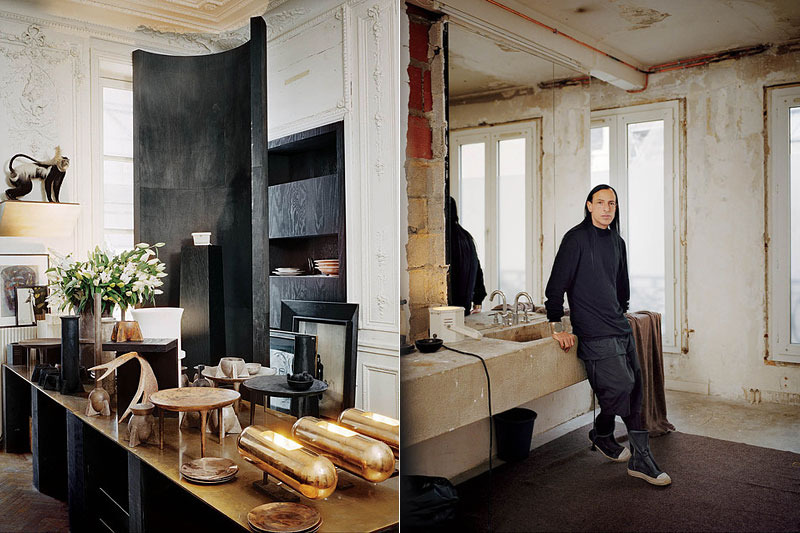
Rick Owens’ primary residence in Paris sits on Place du Palais-Bourbon inside a historic five-story building once used by the French Socialist Party. Rather than preserving its storied past, he systematically erased it.
He gutted the interior completely, stripping away ornate moldings and traditional Parisian softness to expose a brutalist core of raw concrete and hard geometry. The result feels austere yet deliberate, creating the sensation of stepping inside a monumental sculptural installation rather than a domestic home.
- Walls and floors: Cool, porous concrete that absorbs light and sound.
- Lighting: Low and directional, explicitly intended to create shadows instead of broad illumination.
- Furniture: Heavy, monolithic forms carved from marble, bronze, and antler.
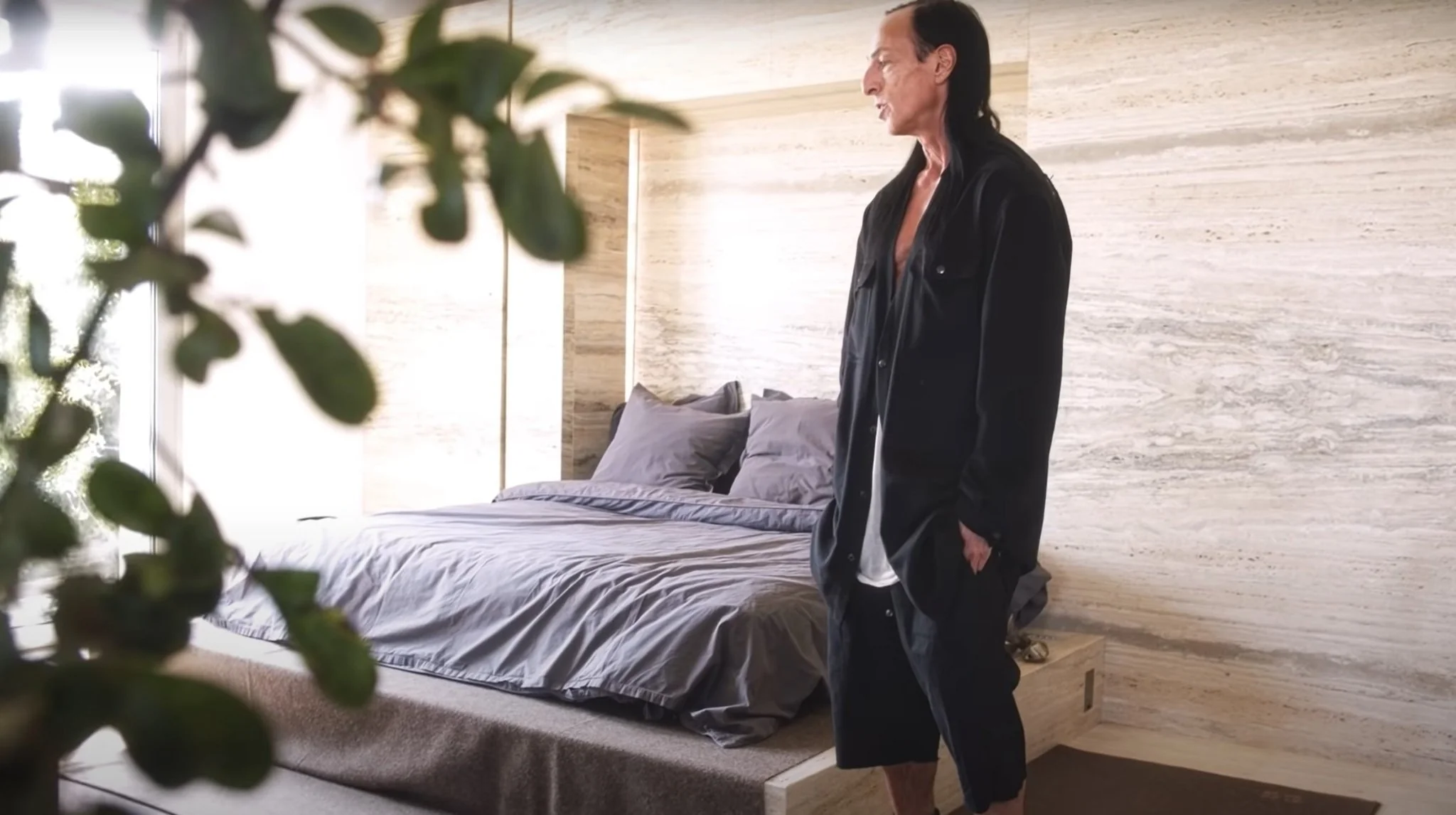
The bedroom heightens this restraint, featuring a large platform bed resting in an open, almost ascetic space. Since there are no curtains to soften daylight or layered textiles to invite relaxation, the room demands absolute presence. Even the shower stands exposed without glass or enclosure, reinforcing an unavoidable sense of raw utility.
In stark contrast, the kitchen operates with surgical precision. Stainless steel surfaces reflect light sharply, evoking the clinical efficiency of a professional workspace rather than a warm, domestic setting. Ultimately, this residence does not aim to soothe its inhabitants, but instead fundamentally recalibrates how one experiences spatial volume.
The Paris Facade: Hiding in Plain Sight
To fully understand the exterior architecture of Rick Owens’ home, one must look closely at what he chose not to touch. The facade of the Place du Palais-Bourbon residence remains deceivingly traditional. Behind the classic, bourgeois Parisian exterior lies the gutted, concrete core, and this severe juxtaposition between the historic street view and the brutalist interior serves as a deliberate study in spatial flow and boundary-setting.
A Working Compound, Not a Home
The Paris building functions as a complete, self-sustaining ecosystem where living and creating coexist without any formal separation.
- The ground floor operates as a sprawling showroom and industrial receiving area.
- The second floor houses his office, characterized by cement floors and highly controlled natural light.
- The upper floors contain private living quarters specifically designed to foster isolation.
This architectural structure entirely removes the boundary between work and life. As a result, creativity becomes continuous and completely embedded within the environment itself.
Owens fills the space almost exclusively with his own furniture, reinforcing his authorship at every possible level. Art punctuates the interiors with emotional intensity, prominently featuring works by Anselm Kiefer and towering murals by Scarlett Rouge. The cumulative effect of these choices feels deeply immersive rather than superficially decorative.
The Venice Apartment: Discipline with a View
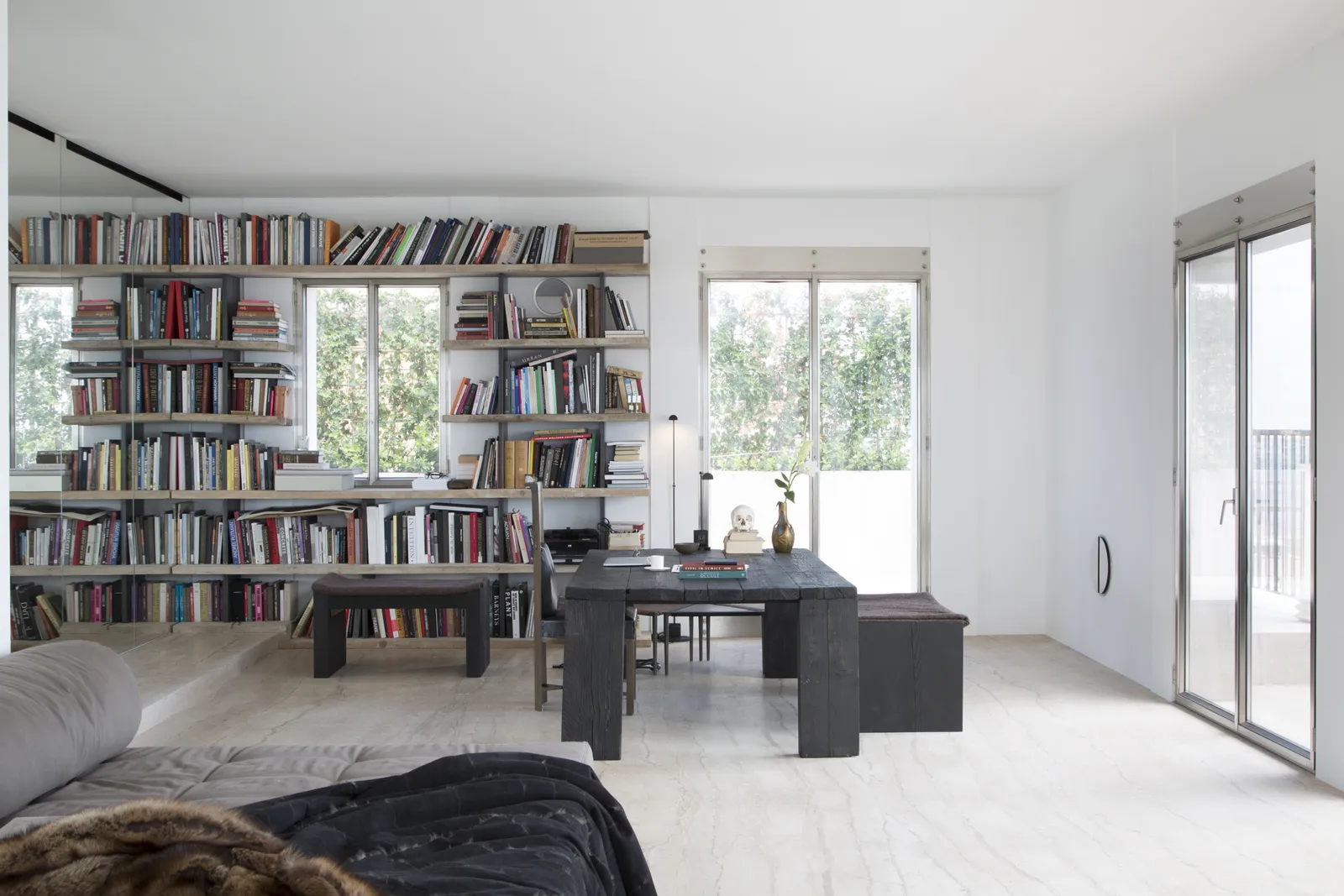
On the Venice Lido, Owens shifts his geographic context but refuses to compromise his core philosophy. The apartment overlooks the Adriatic Sea, yet the interior fiercely resists the expected, breezy openness of a coastal retreat.
Sicilian white stone and dark onyx marble dominate the space, creating a cool, almost glacial atmosphere. The surfaces feel smooth yet distinctly unforgiving, reflecting the coastal light in controlled, muted tones.
- Kitchen: Radically reduced to the bare essentials, containing only a fridge and an espresso maker.
- Gym: Expanded into a heavily mirrored training space that prioritizes physical routine over relaxation.
- Views: Wide, uninterrupted panoramas framed sharply by severe, minimalist interiors.
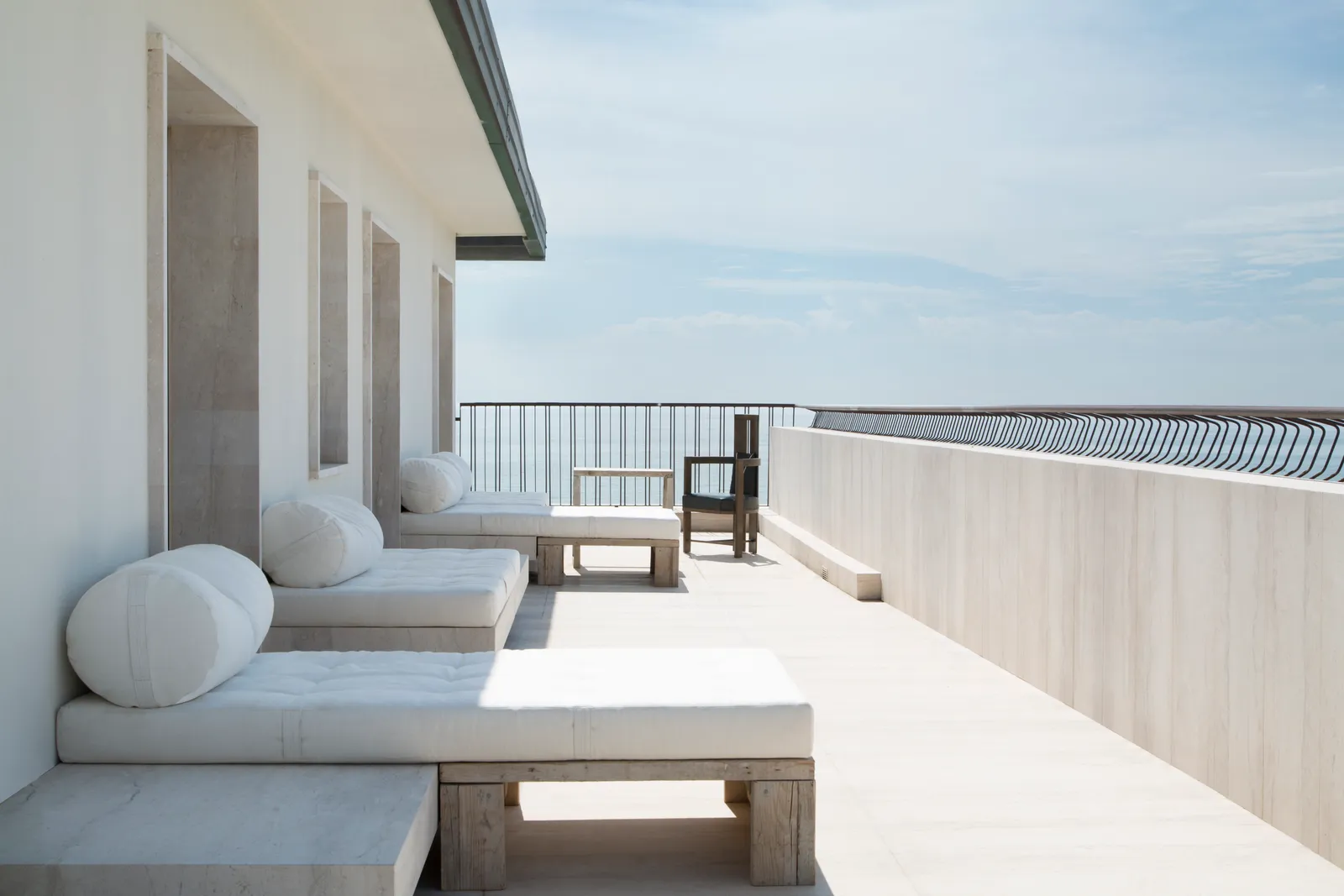
The stark contrast between expansive ocean views and tightly controlled interiors creates a persistent architectural tension. This dichotomy keeps the occupant acutely aware and never fully relaxed, proving that this is not a retreat built for leisure, but rather a space designed to reinforce strict discipline.
The Venice Lido Exterior: Architecture on the Water
While the interior of the Venice apartment focuses on rigid, uncompromising materials, its placement creates a deliberate, ongoing dialogue with the Adriatic Sea. This is far from a traditional waterfront property; instead, it acts as a brutalist fortress observing the tide. The exterior facade maintains a severe, geometric profile that refuses to blend into the coastal environment, actively treating the water as a shifting, volatile contrast to the heavy, static stone hidden within.
Debunking the “Underwater House” Myth
The starkness of Owens’ designs has birthed an entire genre of fabricated internet lore, most notably the viral rumor that Rick Owens secretly inhabits a submerged, underwater house. To clarify the architectural record once and for all: Owens does not own an underwater property. This myth likely originated from visual misinterpretations of his heavily brutalist, windowless concrete structures or avant-garde runway set designs featuring heavy water elements. In reality, his residential portfolio is firmly grounded in historic, terrestrial architecture.
Concordia: The Factory Home
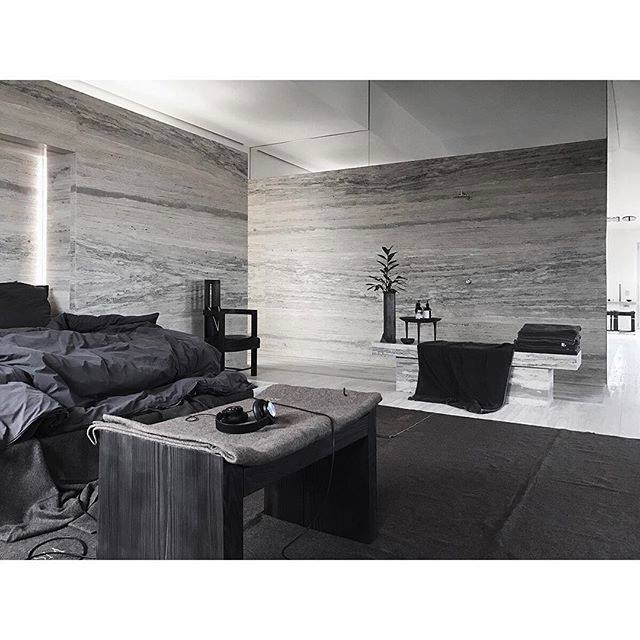
In Concordia, Italy, Owens lives directly across from his factory, completely collapsing the physical distance between conceptual design and physical production.
The residence, often described by visitors as a “travertine box,” strips daily life down to its absolute essentials. The stone surfaces feel matte and consistently cool to the touch, grounding the massive space in stark physical reality.
- Travertine walls and structural columns define the overarching architecture.
- Minimal furniture placement allows the vast space to breathe.
- Objects are carefully, selectively introduced for their symbolic meaning.
An ancient Egyptian sarcophagus, a skull sculpture, and incredibly long Onagadori rooster feathers sit within this highly controlled environment. Together, these elements introduce a quiet, daily confrontation with human mortality and historical continuity. The philosophy of memento mori becomes tangibly present here, ensuring that you do not merely observe the concept—you feel it radiating from the very walls.
The Materials Define Everything
Owens builds his interiors strictly around materials rather than decorative trends, allowing raw texture and physical weight to carry the narrative meaning of the room.
- Concrete: Dense, cool, and highly absorbent, effectively muting both sound and light.
- Travertine: Smooth yet intrinsically porous, offering a subtle, organic tonal variation.
- Bronze and alabaster: Elements that add substantial depth through their heavy weight and evolving patina.
- Army blankets: Thick, coarse wool that introduces warmth purely through tactile resistance.
The interplay between these chosen materials creates a highly distinct sensory experience. The cold firmness of stone contrasts beautifully with the dense, slightly abrasive texture of military wool, and this tension between rigid hardness and rough softness prevents the sweeping spaces from feeling sterile. These intentional choices reflect a deep influence from artists like Joseph Beuys, who famously used industrial and organic materials to express human vulnerability alongside the need for protection.
Influence of Brutalism and Minimalism
Owens’ interiors sit at a precise, calculated intersection of architectural movements. Brutalism provides the necessary structure through raw, exposed materials and a truly monumental scale. Meanwhile, minimalism strips away the excess, forcing the eye’s attention entirely onto proportion and surface execution.
He also draws heavily from the legacy of Jean-Michel Frank, whose early 20th-century work emphasized quiet luxury achieved through strict material restraint rather than applied ornament. This potent combination creates spaces that feel both ancient and incredibly forward-looking, remaining solidly grounded yet highly abstract.
The Role of Michèle Lamy
Michèle Lamy shapes these iconic interiors in a deeply hands-on, vital way. Rather than simply curating objects, she actively sources rare materials and collaborates directly with specialized artisans across Europe.
She works alongside master craftsmen to cast complex bronze elements, source massive pieces of petrified wood, and shape raw marble into functional sculptural forms. Because these meticulous processes take considerable time and precision, each resulting piece carries immense weight both physically and conceptually.
Her sweeping influence introduces a necessary layer of organic unpredictability within Owens’ otherwise strict framework. Together, they perfectly balance rigid discipline with wild instinct, a partnership that transforms their living spaces into evolving, collaborative works of art rather than static environments.
Furniture as Architecture
Because Owens treats furniture as foundational structural elements rather than mere accessories, pieces like the pedalo chairs carved from solid resin feel remarkably dense and grounded. Massive stone tables act as visual anchors within the open rooms, while complex antler constructions introduce an organic, chaotic tension against the rigid geometry of the home.
Each piece actively defines how the space is experienced, requiring you to move around them the exact same way you would navigate permanent walls or structural columns. Even his improvised, experimental elements—such as sculptures crafted from basic cardboard and gaffer tape—reinforce a raw, highly intentional aesthetic that rejects traditional luxury.
Why His Homes Resist Comfort
Owens avoids conventional comfort completely by design, operating on the belief that softness can dilute human awareness. He removes it to actively heighten sensory perception.
Hard surfaces, heavily controlled lighting, and a distinct lack of visual distractions keep the occupant fully engaged with the environment. As a result, the occupant is forced to notice the abrasive textures, the profound silence, and the heavy physical weight of the space itself. This demanding approach to interior design perfectly mirrors his approach to fashion, where garments are built to challenge the wearer rather than simply conform to their body.
Philosophy Over Lifestyle
Each residence in Owens’ portfolio serves a specific, calculated purpose within a larger creative system.
- Paris functions as the chaotic, energetic creative headquarters.
- Venice serves as a brutalist sanctuary that reinforces physical and mental discipline.
- Concordia seamlessly integrates the realities of mass production with quiet reflection.
This decentralized structure eliminates creative friction and fully supports his continuous, prolific output.
Final Perspective
Ultimately, Rick Owens’ house is not about displaying status or achieving comfort. It is about total environmental control, absolute material honesty, and exploring the deep relationship between physical space and human thought. Every single detail, from the cold stone surfaces to the dense wool textures, reinforces a remarkably clear point of view.
By removing excess to reveal bare structure and using raw materials to communicate profound meaning, he builds environments that demand rigorous attention rather than offering a soft escape. That uncompromising vision is precisely why his homes stay with you long after you leave; instead of trying to please the visitor, they force you into an active, undeniable engagement with the world around you.
