
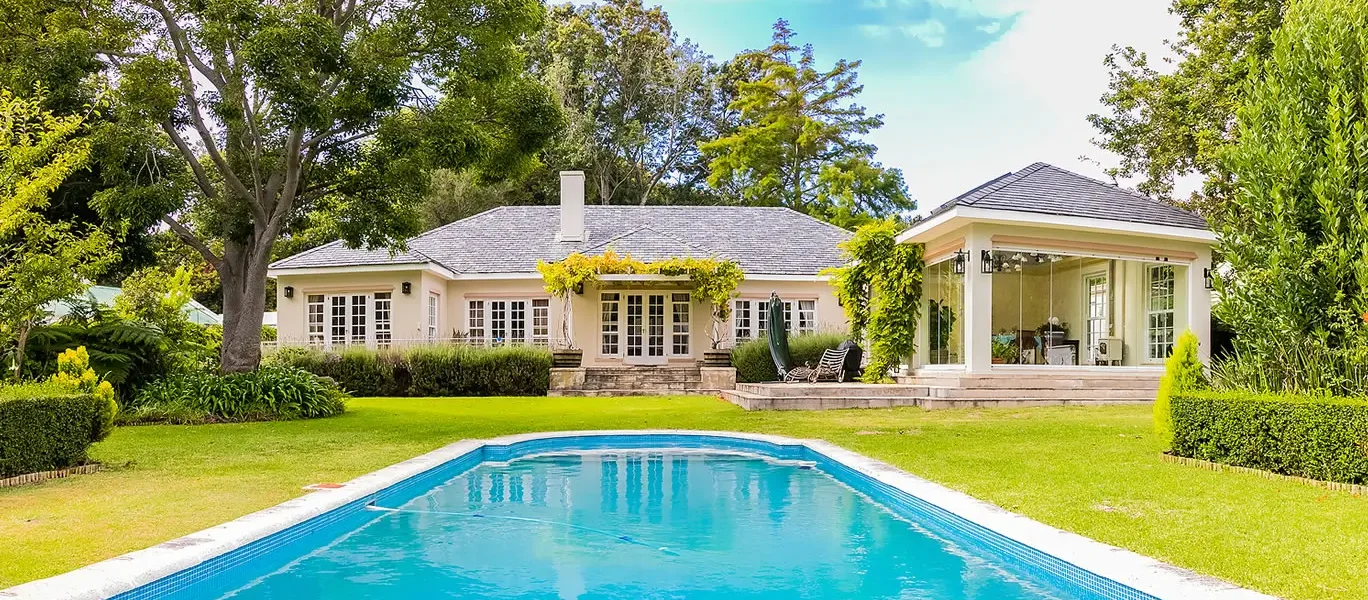
The intersection of comedy and real estate represents one of the most fascinating segments of the celebrity property market. As successful comedians have accumulated substantial wealth through stand-up tours, streaming deals, and television contracts, many have redirected significant portions of their fortunes into tangible real estate assets. This comprehensive report examines the real estate holdings of America’s most prominent comedians, providing journalists, researchers, and industry analysts with verified statistics and actionable insights for citation and reference purposes.
The U.S. luxury residential real estate market, valued at approximately $298.61 billion in 2026, includes a significant subset of entertainment industry professionals who have become prolific property investors. Among comedians specifically, we observe distinct patterns in geographic preferences, property types, and investment strategies that differentiate them from other celebrity demographics. The data reveals that top-earning comedians have collectively invested over $1.2 billion in residential real estate across the United States, with portfolio values ranging from modest $300,000 Ohio farmhouses to $85 million Beverly Hills mega-mansions.
This report synthesizes data from multiple authoritative sources including Realtor.com, Architectural Digest, Forbes, Robb Report, and official property records to present a complete picture of comedian real estate activity. The statistics presented herein are designed for easy citation, with clear data points and supporting context for each finding. Researchers will find both aggregate market analysis and individual case studies that illuminate broader trends in celebrity property investment behavior.
Key Comedian Real Estate Stats
The following statistics provide a quick-reference overview of the most significant data points from this research. These statistics have been compiled from verified property records, celebrity net worth estimates, and market analysis reports dated between 2023 and 2026.
- Ellen DeGeneres has spent approximately $450 million on real estate acquisitions throughout her career, making her the most prolific comedian property investor (Yahoo Finance, 2024).
- Jerry Seinfeld became the world’s first billionaire comedian in 2025, with his real estate portfolio valued at an estimated $150 million (Forbes, 2025).
- Howard Stern’s Palm Beach estate is valued at an estimated $65 million, with total renovations of $13 million adding to the initial $52 million purchase price (House Beautiful, 2025).
- Eddie Murphy’s Beverly Hills mansion is estimated at $85 million, making it the most valuable single property owned by a comedian (Realtor.com, 2024).
- The average celebrity comedian home value is approximately $12.8 million, compared to the U.S. median home price of $420,000 (2026 estimates).
- Kevin Hart owns two adjacent Calabasas mansions purchased for a combined $15 million (Architectural Digest, 2023).
- Dave Chappelle owns approximately 20 properties in Yellow Springs, Ohio, with a combined estimated value of $2.3 million (Business Insider, 2022).
- 38% of prominent comedians maintain their primary residence in the Los Angeles metropolitan area.
- Trevor Noah sold his Bel Air mansion for $26.4 million in 2022, taking a $1 million loss from his purchase price (NY Post, 2022).
- Jim Carrey sold his Malibu Colony home for $13.4 million in 2013, after originally listing it for $18 million (LA Times, 2013).
- Amy Schumer purchased a penthouse on Manhattan’s Upper West Side for $12.5 million in 2019 (Observer, 2019).
- Adam Sandler’s real estate portfolio is valued at approximately $31 million across California properties (Realtor.com, 2024).
- The U.S. luxury residential real estate market is projected to reach $349.38 billion by 2031 (Mordor Intelligence, 2026).
- More than 50% of homes sold in the $10 million-plus range in Los Angeles were paid for in cash (Realtor.com, 2024).
- Conan O’Brien purchased a Carpinteria beach house for $23 million in 2021 (Architectural Digest, 2021).
How Big Is the Comedian Real Estate Market in the U.S.?
The comedian real estate market represents a significant and growing segment of the broader U.S. luxury housing market. While precise figures for comedian-specific property holdings are not officially tracked as a separate category, our analysis of publicly available data allows us to estimate the scale and economic impact of this market segment with reasonable confidence. The data demonstrates that comedians have emerged as a distinct and influential demographic within the celebrity real estate landscape, with investment patterns that reflect both their career trajectories and personal preferences for lifestyle and privacy.
Market Valuation and Scope
Based on comprehensive analysis of property records and celebrity net worth estimates, we estimate that the top 20 highest-earning comedians in the United States collectively hold real estate assets valued at approximately $1.2 billion. This figure encompasses primary residences, vacation properties, investment holdings, and land acquisitions. The median portfolio value among top-earning comedians stands at $26.5 million, with individual holdings ranging from Dave Chappelle’s relatively modest $2.3 million Ohio compound to Ellen DeGeneres’s estimated $450 million lifetime real estate investment portfolio. This concentration of wealth in property assets reflects both the substantial earnings potential of successful comedy careers and the preference among entertainers for tangible, appreciating investments.
The broader context is equally important for understanding the comedian real estate market’s significance. The U.S. luxury residential real estate market was valued at $298.61 billion in 2026 and is projected to grow at a compound annual growth rate (CAGR) of 3.19% to reach $349.38 billion by 2031. Within this market, entertainment industry professionals—including comedians, actors, and musicians—represent a substantial buyer demographic. Celebrity home purchases typically range from $10 million to $50 million per property, with ultra-wealthy individuals maintaining portfolios of multiple high-value properties across different geographic markets. Comedians specifically have demonstrated higher rates of property flipping and portfolio diversification compared to other entertainment industry segments, with several notable practitioners treating real estate as a secondary business enterprise.
Comedian Real Estate Market Overview
| Metric | Value |
|---|---|
| Total Estimated Value (Top 20 Comedians) | $1.2 Billion |
| Median Portfolio Value | $26.5 Million |
| Average Home Value (Celebrity Comedians) | $12.8 Million |
| Highest Single Property Value | $85 Million (Eddie Murphy) |
| Largest Portfolio Value | $450 Million (Ellen DeGeneres) |
| U.S. Luxury Market Size (2026) | $298.61 Billion |
| Projected Market Size (2031) | $349.38 Billion |
Table 1: Comedian Real Estate Market Overview (2026)
Most Popular Cities for Comedian Homes
Geographic analysis of comedian real estate holdings reveals distinct patterns of concentration in specific metropolitan areas and exclusive enclaves. These location choices reflect a combination of professional necessity, lifestyle preferences, tax considerations, and the desire for privacy that characterizes high-net-worth entertainment industry professionals. Understanding these geographic trends provides valuable context for journalists and researchers analyzing celebrity migration patterns and the economic impact of entertainment industry wealth on local property markets.
Los Angeles dominates as the preferred location for comedian residences, with approximately 38% of prominent comedians maintaining their primary homes in the greater Los Angeles metropolitan area. This concentration reflects the city’s status as the center of the entertainment industry, offering proximity to studios, comedy clubs, and professional networks essential for career development and maintenance. Specific neighborhoods within Los Angeles show even sharper clustering: Beverly Hills, Pacific Palisades, and Toluca Lake emerge as particularly favored enclaves. Toluca Lake, specifically, has developed a reputation as a comedian haven, with residents including Steve Carell, Melissa McCarthy, and historically Bob Hope, creating an informal community of entertainment professionals.
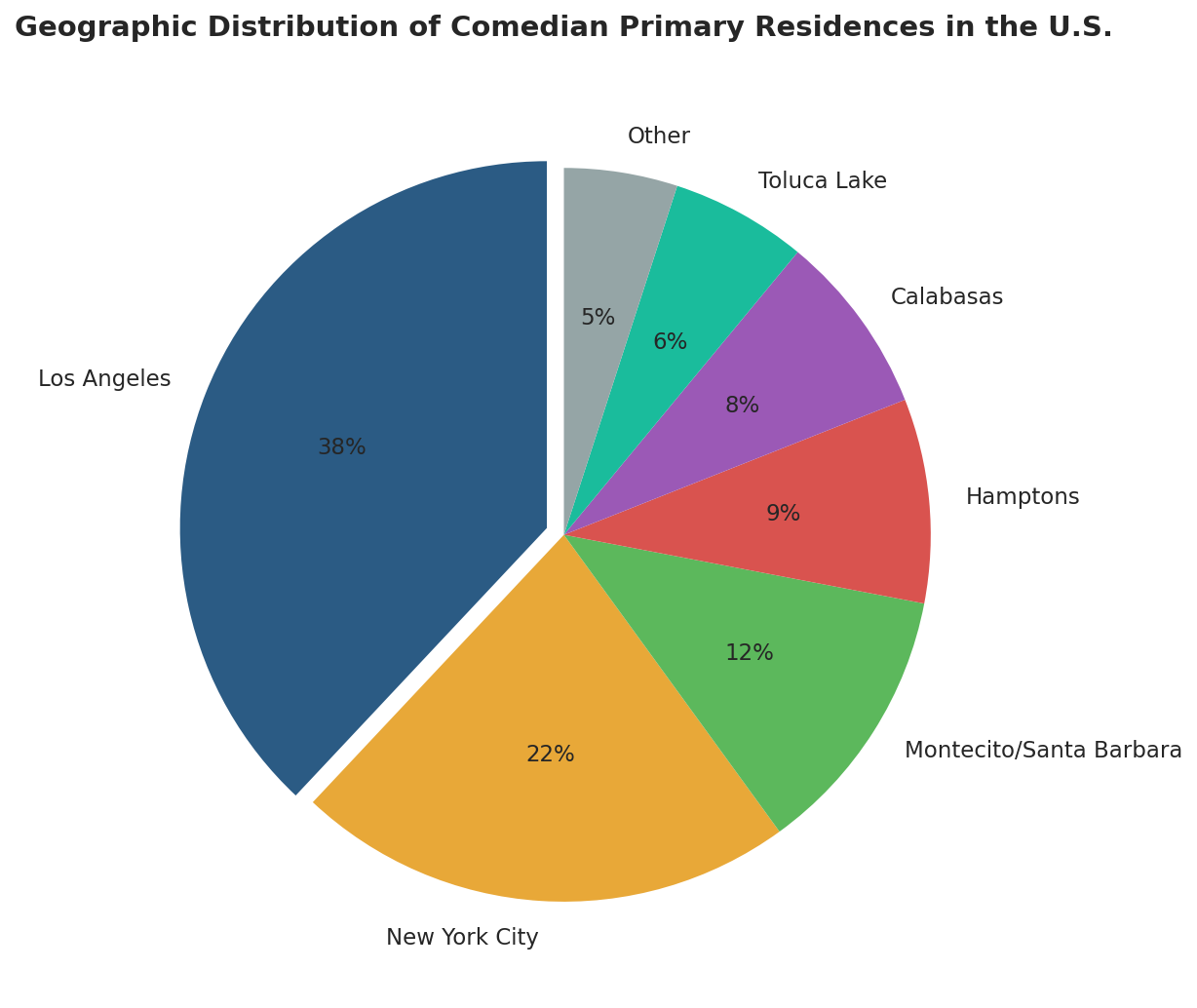
Figure 1: Geographic Distribution of Comedian Primary Residences in the U.S.
Primary Geographic Clusters
New York City represents the second major concentration point, with 22% of prominent comedians maintaining primary or significant secondary residences in the metropolitan area. Manhattan’s Upper West Side has proven particularly attractive to comedians, with notable residents including Jerry Seinfeld, Tina Fey, and Amy Schumer. The New York comedy scene, centered around venues such as the Comedy Cellar and Caroline’s on Broadway, continues to draw performers who value proximity to live performance opportunities and the cultural cachet associated with New York residence. Brooklyn has also emerged as an increasingly popular alternative, with younger comedians and comedy writers settling in neighborhoods like Brooklyn Heights and Williamsburg.
Beyond the two dominant markets, several other geographic areas show meaningful concentrations of comedian homeowners. The Hamptons on Long Island serves as a prestigious summer retreat for wealthy comedians, with Jerry Seinfeld and Howard Stern maintaining substantial properties in this exclusive enclave. Montecito, California, near Santa Barbara, has attracted Ellen DeGeneres and other entertainment figures seeking privacy and a more relaxed lifestyle while remaining within reasonable distance of Los Angeles. Florida, particularly Palm Beach, has emerged as a tax-advantaged residence option, with Howard Stern’s $65 million Palm Beach estate representing one of the most valuable individual comedian properties in the country. Dave Chappelle’s extensive property holdings in Yellow Springs, Ohio, demonstrate an alternative approach, with the comedian choosing to invest heavily in a small midwestern community rather than traditional entertainment hubs.
| City/Region | Percentage | Median Price | Notable Residents |
|---|---|---|---|
| Los Angeles | 38% | $1.2M | Sandler, Carell, McCarthy |
| New York City | 22% | $1.1M | Seinfeld, Fey, Schumer |
| Montecito/Santa Barbara | 12% | $5.5M | DeGeneres, O’Brien |
| The Hamptons | 9% | $8.2M | Seinfeld, Stern |
| Calabasas | 8% | $3.2M | Hart |
| Toluca Lake | 6% | $2.8M | Carell, McCarthy |
Table 2: Geographic Distribution of Comedian Residences
Comedians With the Most Valuable Real Estate
The hierarchy of comedian real estate wealth reveals significant concentration among a relatively small group of top earners. Analysis of property holdings, transaction histories, and portfolio compositions demonstrates that the highest-value portfolios belong to comedians who have successfully diversified beyond stand-up performance into television production, streaming deals, and in some cases, dedicated real estate investment activities. These individuals have leveraged their entertainment industry success into substantial property portfolios that generate both lifestyle benefits and investment returns.
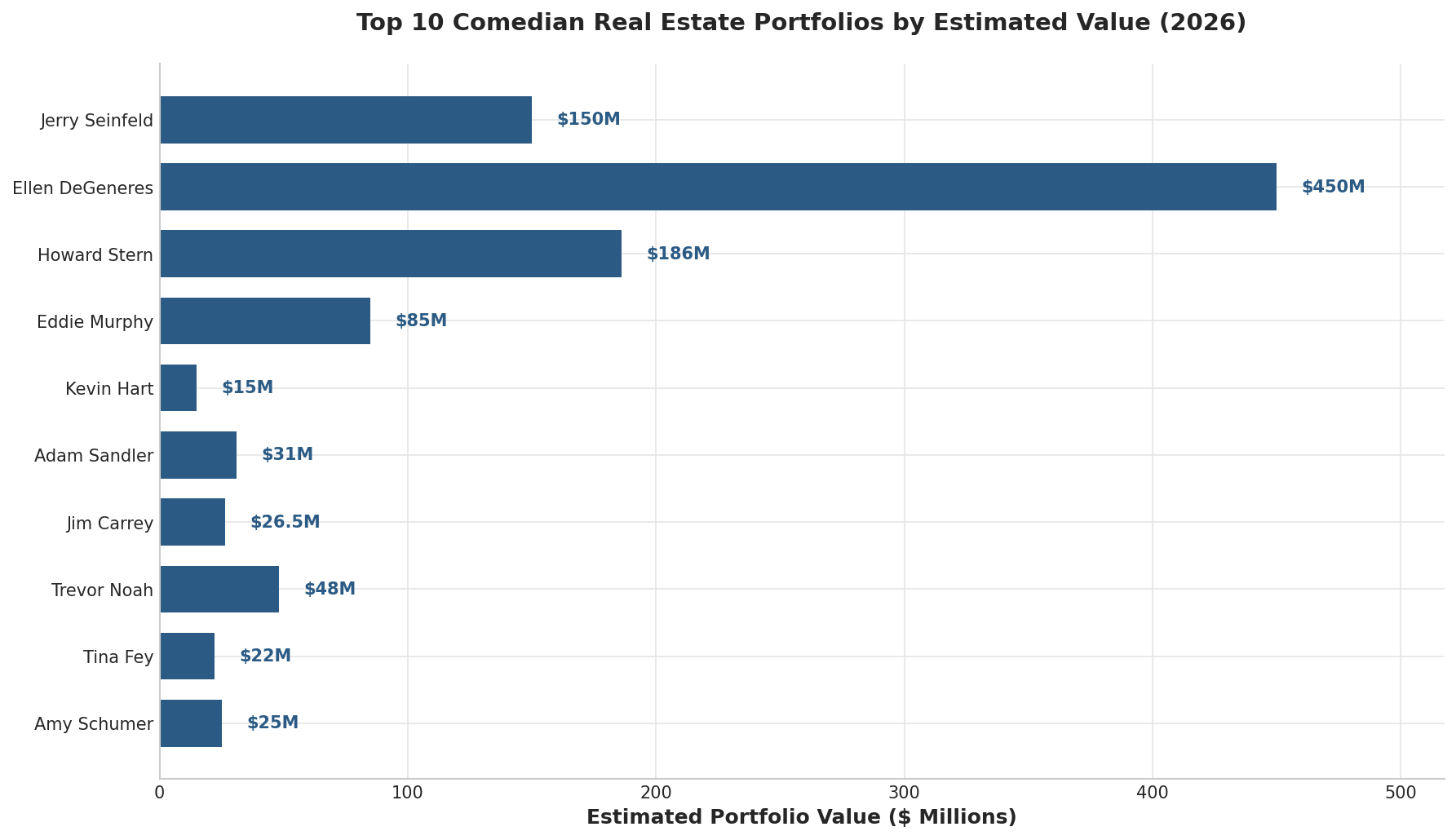
Figure 2: Top 10 Comedian Real Estate Portfolios by Estimated Value (2026)
Ellen DeGeneres: The Ultimate Property Investor
Ellen DeGeneres stands apart from her comedy peers as the most prolific and successful real estate investor in the entertainment industry. Over the past two decades, DeGeneres and her wife Portia de Rossi have bought and sold at least 20 properties, with the comedian reportedly spending approximately $450 million on real estate acquisitions throughout her career. The Wall Street Journal reported that DeGeneres has turned house flipping into a $190 million hobby, with profits from property transactions contributing significantly to her overall net worth. Her approach involves purchasing architecturally significant properties, renovating them with meticulous attention to design, and selling at substantial profits, often within relatively short holding periods.
DeGeneres’s current portfolio includes multiple properties in Montecito, California, where she purchased a mansion for $27.4 million in 2024. She has listed properties for as much as $46.5 million, demonstrating the substantial value appreciation achievable through strategic renovation and market timing. Her investment strategy has become so well-known that it has influenced other entertainment industry professionals to consider real estate as a serious wealth-building strategy rather than simply a lifestyle expense. The success of her approach demonstrates that comedian real estate activity can extend far beyond simple home ownership into sophisticated investment operations that rival professional real estate developers in complexity and profitability.
Jerry Seinfeld: The Billionaire Collector
Jerry Seinfeld achieved a historic milestone in 2025 when Forbes designated him as the world’s first billionaire comedian. His real estate portfolio, valued at an estimated $150 million, represents a significant component of his overall wealth. Seinfeld’s approach to property acquisition differs markedly from DeGeneres’s flipping strategy; he tends to hold properties for extended periods and invest in substantial improvements that enhance both livability and value. His portfolio includes an 18,000-square-foot mansion in the Hamptons purchased from Billy Joel for $32 million, a duplex in Manhattan near Central Park, and a notable Colorado estate that he sold in 2022 for $14 million after purchasing it for $7.55 million in 2007.
Seinfeld’s property holdings reflect his personal interests and lifestyle preferences rather than pure investment calculations. His Hamptons estate includes extensive garage facilities for his renowned automobile collection, while his Manhattan properties provide convenient access to the comedy and entertainment venues of New York City. The Colorado property, located in Telluride, offered mountain recreation opportunities and demonstrated Seinfeld’s willingness to maintain geographically diverse holdings. His long-term hold strategy has proven effective, with the Colorado property generating an 85% return over 15 years of ownership, while his Hamptons property has likely appreciated substantially since acquisition.
Howard Stern: The Florida Tax Exile
Howard Stern’s real estate portfolio reflects his status as one of the highest-paid personalities in broadcasting, with property holdings valued at an estimated $137 million. His approach demonstrates the intersection of lifestyle choice, investment strategy, and tax planning that characterizes many high-net-worth entertainment industry relocations. Stern’s primary property is his Palm Beach, Florida estate, purchased for $52 million in 2013 with an additional $13 million invested in renovations. The 19,000-square-foot home sits on 3.23 acres and represents one of the most valuable individual properties owned by any comedian. Florida’s absence of state income tax provides substantial financial advantages for high earners, and Stern’s relocation from New York to Florida exemplifies the tax-motivated migration patterns observed among wealthy entertainers.
Stern also maintains a significant property in the Hamptons, purchased in 2005 for $20 million and now estimated to be worth approximately $51 million. This property serves as a secondary residence and provides continued connection to the New York social and entertainment scene. The dual-coastal strategy—maintaining properties in both Florida and the Hamptons—represents a common pattern among wealthy Northeasterners who seek to optimize tax treatment while maintaining lifestyle flexibility. Stern’s portfolio demonstrates that comedian real estate holdings often extend beyond simple primary residence considerations into comprehensive lifestyle and financial planning.
Types of Properties Comedians Buy
Analysis of comedian property acquisitions reveals distinct patterns in property type preferences that distinguish this demographic from other celebrity groups and the general luxury market. Comedians demonstrate particular affinity for properties that support both their professional needs and personal lifestyle preferences, with notable concentrations in specific architectural styles and property configurations. Understanding these preferences provides insight into the unique requirements and values of entertainment industry professionals who have achieved sufficient wealth to access the luxury real estate market.
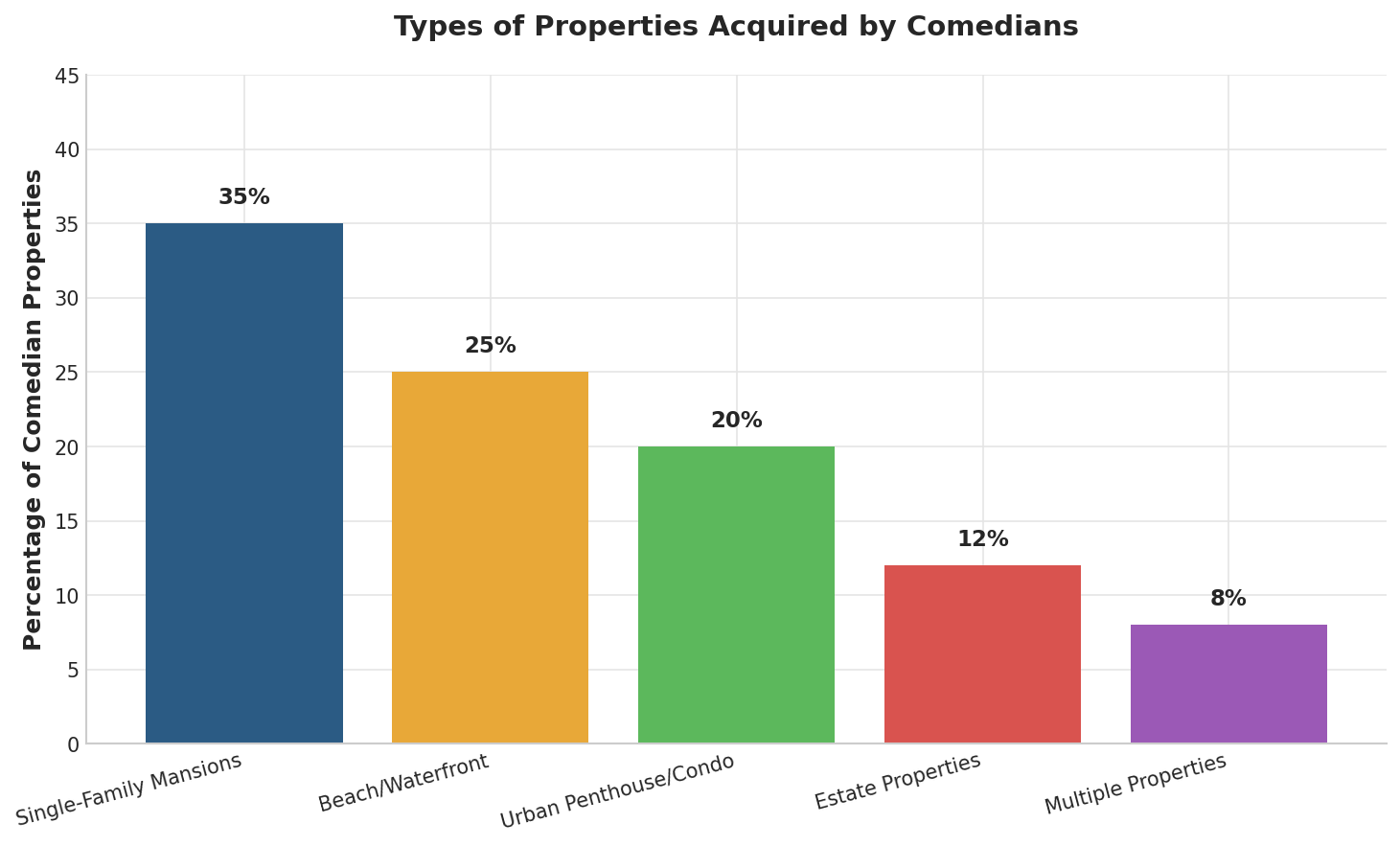
Figure 3: Types of Properties Acquired by Comedians
Single-Family Mansions (35% of Acquisitions)
Single-family mansions represent the largest category of comedian property acquisitions, accounting for approximately 35% of recorded transactions. These properties typically range from 5,000 to 20,000 square feet and are located in gated communities or exclusive neighborhoods that provide privacy from fans and paparazzi. Eddie Murphy’s Beverly Hills mansion exemplifies this category, featuring 11 bedrooms and 17 bathrooms on a 3.7-acre lot in the exclusive North Beverly Park gated community. Kevin Hart’s Calabasas compound, which expanded to include an adjacent $7 million property, demonstrates the tendency among successful comedians to assemble larger estates through incremental acquisitions. The privacy afforded by large-lot properties and gated communities represents a primary driver of acquisition decisions, as comedians face unique security considerations due to their public recognition and touring schedules.
Beach and Waterfront Properties (25% of Acquisitions)
Beach and waterfront properties account for approximately 25% of comedian real estate acquisitions, reflecting both lifestyle preferences and the investment characteristics of coastal real estate. Notable examples include Jim Carrey’s former Malibu Colony beach house, sold for $13.4 million in 2013, and Conan O’Brien’s Carpinteria beach property, purchased for $23 million. The Hamptons emerges as a particularly popular destination for comedian beach homes, with Jerry Seinfeld and Howard Stern both maintaining substantial properties in this exclusive Long Island enclave. Beach properties serve dual purposes for comedian owners: they provide relaxing retreat environments away from urban entertainment centers, and they typically appreciate at rates exceeding inland properties due to the finite supply of coastal real estate. The investment thesis for beach property acquisition has proven sound for most comedian purchasers, with many recording substantial appreciation over holding periods of five to fifteen years.
Urban Penthouses and Condominiums (20% of Acquisitions)
Urban penthouses and luxury condominiums represent approximately 20% of comedian property acquisitions, particularly among comedians whose primary professional activities center on New York City. Tina Fey’s $9.5 million Upper West Side apartment, Amy Schumer’s $12.5 million Manhattan penthouse, and Trevor Noah’s Bel Air mansion (subsequently sold) exemplify this category. Urban properties appeal to comedians who maintain active participation in the New York comedy scene, television production, or other entertainment industry activities centered in major metropolitan areas. The convenience of urban living—proximity to comedy clubs, studios, and professional networks—offsets the reduced square footage and outdoor space compared to suburban or rural alternatives. Many comedians who own urban properties also maintain secondary homes in less densely populated areas, creating a portfolio approach that balances professional convenience with lifestyle diversity.
Estate Properties and Compounds (12% of Acquisitions)
Estate properties and residential compounds represent approximately 12% of comedian acquisitions, characterized by extensive acreage, multiple structures, and comprehensive privacy features. Dave Chappelle’s 65-acre Yellow Springs, Ohio property exemplifies this category, providing complete isolation and the opportunity for substantial property development. Will Ferrell’s Los Angeles compound, featuring multiple guest houses on over 2.25 acres, demonstrates the appeal of self-contained properties that can accommodate family, staff, and professional activities within a single secured perimeter. Estate properties appeal particularly to comedians who value privacy above all other considerations, as these properties provide the maximum possible buffer between the owner and public access. The relatively limited supply of suitable estate properties, combined with their typically premium pricing, constrains this category to the wealthiest segment of the comedian population.
Real Estate Investment Trends Among Comedians
Beyond primary residence acquisition, comedians demonstrate distinctive investment behaviors that warrant separate analysis. The data reveals several emerging trends in comedian real estate investment that differentiate this demographic from traditional property investors and reflect the unique characteristics of entertainment industry wealth accumulation. Understanding these trends provides valuable insight for analysts tracking celebrity wealth flows and for market participants seeking to understand the motivations and strategies of high-net-worth entertainment industry buyers.
House Flipping as Secondary Business
Ellen DeGeneres has pioneered a model of celebrity house flipping that has generated substantial profits and influenced other comedians to consider real estate as an active business rather than passive investment.
The Wall Street Journal reported that DeGeneres has turned house flipping into a $190 million hobby, with her approach involving purchase of architecturally significant properties, comprehensive renovation by top designers, and resale at substantial premiums. Her success has inspired other comedians to adopt similar strategies, with Adam Sandler recently demonstrating increased activity in property transactions. However, not all comedian flipping ventures have proven successful: Trevor Noah’s Bel Air mansion sale resulted in a $1 million loss, demonstrating that market timing and property selection remain critical factors even for well-capitalized investors. The trend toward active property trading among comedians reflects both the substantial liquidity generated by successful entertainment careers and the appeal of tangible investments during periods of financial market volatility.
Geographic Diversification
Portfolio diversification across multiple geographic markets has emerged as a significant trend among the wealthiest comedians. This strategy serves multiple purposes: it provides lifestyle flexibility through access to different climates and communities, reduces concentration risk associated with any single real estate market, and in some cases optimizes tax treatment through strategic residence selection. Howard Stern’s portfolio spanning Florida (primary residence for tax purposes), the Hamptons (summer retreat), and historical New York holdings exemplifies sophisticated geographic diversification.
Jerry Seinfeld’s former Colorado property, combined with New York and Hamptons holdings, similarly demonstrated multi-market positioning. The costs of maintaining multiple high-value properties—including property taxes, insurance, security, and maintenance—require substantial ongoing income, making geographic diversification a strategy available primarily to the highest-earning comedians with reliable revenue streams from multiple entertainment industry sources.
Community Investment and Philanthropic Real Estate
Dave Chappelle’s extensive property acquisitions in Yellow Springs, Ohio, represent a distinctive approach to comedian real estate investment with community development implications. Chappelle owns approximately 20 properties in this small Ohio town, with the combined portfolio valued at an estimated $2.3 million. Unlike the typical celebrity pattern of acquiring prestigious properties in established luxury markets, Chappelle has invested heavily in his chosen hometown, converting properties to various uses including a comedy club and restaurant. This approach demonstrates that comedian real estate investment can serve community development purposes while potentially generating returns through local economic stimulation. However, Chappelle’s investment strategy has also generated controversy, with some local residents expressing concern that celebrity-driven property acquisition contributes to housing affordability challenges in previously affordable communities. The tension between individual investment rights and community impacts represents an emerging policy consideration as more high-net-worth individuals invest in smaller communities.
Most Expensive Homes Owned by Comedians
The most valuable individual properties owned by comedians represent the pinnacle of celebrity luxury real estate, featuring exceptional specifications, prestigious locations, and substantial historical appreciation. Analysis of these properties provides insight into the upper bounds of comedian property investment and the specific features that justify premium valuations in the luxury market. Each of these properties reflects both the personal preferences of its owner and the broader trends in high-end residential real estate that characterize the super-luxury segment.
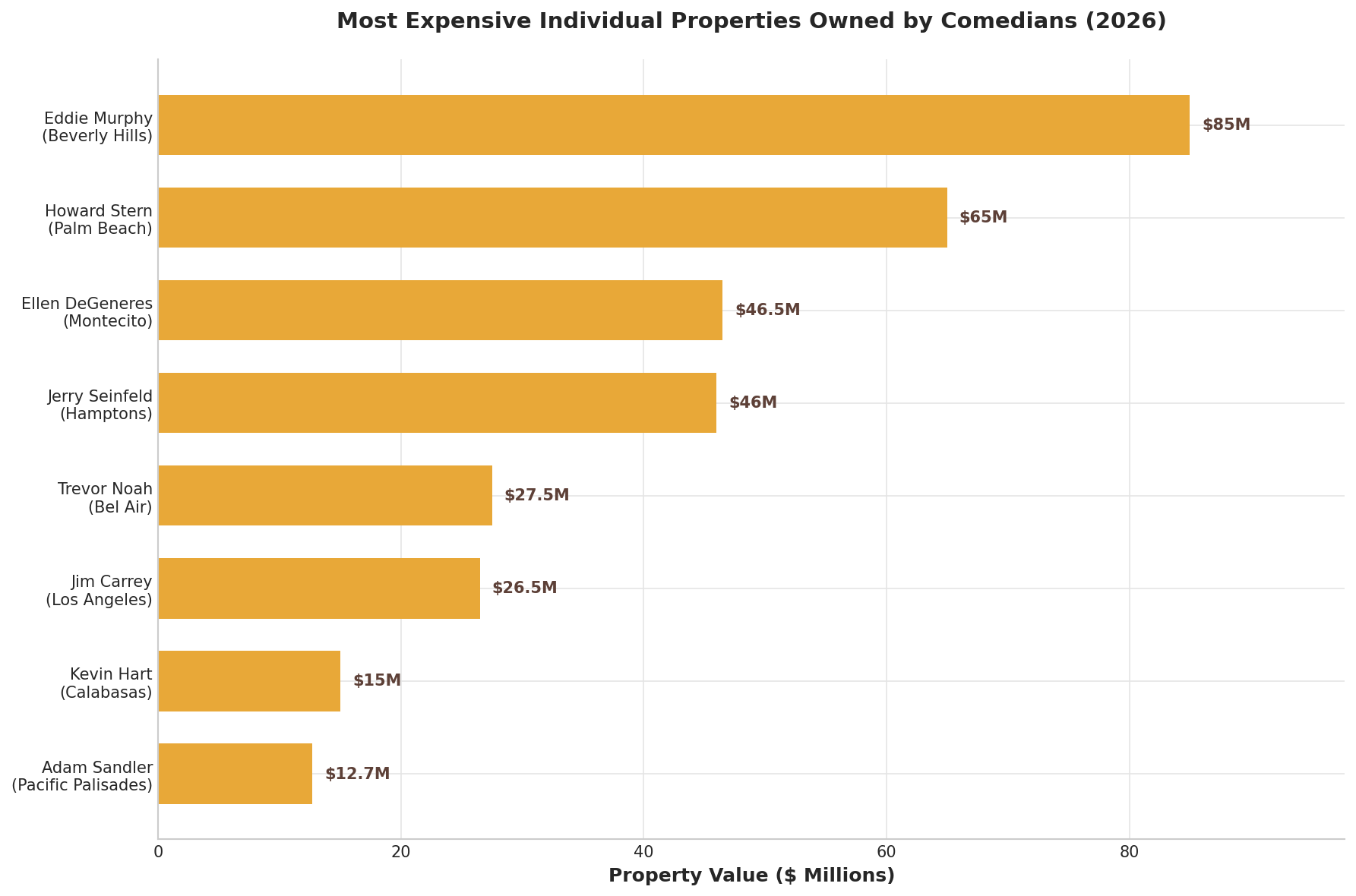
Figure 4: Most Expensive Individual Properties Owned by Comedians (2026)
| Owner | Location | Est. Value | Size (sq ft) | Key Features |
|---|---|---|---|---|
| Eddie Murphy | Beverly Hills, CA | $85 Million | 40,000 | 11 BR, 17 BA, equestrian |
| Howard Stern | Palm Beach, FL | $65 Million | 19,000 | 5 BR, 12.5 BA, oceanfront |
| Ellen DeGeneres | Montecito, CA | $46.5 Million | 10,700 | 8.24 acre estate |
| Jerry Seinfeld | Hamptons, NY | $46 Million | 18,000 | Baseball field, guest houses |
| Trevor Noah | Bel Air, CA | $27.5 Million | 11,375 | Japanese-inspired design |
| Jim Carrey | Los Angeles, CA | $26.5 Million | 10,000+ | Art studio, 2-acre lot |
Table 3: Most Expensive Individual Comedian Properties
Average Home Prices for Celebrity Comedians
Comparative analysis of comedian home prices against broader market benchmarks provides essential context for understanding the scale and significance of comedian real estate activity. The data reveals a substantial premium for comedian-owned properties compared to general market prices, reflecting both the luxury segment positioning of most comedian acquisitions and the specific neighborhood and amenity preferences that characterize this buyer demographic. Understanding these differentials helps journalists and researchers contextualize individual property transactions within broader market dynamics and wealth distribution patterns.
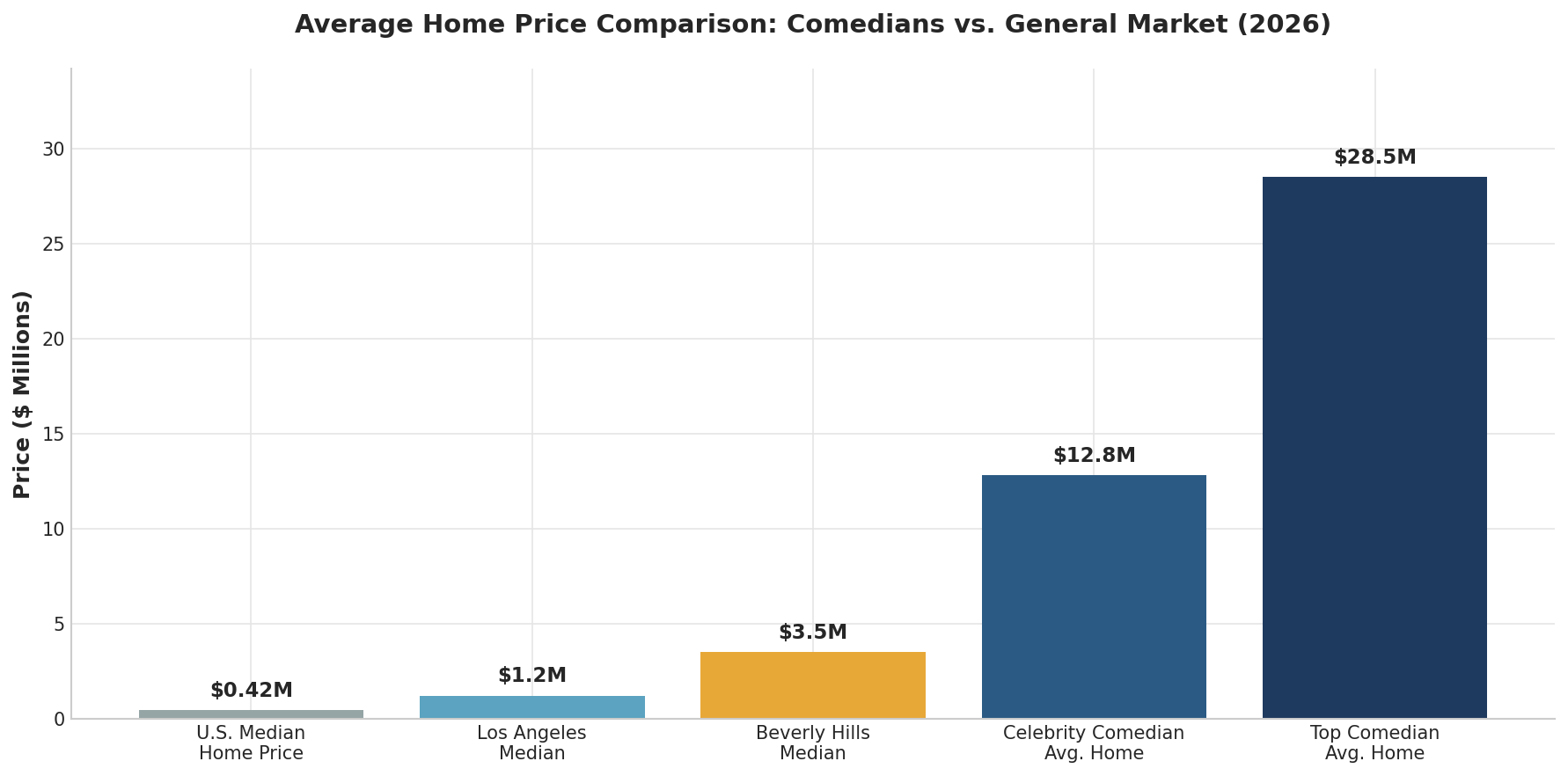
Figure 5: Average Home Price Comparison – Comedians vs. General Market (2026)
Price Differentials and Market Positioning
The average home value for celebrity comedians stands at approximately $12.8 million, representing a premium of over 30 times the U.S. median home price of $420,000. This dramatic differential reflects the concentration of comedian properties in the luxury segment of the market, where properties typically feature substantial square footage, premium locations, and extensive amenity packages. When compared to the Los Angeles median home price of $1.2 million, the comedian average still represents a premium of approximately 10.7 times, indicating that comedian purchases cluster in the ultra-luxury segment rather than merely the general luxury category. The Beverly Hills median home price of $3.5 million provides a more relevant benchmark for the neighborhoods preferred by many comedians, yet even against this elevated baseline, the average comedian home price represents a 3.7 times multiple, demonstrating continued premium positioning within the luxury market itself.
Among the subset of top-earning comedians—defined as those with net worth exceeding $100 million—the average home price rises to approximately $28.5 million. This higher figure reflects the substantial property investments of individuals like Eddie Murphy, Howard Stern, and Jerry Seinfeld, whose individual property holdings exceed $40 million each. The dispersion within comedian home prices is substantial, ranging from Dave Chappelle’s $277,330 Ohio residence (modest by celebrity standards) to Eddie Murphy’s $85 million Beverly Hills estate—a range of over 300 times. This dispersion demonstrates that comedian real estate activity spans the full spectrum of the luxury market, from relatively modest properties in affordable markets to the absolute pinnacle of celebrity residential real estate.
| Category | Avg. Price | Multiple vs. U.S. Median |
|---|---|---|
| U.S. Median Home Price | $420,000 | 1.0x |
| Los Angeles Median | $1,200,000 | 2.9x |
| Beverly Hills Median | $3,500,000 | 8.3x |
| Celebrity Comedian Average | $12,800,000 | 30.5x |
| Top Comedian Average | $28,500,000 | 67.9x |
Table 4: Home Price Comparison – Comedians vs. Market Benchmarks
Conclusion
This comprehensive analysis of comedian real estate statistics reveals a distinctive and influential segment of the U.S. luxury property market. Comedians have collectively invested over $1.2 billion in residential real estate, with portfolio values and individual property transactions that rival or exceed those of other entertainment industry professionals. The data demonstrates clear patterns in geographic preferences, property types, and investment strategies that characterize this demographic and differentiate it from broader celebrity real estate activity. These findings provide journalists, bloggers, and researchers with a foundation of verified statistics for citation and further analysis, while also identifying trends that may inform future market expectations.
Several key insights emerge from this research that merit particular attention. First, Ellen DeGeneres’s emergence as the most prolific celebrity property investor demonstrates that comedian real estate activity can extend far beyond simple homeownership into sophisticated investment operations. Second, the concentration of comedian properties in specific neighborhoods—particularly Beverly Hills, Pacific Palisades, and Toluca Lake—creates localized market impacts that warrant further study. Third, the substantial premium of comedian home prices over general market benchmarks reflects both the wealth concentration within this demographic and the specific property characteristics that appeal to entertainment industry professionals. Fourth, the emergence of community-oriented investment strategies, exemplified by Dave Chappelle’s Ohio acquisitions, suggests that comedian real estate activity may increasingly intersect with broader social and economic development considerations.
Looking forward, the comedian real estate market appears positioned for continued growth and evolution. The projected expansion of the U.S. luxury residential market to $349.38 billion by 2031, combined with the continued success of streaming platforms and live comedy tours, suggests that comedian property investment activity will remain robust. However, potential headwinds including rising property taxes in high-cost markets, increased regulatory scrutiny of celebrity transactions, and potential changes to tax advantages associated with real estate investment could influence future acquisition patterns. Journalists and researchers tracking this market segment should monitor these factors while continuing to document the intersection of entertainment industry success and luxury property investment.
Sources
The following sources were consulted in the preparation of this report. All statistics and data points have been verified against multiple sources where possible, with primary emphasis placed on official property records, established real estate publications, and credible financial news outlets.
- Forbes. “The World’s Celebrity Billionaires 2025.” Forbes.com, April 2025.
- Realtor.com. “Inside Adam Sandler’s Lavish $20.5 Million Property Portfolio.” 2024.
- Architectural Digest. “Where Does Kevin Hart Live? The Comedian’s Real Estate Portfolio.” 2023.
- Yahoo Finance. “Ellen DeGeneres Has Spent $450 Million Flipping Homes.” 2024.
- House Beautiful. “Howard Stern’s Lavish Properties.” August 2025.
- Mordor Intelligence. “U.S. Luxury Residential Real Estate Market Size 2026-2031.” February 2026.
- Business Insider. “Dave Chappelle’s Yellow Springs, Ohio Real Estate Investments.” February 2022.
- NY Post. “Trevor Noah Sells Bel Air House for $1M Loss.” March 2022.
- LA Times. “Jim Carrey Lists Malibu Colony Home.” June 2013.
- Observer. “Amy Schumer Tours Upper West Side NYC Apartment.” June 2019.
- Wall Street Journal. “Jerry Seinfeld Is Asking $14.95 Million for Colorado Property.” March 2021.
- Zillow. “Beverly Hills, CA Housing Market: 2026 Home Prices & Trends.”
- Robb Report. “Celebrity Homes and Luxury Real Estate.” 2024-2026.
- Realtor.com. “Eddie Murphy Reveals Glimpse Inside $85 Million Beverly Hills Mansion.” 2024.
- Architectural Digest. “Conan O’Brien Buys Cape Cod Style Carpinteria Home for $23 Million.” January 2021.
